What are the CPCB noise limits for a DG set?
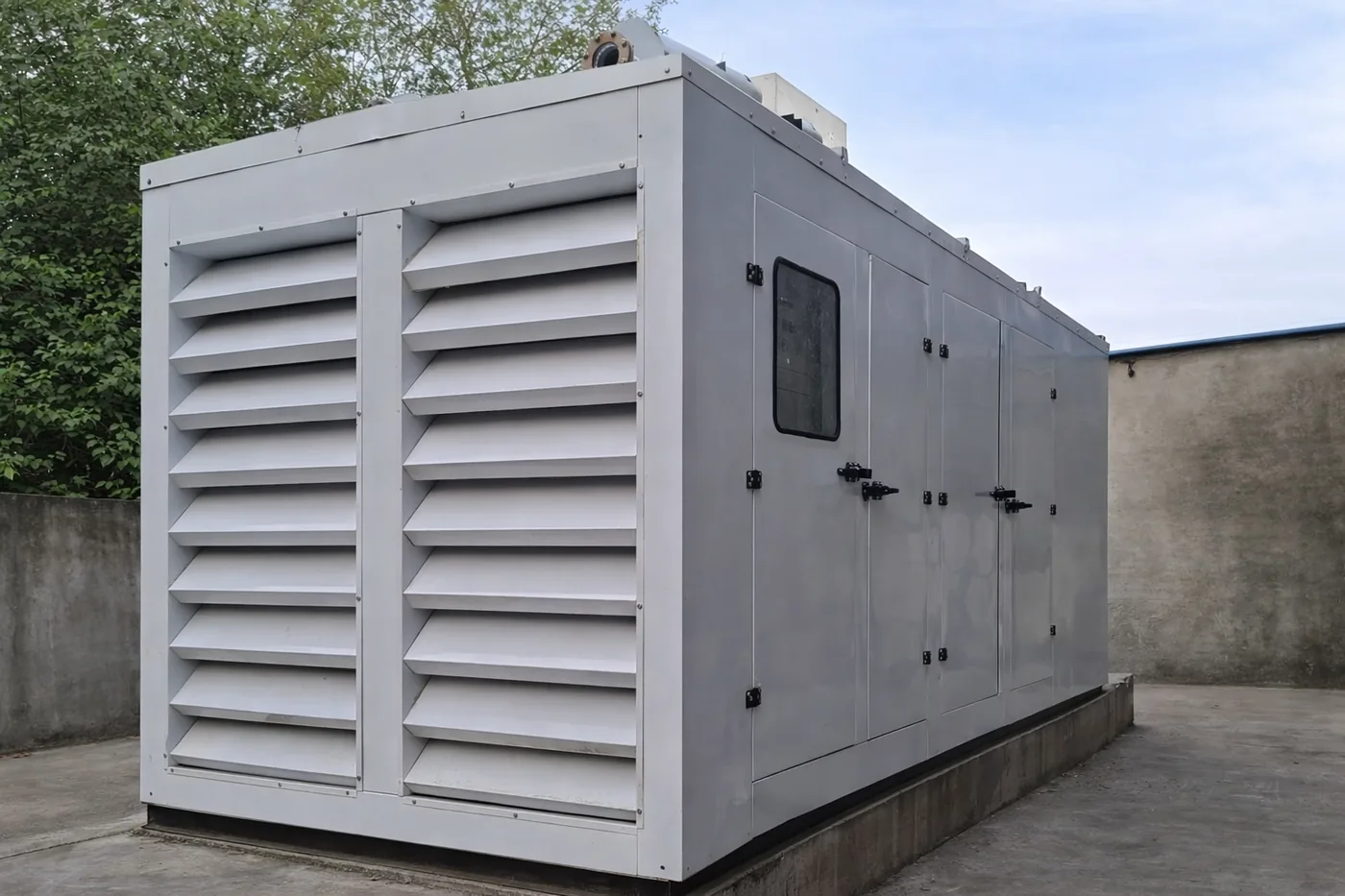
Under CPCB / Environment (Protection) Rules, a diesel generator must meet a noise limit of 75 dB(A) at 1 metre from the enclosure surface, which requires an acoustic enclosure with a minimum insertion loss of 25 dB(A). The enclosure must still pass enough ventilation air for combustion and cooling without breaching that limit.
The Two Jobs a DG Room Must Do
A diesel generator room has two competing requirements. It must move large volumes of air — for combustion and, above all, to carry away radiator and radiated heat — or the set overheats and de-rates. And it must stay within the CPCB noise limit at the boundary. Solve one and ignore the other, and operators end up propping doors open in summer, defeating the acoustics entirely.
How Much Air a DG Room Needs
The dominant load is radiator cooling air (from the genset data sheet), plus combustion air for the engine, plus an allowance for radiated heat that must be removed to keep the room within a safe temperature rise. Together these set the intake free area and the hot-air discharge — typically far more air than people expect, which is why under-sized louvers are the most common DG-room failure.
Radiator air
The largest flow — carries engine heat out through the radiator and hot-air duct.
Combustion air
Clean air the engine burns; must be available at the air-intake face.
Heat removal
Extra ventilation to hold room temperature rise within limits.
Attenuated Intake & Exhaust Louvers
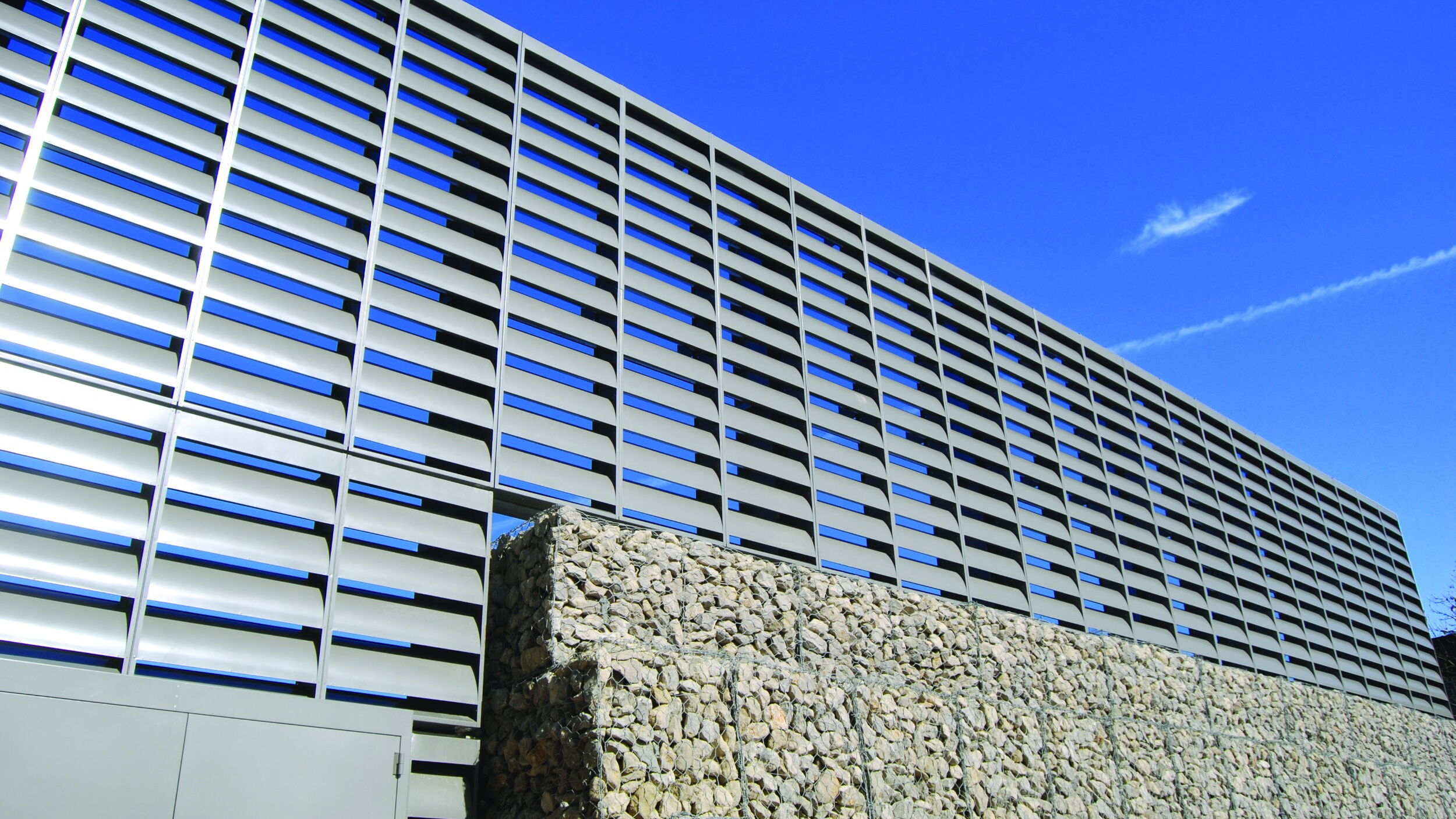
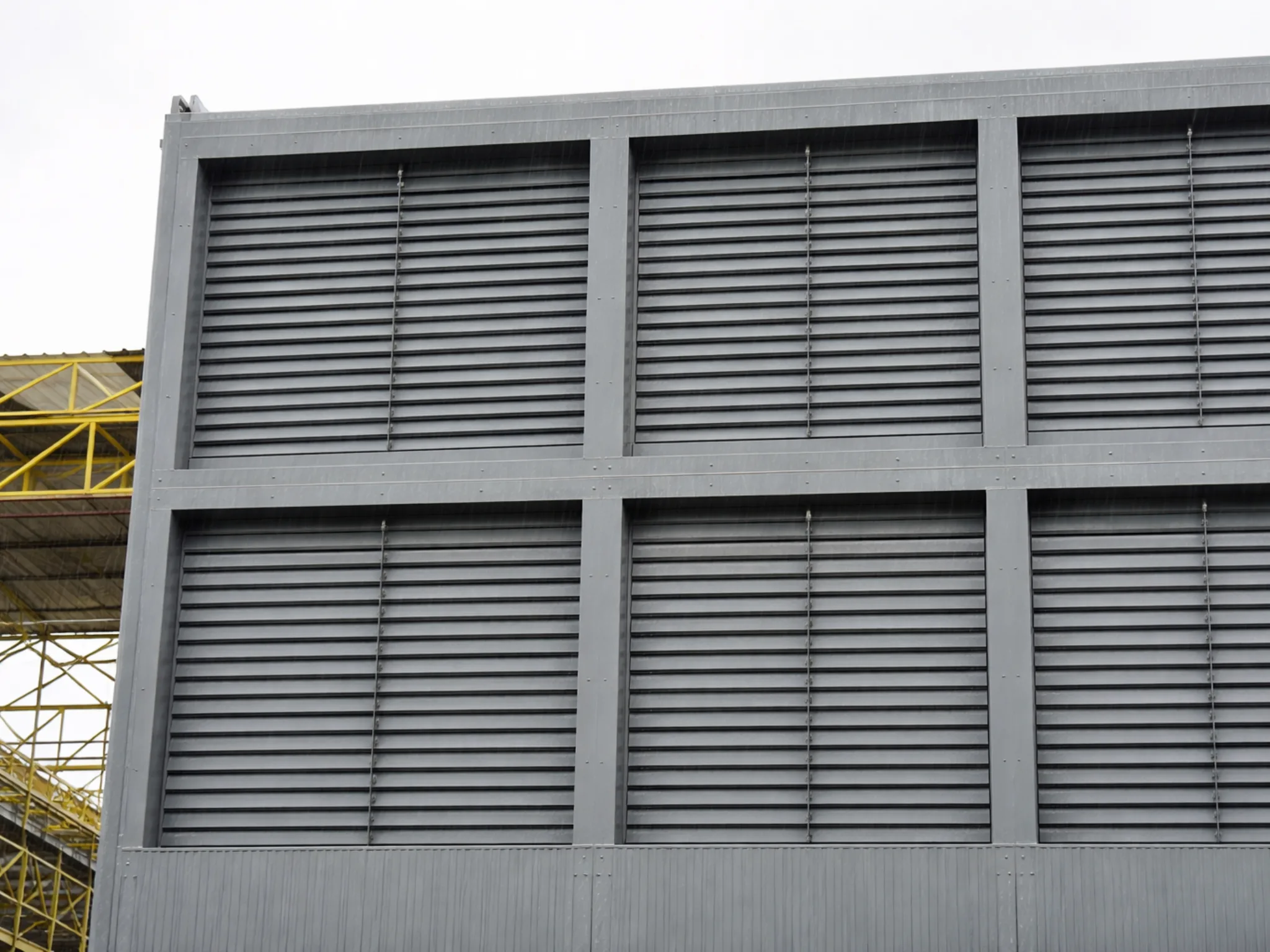
The way to move that air quietly is acoustic (attenuated) louvers at the intake and exhaust — louvers with sound-absorbing splitters that pass the required airflow while cutting the noise that escapes with it. Paired with an exhaust silencer on the engine, they let the room breathe without breaching the boundary limit.
Balancing Airflow Against Noise
This is a genuine engineering trade-off. More attenuation (deeper splitters) means more pressure drop, which can restrict airflow; more free area for airflow can let more noise out. The design has to size the attenuated louvers so that both the airflow target and the CPCB limit are met simultaneously — verified with the genset's airflow and the boundary noise target, not guessed.
Design for both at once: the room must hit its airflow target and stay under 75 dB(A) at 1 m — attenuated louvers sized to do both are what make that possible.
Common DG-Room Ventilation Mistakes
- Under-sized intake louvers — starves the radiator, the set overheats and de-rates.
- Plain louvers instead of attenuated — meets airflow but fails the noise limit.
- No hot-air discharge path — heat recirculates and room temperature climbs.
- Doors propped open in summer — the symptom of all of the above, and an instant acoustic failure.
KBG Group DG-Room Solutions
KBG Group designs and supplies attenuated intake and exhaust louvers, acoustic doors and enclosure treatments that let a DG room move its cooling air while meeting CPCB noise limits. Share the genset kVA and room layout for a sized, quoted solution.
Frequently Asked Questions
How much ventilation does a DG room need?
The dominant demand is radiator cooling air (from the genset data sheet), plus combustion air and an allowance to remove radiated heat. Together these usually require far more air — and free louver area — than expected, which is why under-sized louvers are the most common failure.
How do you keep a DG room quiet while ventilating it?
By using attenuated (acoustic) louvers with sound-absorbing splitters at the intake and exhaust, paired with an engine exhaust silencer. These pass the required airflow while cutting the noise that would otherwise escape with it.
Why do DG sets overheat in summer?
Usually because the room ventilation (intake louvers and hot-air discharge) is under-sized, so the radiator cannot reject heat. Operators then prop doors open — which fixes cooling but breaks the acoustic performance and CPCB compliance.
What is the noise limit for a DG room?
The DG set must not exceed 75 dB(A) at 1 metre from the enclosure/room under CPCB-II norms, and the site must also meet the ambient boundary limit for its zone.
Can airflow and noise limits both be met?
Yes — with attenuated louvers sized so that the airflow target and the CPCB noise limit are satisfied at the same time. It is a trade-off that must be engineered against the genset airflow and the boundary target.