Wind load on long vertical fins
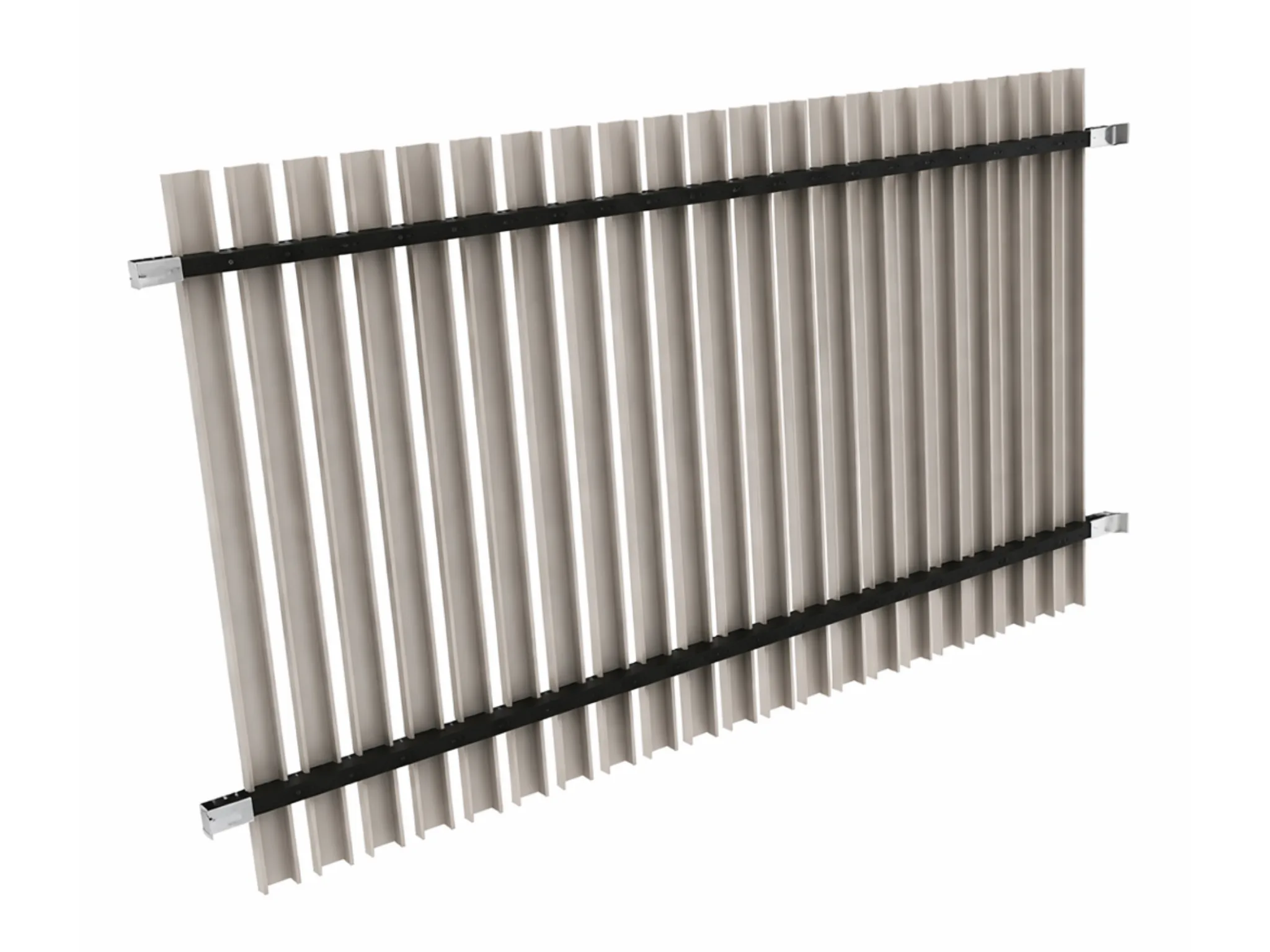
An architectural fin projecting off a facade is a cantilever loaded by wind. The longer and deeper the fin, and the higher up the building, the greater the wind pressure it must carry back to its fixings. The fin section, its wall thickness, and the number and spacing of brackets all have to be sized for the design wind load (to IS 875 and the project wind study), or the fin deflects, the brackets overstress, and the fixings work loose over time.
- Fin length & depth — set the wind area and the bending moment back to the fixings.
- Building height & exposure — wind pressure rises with height and exposure.
- Bracket spacing — closer brackets shorten the span and cut deflection and stress.
Facades & Wind
- Facade elements are designed to the wind pressures of the local wind code (in India, IS 875 Part 3) for the building height and terrain.
- Slender projecting elements can be excited into vibration by wind even below their static design load, through vortex shedding.
- External aluminium finishes such as PVDF are chosen for long-term UV and weather durability on exposed facades.
Why fins vibrate — and how to stop it
A fin can be strong enough for the static wind load and still vibrate. As wind flows past a slender element it sheds vortices alternately from each side; if that shedding frequency approaches the fin's natural frequency, the fin resonates — humming, oscillating and, over time, fatiguing its fixings. This is a stiffness-and-damping problem, not just a strength one.
The cures are geometric and mechanical: increase the fin's stiffness (deeper section, thicker wall) to raise its natural frequency away from the excitation; add or tighten brackets to shorten the free span; and design the fixings to be rigid and, where needed, damped rather than free to rattle. A fin that is properly stiffened and well bracketed simply does not enter that resonant regime.
A fin can pass its static wind check and still hum in a breeze. Vibration is a stiffness-and-fixing problem — solved with section depth, bracket spacing and rigid, considered connections.
Bracket systems and finishes
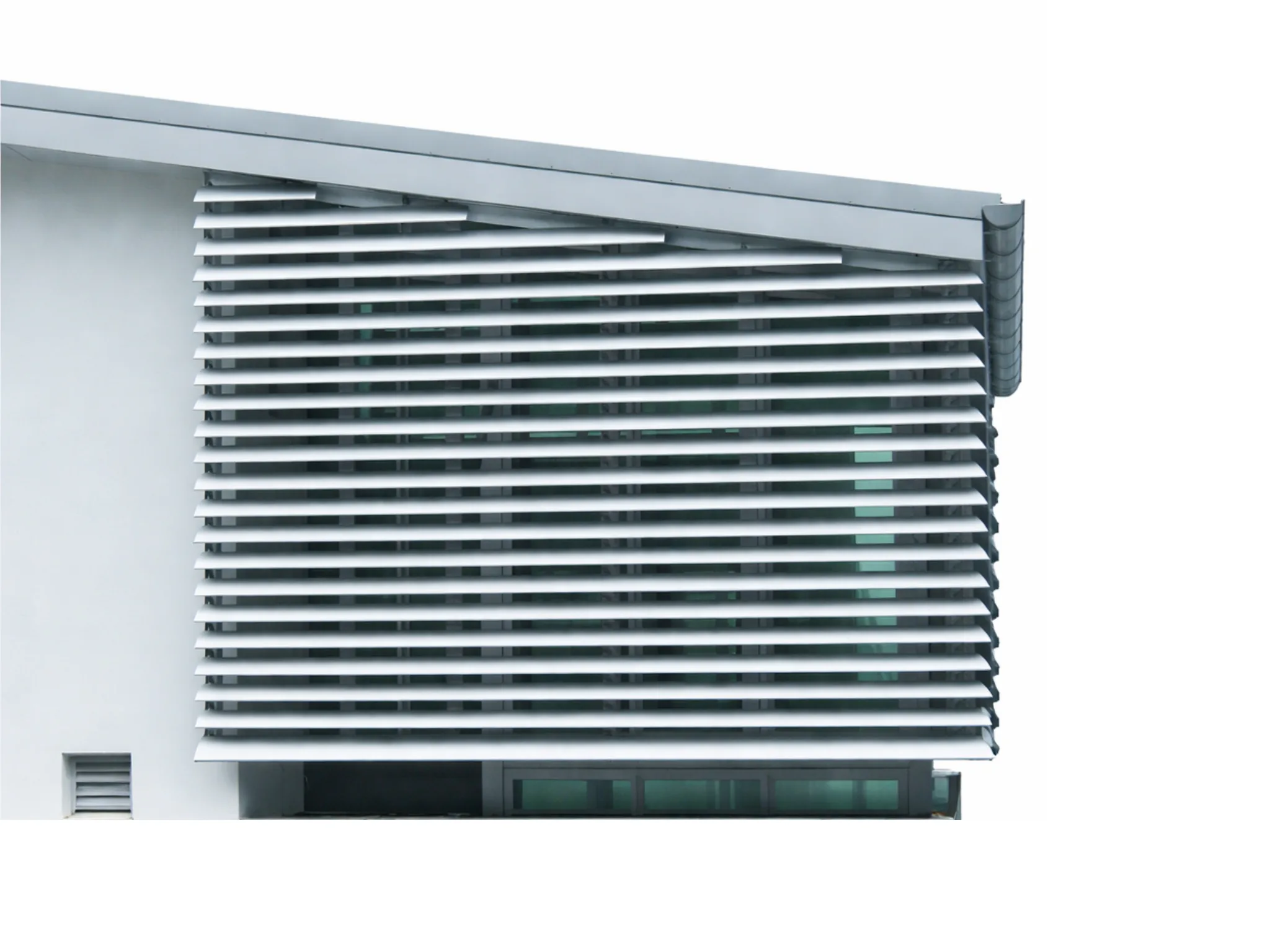
Fin support systems come in three broad types: fixed brackets (rigid, simplest), adjustable brackets (to take up facade tolerance on site), and modular systems (repeatable, fast to install on large runs). Good bracketry also allows for thermal movement of long aluminium fins while still restraining wind — pinning one point and letting the fin slide elsewhere, so it does not buckle in summer heat.
| Finish | Character | Best for |
|---|---|---|
| PVDF (fluoropolymer) | Superior UV & weather durability | Exposed facades, coastal, long life |
| Powder coat (polyester) | Good durability, wider colour/cost range | General facades, sheltered elevations |
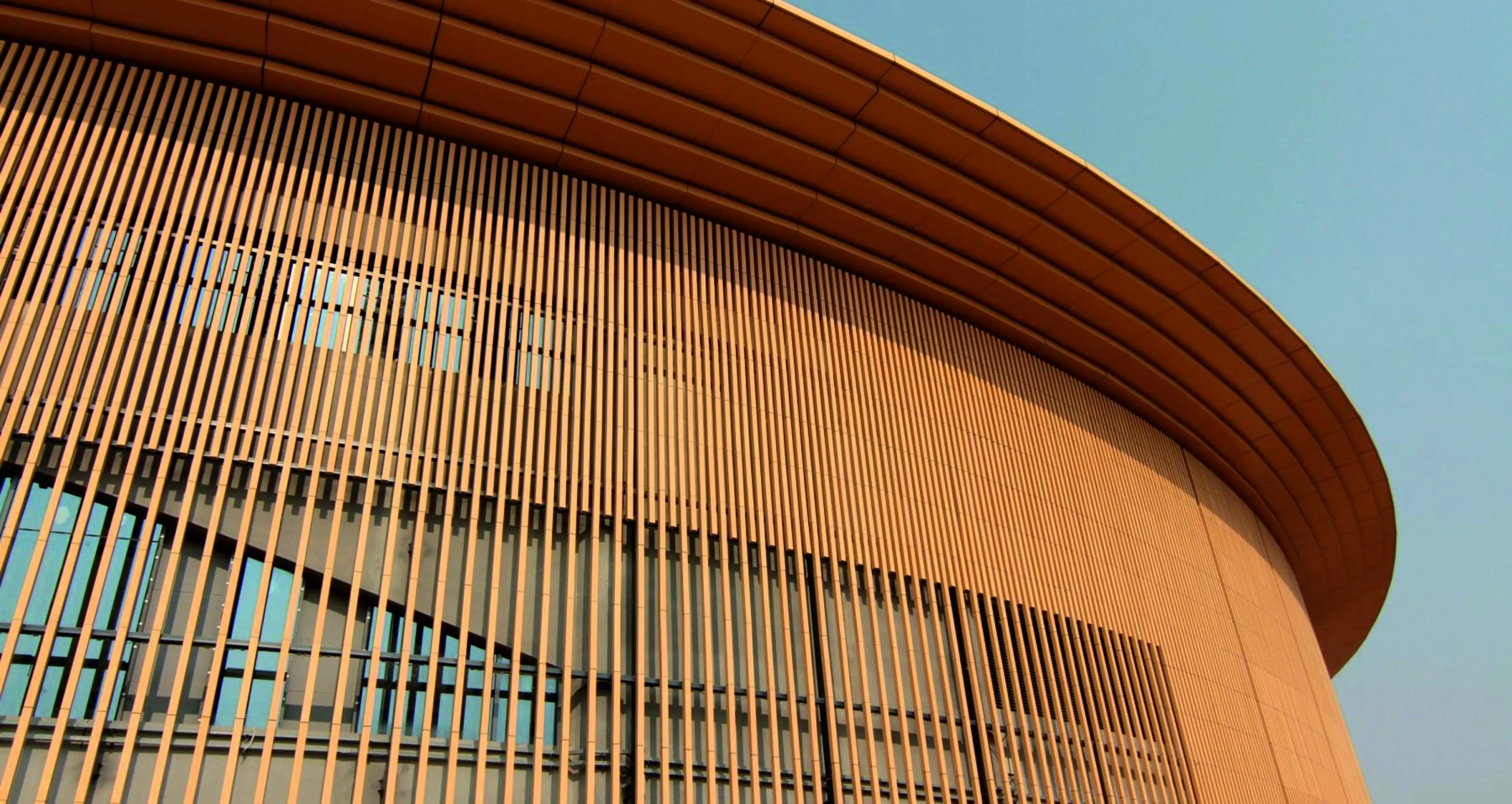
| Wood-finish aluminium | Timber look, no timber maintenance | Warm aesthetic without weathering/upkeep |
| Anodised | Durable metallic finish | Contemporary metallic facades |
Wood-finish aluminium deserves a note: it gives the warmth of timber fins without natural wood's weathering, movement and maintenance — a common choice where architects want the look but not the upkeep. KBG Group manufactures extruded aluminium facade fins and sun louvers with engineered bracket systems and PVDF, powder, anodised and wood-finish options. See the companion piece on facade louver and fin orientation, spacing and depth.
Frequently Asked Questions
How are long facade fins engineered against wind?
The fin section, wall thickness and bracket spacing are sized for the design wind load (IS 875 and the project wind study) for the building height and exposure, so the fin does not over-deflect and the fixings are not overstressed.
Why do facade fins vibrate and how is it prevented?
Wind sheds vortices off a slender fin; if that frequency nears the fin's natural frequency it resonates and fatigues its fixings. It is prevented by increasing stiffness (deeper/thicker section), tightening bracket spacing to shorten the span, and using rigid, damped fixings.
What is the difference between PVDF and powder-coat finishes?
PVDF (fluoropolymer) has superior UV and weather durability for exposed and coastal facades; powder coat (polyester) is a good, more economical finish with a wide colour range, better suited to sheltered elevations.
Is wood-finish aluminium better than natural wood for fins?
For exterior fins, usually yes — wood-finish aluminium gives the timber look without natural wood's weathering, movement and ongoing maintenance, while keeping aluminium's durability and dimensional stability.
Engineering long facade fins for a tower?
Our engineers review specifications and share test data at no cost. Typical response within one business day.