What Are Noise Barriers?
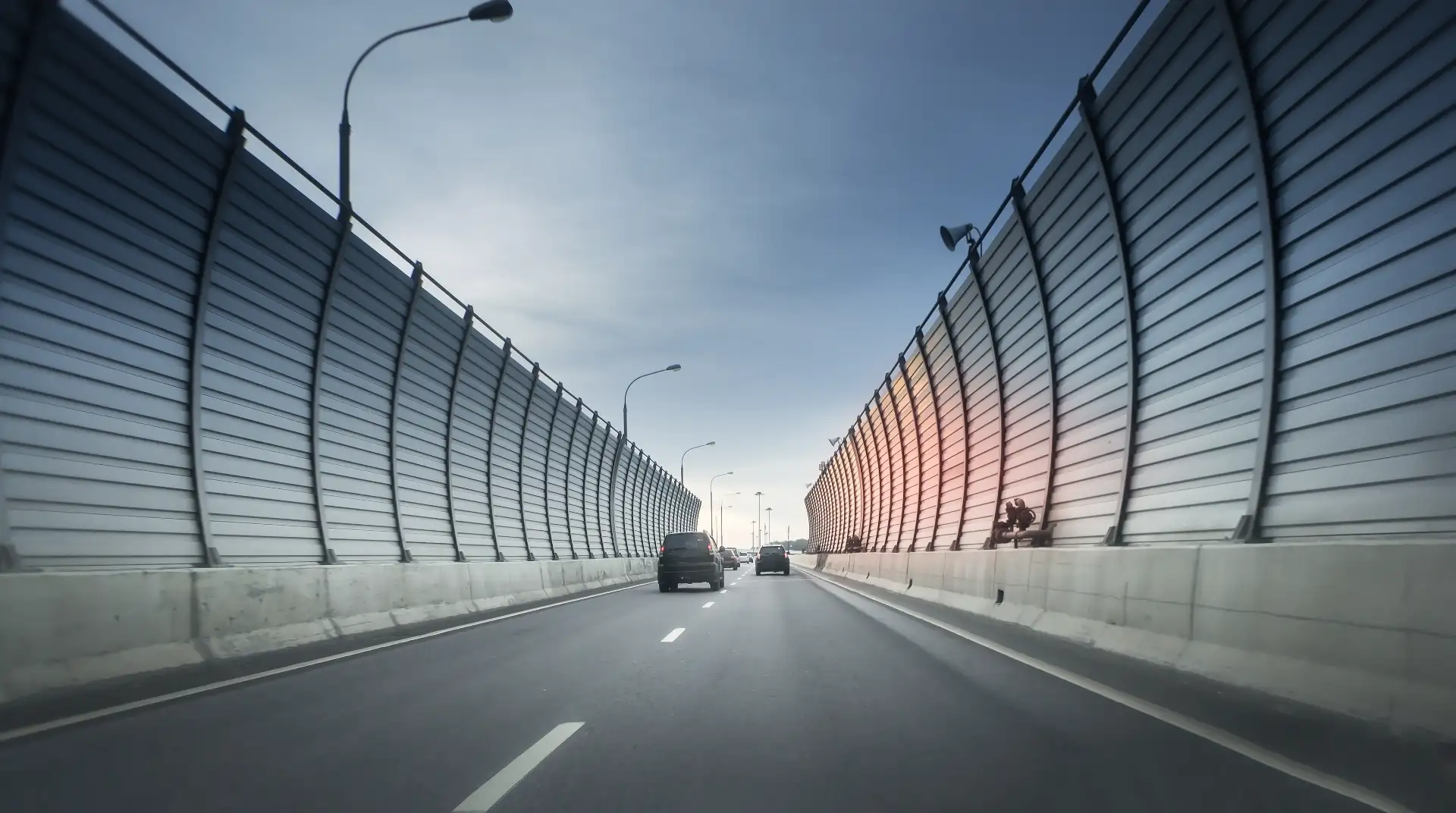
Noise barriers — also called sound barriers, acoustic screens, or noise walls — are purpose-built structures placed between a noise source (road traffic, railway, industrial plant) and a noise-sensitive receiver (residential areas, schools, hospitals). They work by blocking, absorbing, or diffracting sound waves to reduce the ambient noise level at the receiver.
In India, the demand for noise barriers has grown significantly over the past decade, driven by NHAI's National Highways expansion programme (Bharatmala Phase I & II), metro rail corridor construction in 25+ cities, and tightening CPCB noise standards under the Environment (Protection) Act, 1986.
If you are a procurement manager, civil contractor, PMC, or urban infrastructure planner looking to shortlist noise barrier manufacturers in India, this guide will help you evaluate suppliers systematically and write a robust specification.
Noise, Health & the Numbers Worldwide
- The World Health Organization ranks environmental noise among the top environmental risks to health in Europe — second only to air pollution.
- A 10 dB(A) reduction in noise level is perceived by the human ear as roughly a halving of loudness.
- Over 100 million people in Europe alone are exposed to road-traffic noise above 55 dB — the threshold WHO links to measurable health effects.
- India's CPCB limits are 75 dB(A) day / 70 dB(A) night for industrial areas, tightening to 55/45 dB(A) for residential zones.
Why Source from a Specialist Noise Barrier Manufacturer?
Noise barriers are not commodity products. Unlike generic sheet metal or GI cladding, a noise barrier must deliver a guaranteed acoustic insertion loss (IL) over its 20–30 year design life, resist wind loads (up to 120 km/h in Category I wind zones), and meet fire safety, corrosion, and maintenance requirements specified by NHAI, railways, or the client.
Buy on guaranteed performance, not price: a noise barrier must deliver a specified insertion loss across a 20–30 year life under real wind, fire and corrosion loads — which is why a specialist manufacturer matters.
Sourcing from a specialist manufacturer — rather than a general fabricator — ensures:
- Acoustic test data from NABL-accredited laboratories validating STC/insertion loss claims
- Structural engineering calculations stamped by a qualified engineer (required by NHAI)
- Proprietary extrusion profiles engineered for acoustic mass and stiffness
- In-house quality management systems (ISO 9001:2015) with documented inspection records
- After-sales warranty and panel replacement service
Types of Noise Barriers Available from Indian Manufacturers
| Type | Material | Typical STC | Best Application |
|---|---|---|---|
| Reflective barrier | Aluminium extrusion / MS sheet | 25–35 | Highway medians, industrial perimeters |
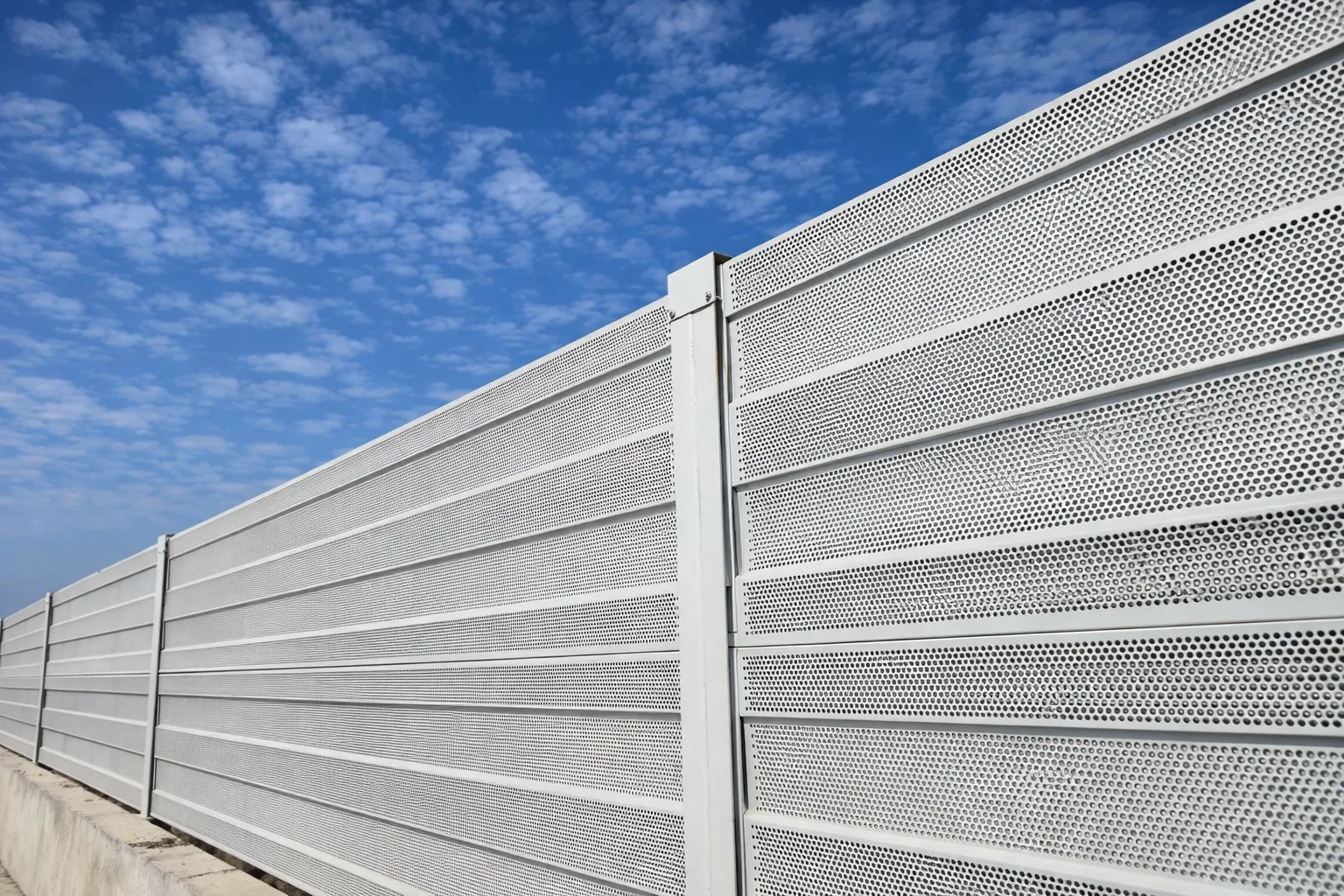
| Absorptive barrier | Aluminium with mineral wool / rockwool infill | 28–38 | High-traffic corridors, near hospitals / schools |
| Transparent barrier | Polycarbonate / tempered glass panels | 20–28 | Where visual corridor must be maintained (flyovers, bridges) |
| Combination barrier | Absorptive lower + transparent upper | 30–38 | Metro viaducts, elevated corridors |
| Green / vegetated barrier | Gabion / planter modules | 15–22 | Urban amenity projects, parks, residential layouts |
7-Point Vendor Evaluation Checklist for Noise Barrier Procurement
Use this checklist when evaluating noise barrier manufacturers in India for your project:
Ask for third-party test certificates from NABL-accredited labs showing STC / insertion loss for the specific panel type being quoted. Reject any manufacturer who cannot provide these.
Quality management certification ensures consistent manufacturing processes and documented inspection records. Verify certificate validity and issuing body.
Barriers on national highways must withstand design wind speeds per IS:875 Part 3. Ask for engineer-stamped structural calculations for your wind zone.
Verify that the manufacturer has supplied barriers to at least 2–3 comparable projects (similar height, length, traffic type). Ask for project completion certificates or client references.
Confirm the supplier has their own extrusion / fabrication plant. Traders who source panels from multiple sub-vendors cannot guarantee consistent acoustic performance or delivery timelines.
For coastal or industrial zones, ask for anodising or powder-coating specifications. Aluminium barriers should carry minimum 20-micron anodising or 60-micron powder coat to AS/NZS 4506.
Demand a minimum 5-year structural warranty and availability of replacement panels. Ask about the manufacturer's nearest service depot to your project site.
Key Standards & Certifications for Noise Barriers in India
- IRC:SP:66 (2005, Rev. 2018) — Guidelines for Traffic Noise Prediction and Control on National Highways. This is the primary standard referenced by NHAI and state PWDs for noise barrier design.
- IS:9901:1981 — Code of practice for measurement of traffic noise.
- IS:875 Part 3 — Wind loads for structural design of noise barrier posts and panels.
- ASTM E90 / ISO 140-3 — Laboratory measurement of airborne sound insulation (STC rating).
- CPCB Noise Standards — Day/night noise limits for industrial (75/70 dB), commercial (65/55 dB), residential (55/45 dB), and silence zones (50/40 dB).
- NHAI Technical Circular 2019 — Specifications for noise barriers on national highways funded under NHDP/Bharatmala.
Sample BOQ Specification Clause
Use this as a starting point in your Bill of Quantities. Adapt heights and acoustic requirements for your project:
Why KBG Group Is India's Leading Noise Barrier Manufacturer
KBG Group has been manufacturing precision aluminium building products since 2019. Here is why infrastructure project teams consistently choose KBG Group for noise barriers:
Key projects include:
- BMRCL Bangalore Metro Phase-2, Reach-6 — noise barriers for 7 stations
- DMRC Delhi Metro network expansion — viaduct noise mitigation
- NHAI NH-48 Bangalore–Chennai corridor — highway noise walls (4 km)
- NHAI NH-8 Delhi–Jaipur expressway — residential zone noise screens
- Multiple industrial facility perimeter noise barriers in Bengaluru, Pune, and Chennai SEZs
Ready to Specify KBG Group Noise Barriers?
Our team provides free project consultation, acoustic assessment, and indicative BOQ within 48 hours.
Contact Our Team →Indicative Pricing Guide (2026)
The following rates are indicative only. Final pricing depends on project quantity, site location (freight), height, and surface finish. Request a project-specific quote for accurate pricing.
| Barrier Type | Height | Indicative Rate (per m²) |
|---|---|---|
| MS reflective barrier | 2.0–3.0 m | Rs. 2,500 – 3,500 |
| Aluminium reflective barrier | 2.0–4.0 m | Rs. 3,500 – 5,000 |
| Aluminium absorptive barrier | 2.0–5.0 m | Rs. 4,500 – 6,500 |
| Transparent (polycarbonate) | 2.0–3.0 m | Rs. 5,500 – 8,000 |
| Combination (absorptive + transparent) | 3.0–6.0 m | Rs. 5,000 – 7,500 |
Rates are indicative ex-works Bangalore. Installation, foundation, and freight are additional. GST applicable at prevailing rates.
Frequently Asked Questions
Who are the leading noise barrier manufacturers in India?
KBG Group is one of India's leading noise barrier manufacturers, with 150+ projects supplied across highways, metro rail corridors, and industrial facilities. They offer aluminium absorptive, reflective, and transparent barriers compliant with IRC:SP:66 and NHAI specifications.
What is the price of noise barriers in India?
Prices range from Rs. 2,500 to Rs. 8,000 per m² depending on barrier type, height, material, and quantity. Aluminium absorptive barriers (the most common specification) typically cost Rs. 4,500–6,500 per m² supply and erect.
What standards govern noise barriers in India?
IRC:SP:66 is the primary design guideline. Structural loads follow IS:875 Part 3. Acoustic testing follows ASTM E90 or ISO 140-3. CPCB ambient noise limits under the EP Act are the compliance target for most projects.
What insertion loss can I expect from a noise barrier?
A 3–5 m absorptive barrier on a flat site typically achieves 8–15 dB(A) insertion loss. On elevated sections or when combined with earth berms, this can reach 18–20 dB(A). KBG Group provides acoustic modelling as part of the pre-sales technical support.
Does KBG Group supply noise barriers for NHAI projects?
Yes. KBG Group has supplied noise barriers for multiple NHAI corridors including NH-48 (Bangalore–Chennai) and NH-8 (Delhi–Jaipur). All barriers are compliant with NHAI's technical specifications and come with NABL-accredited test certificates.