Why Sand Trap Louvers Exist
In Rajasthan, Gujarat, and Middle-East-style arid corridors, the air an HVAC system pulls in is loaded with fine sand and dust. A standard louver lets it straight through — clogging filters within weeks, abrading fans, and fouling sensitive equipment. Sand trap louvers are engineered to drop that sand out before it enters the building.
How a Sand Trap Louver Works
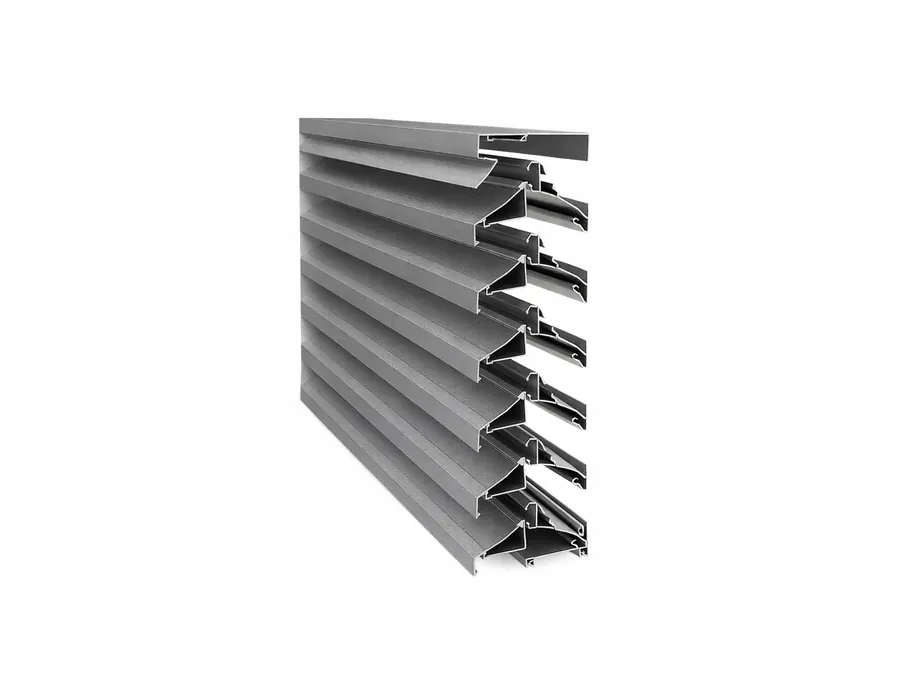
A sand trap louver is a two-stage inertial separator. Incoming air is slowed and forced through staged blades; the heavier sand particles cannot follow the air's change of direction, so they lose momentum, drop out, and collect in a sump to be drained or cleared. Clean air continues to the plant. The key to performance is a low face velocity — typically around 2–2.5 m/s — which is why sand trap louvers are physically deeper and larger than ordinary weather louvers for the same airflow.
Where Sand Trap Louvers Earn Their Keep
Specify them wherever airborne dust threatens equipment or filter economics:
- Data centres in arid regions — protecting CRAC/CRAH intakes and reducing filter changes
- Power plants and substations in desert corridors
- Industrial plant rooms with fresh-air intakes in dusty environments
- Telecom and process shelters where maintenance access is limited
Sizing and Free Area
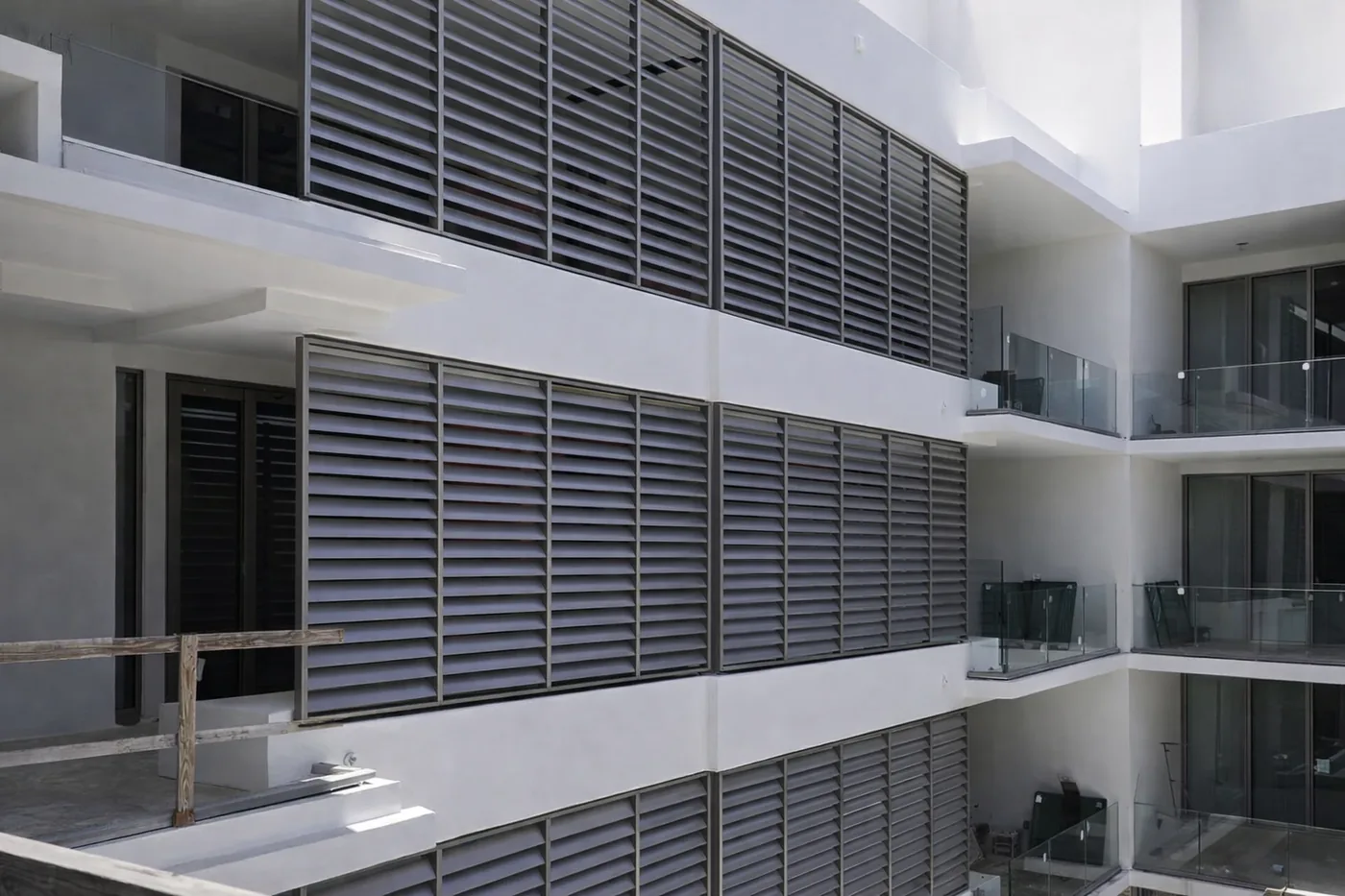
Because sand separation depends on low velocity, sizing is driven by airflow ÷ target face velocity, not just the opening dimension. Under-size the louver and velocity rises, separation efficiency falls, and sand carries through. The trade-off is footprint: a sand trap louver bank is larger than an equivalent standard louver, which must be allowed for in the facade.
Writing the Specification
A sand trap louver clause should state the design airflow and maximum face velocity, the two-stage separation requirement, the collection/drainage arrangement, aluminium alloy and finish for the environment (anodising for coastal-desert), and a bird/insect mesh if required. Reference the downstream filter grade so the louver and filtration are designed as a system.
KBG Group Sand Trap Louvers
KBG Group manufactures two-stage sand trap louvers in extruded aluminium, sized to your airflow and environment, with finishes for aggressive desert and coastal-desert exposure. Share your airflow and opening sizes for a sized quotation.
Frequently Asked Questions
How does a sand trap louver work?
It is a two-stage inertial separator: incoming air is slowed and forced through staged blades, so heavier sand particles lose momentum, drop out, and collect in a sump, while clean air passes through. Low face velocity (around 2–2.5 m/s) is essential to performance.
Where are sand trap louvers used?
In arid and desert environments — data centres, power plants, substations, industrial plant rooms and telecom shelters in regions like Rajasthan, Gujarat and the Middle East — to protect HVAC filters and equipment from airborne sand and dust.
What face velocity should a sand trap louver be designed for?
Typically a maximum of about 2–2.5 m/s. Because separation depends on low velocity, sand trap louvers are larger and deeper than standard weather louvers for the same airflow.
Do sand trap louvers replace air filters?
No — they are the first stage. Sand trap louvers remove coarse airborne sand so downstream HVAC filters last far longer and equipment is protected. Louver and filtration should be designed together as a system.
What finish is best for desert sites?
Anodised aluminium is preferred for abrasive, high-exposure desert and coastal-desert environments for its hard, corrosion-resistant surface; PVDF powder coat is an alternative where colour matching is needed.