Three strategies for the same problem
When equipment breaches a boundary noise limit, there are three physical routes to fix it, and picking the wrong one wastes money or cooling air. They differ in how completely they wrap the source and how much noise reduction they can deliver.
- Acoustic cladding (lagging) — absorptive and barrier layers applied directly onto the equipment casing, ducts or pipes to cut noise breaking out of the surface. Least intrusive, modest reduction.
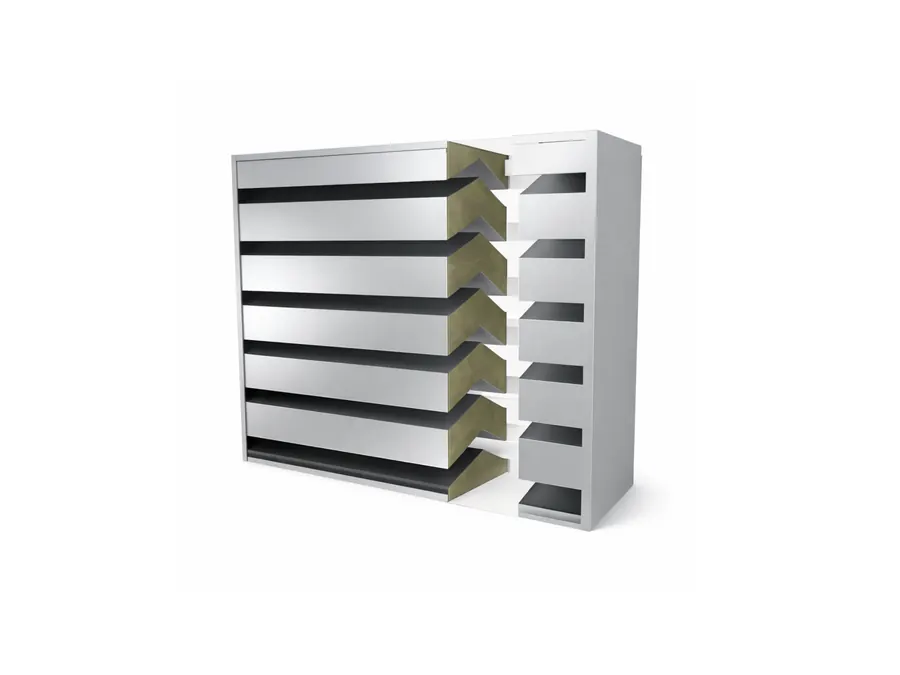
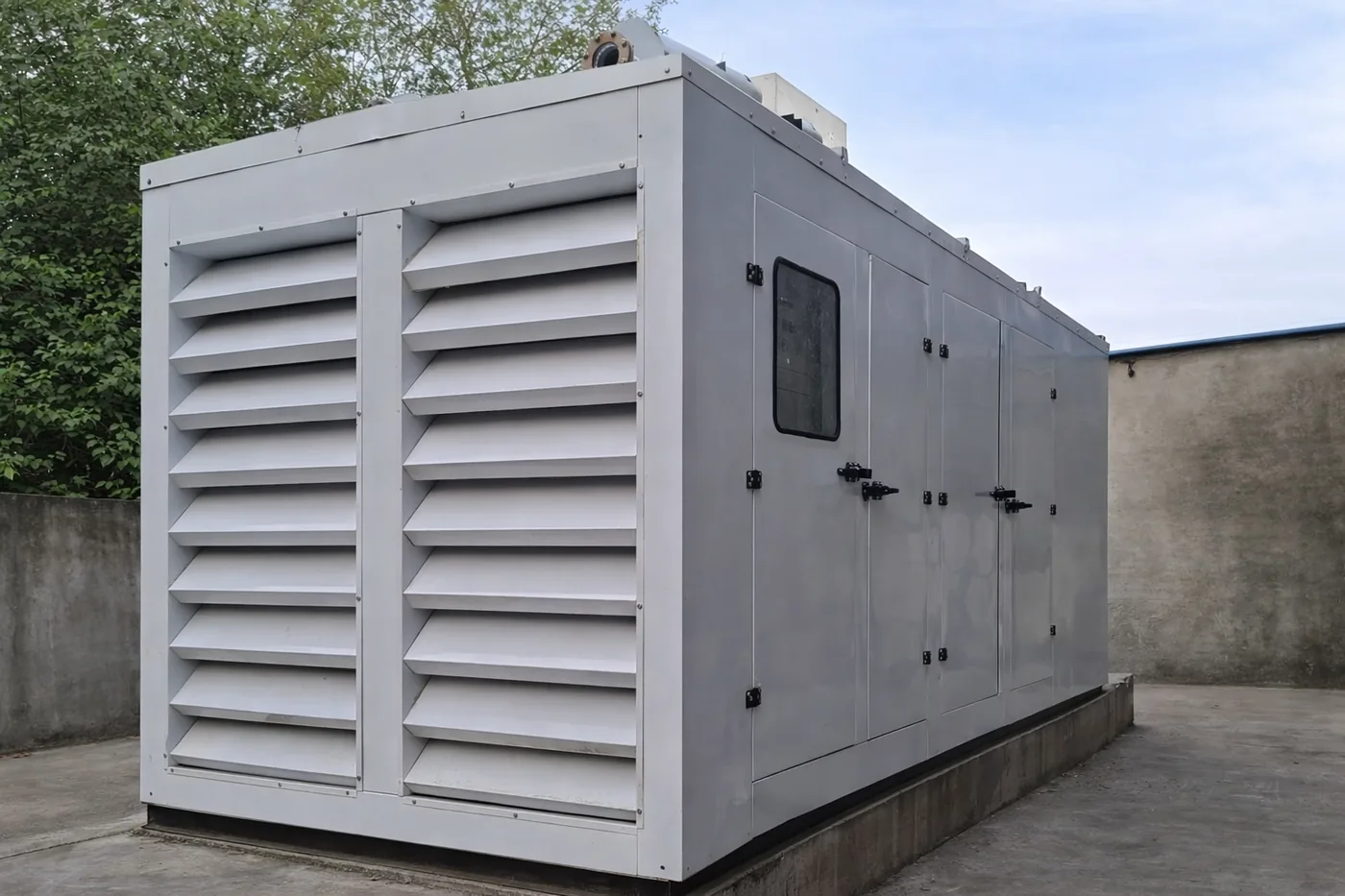
- Acoustic enclosure — a close-fitting or walk-in box of acoustic panels around the equipment, with ventilation openings fitted with acoustic louvers and splitter silencers. Highest reduction, but must manage heat and airflow.
- Noise barrier — a free-standing screen between the source and the receiver. Does not enclose the source; reduces noise in one direction by breaking line of sight.
Equipment Noise & Limits
- In India, DG-set noise is regulated under the CPCB / Environment (Protection) rules, driving the need for engineered enclosures and cladding on generators.
- A full acoustic enclosure can achieve much higher insertion loss than surface cladding or a barrier, but only if its ventilation path is silenced too.
- A barrier only helps the receivers whose line of sight to the source it blocks — it does nothing for noise radiated over or around it.
How the three compare
| Strategy | Typical reduction | Ventilation impact | Best for |
|---|---|---|---|
| Acoustic cladding | Low–moderate | Minimal | Ducts, casings, pipes, breakout surfaces |
| Acoustic enclosure | High | Must be engineered (louvers + silencers) | DG sets, pumps, compressors needing tight limits |
| Noise barrier | Moderate, directional | None | Screening a yard/road from specific receivers |
An enclosure that seals the equipment but chokes its cooling air is not a solution — it is a breakdown waiting to happen. Ventilation and acoustics are designed together.
The decisive question is how much reduction the boundary limit demands. A few decibels over the limit at one direction may only need a barrier or cladding; a large exceedance around a DG set needs a full enclosure — with acoustic louvers and splitter silencers on its air path so the ventilation opening does not become the new noise leak.
Matching the strategy to the equipment
DG sets radiate high noise across a wide spectrum and reject a lot of heat, so they usually need an acoustic enclosure with silenced ventilation to meet CPCB limits. Chillers and cooling towers depend on large cooling airflow, so the treatment must not restrict it — often a barrier or an open, attenuated screen rather than a sealed box. Industrial casings, ducts and pipework that radiate breakout noise are best handled by cladding applied to the radiating surface.
KBG Group engineers acoustic enclosures, cladding and barriers as a system — panels, acoustic louvers and splitter silencers matched to the source spectrum and the ventilation load. See the guides to DG-set acoustic enclosures, acoustic louver selection and chiller acoustic barriers.
Frequently Asked Questions
What is the difference between acoustic cladding and an acoustic enclosure?
Acoustic cladding (lagging) is applied directly onto an equipment surface, duct or pipe to reduce breakout noise, giving a modest reduction. An acoustic enclosure is a full box of acoustic panels around the equipment, with silenced ventilation, and can achieve much higher noise reduction.
When should a noise barrier be used instead of an enclosure?
A barrier suits cases where you need to screen specific receivers from a source (a yard or road) and the required reduction is moderate, or where the equipment needs unrestricted airflow (like cooling towers). It does not enclose the source, so it cannot match an enclosure's reduction.
How is DG-set noise best controlled?
DG sets usually need a full acoustic enclosure with acoustic louvers and splitter silencers on the ventilation path, because they radiate high broadband noise and reject significant heat that the enclosure must still ventilate to meet CPCB limits.
Can an acoustic enclosure restrict equipment cooling?
It can if the ventilation is not engineered. A proper enclosure sizes silenced air paths (acoustic louvers and splitter silencers) to pass the equipment's full cooling airflow while still attenuating noise — acoustics and ventilation are designed together.
Deciding how to control DG or chiller noise?
Our engineers review specifications and share test data at no cost. Typical response within one business day.