The diffuser is where the system meets the occupant
A chiller can be perfectly sized and an air handler perfectly commissioned, and the occupant will still complain if the air terminal device at the end of the duct is wrong. The diffuser, grille or nozzle is the last component in the chain and the only one people actually feel — it decides whether conditioned air mixes evenly into the room or dumps as a cold draught, whether the far corner is reached or left stagnant, and whether the outlet is silent or whistles. Selecting it on airflow alone is the most common cause of "the AC works but the room is uncomfortable."
Air terminal devices fall into a few families, each shaped for a different mixing job:
- Grilles & registers — bladed supply/return faces, often with deflection blades and an opposed-blade damper for balancing.
- Ceiling diffusers — square, round or plaque types that spread and induce room air for even mixing across a ceiling.
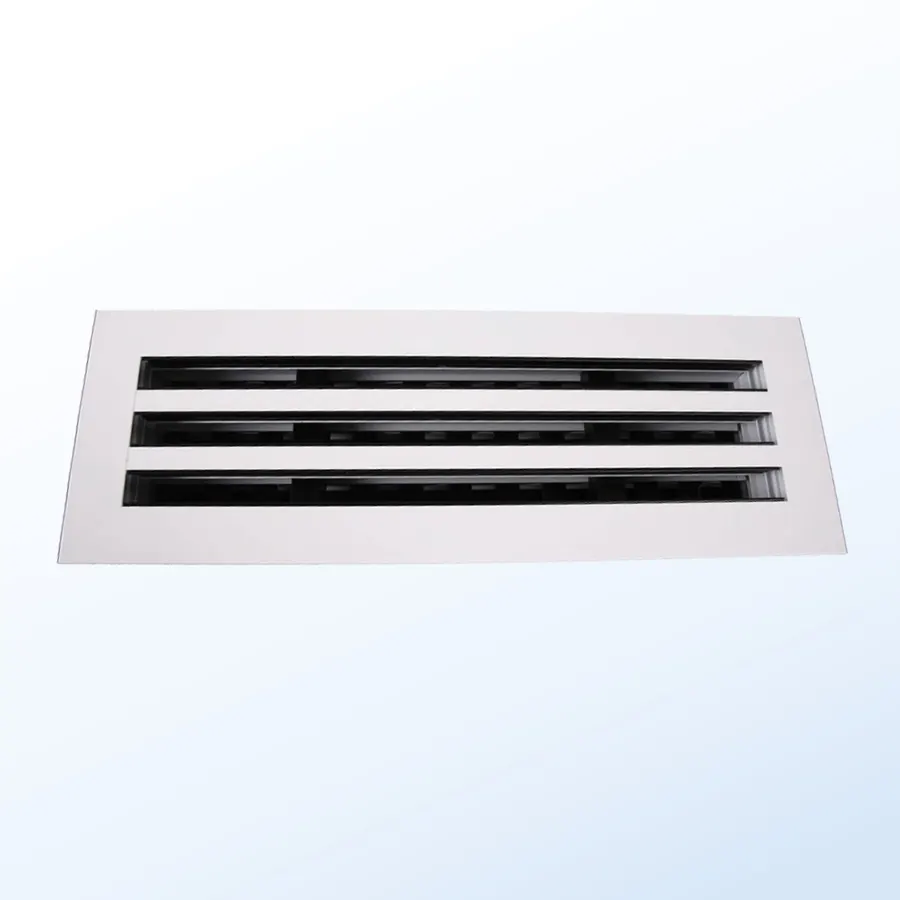
- Linear slot diffusers — architectural slots for continuous runs, with adjustable pattern controllers.
- Swirl diffusers — high-induction outlets that mix supply and room air quickly, suited to higher ceilings and larger temperature differentials.
- Jet nozzles — long-throw outlets that project air across large volumes such as airports, atriums and auditoriums.
Air, Comfort & Energy
- People in many economies spend the large majority of their time indoors, so indoor air movement and comfort directly affect wellbeing and productivity (WHO / indoor-environment research).
- Space conditioning is one of the largest end-uses of energy in buildings worldwide (International Energy Agency), so efficient air distribution has an energy payoff as well as a comfort one.
- Air-terminal performance — throw, drop, sound and diffusion — is measured by standardised methods such as ISO 5219 and ASHRAE Standard 70, so published data can be compared like-for-like.
The five numbers that drive selection
A defensible air-outlet selection is made against five published performance figures, not one. Size for airflow only and you may hit the volume but miss on comfort or acoustics.
- Airflow rate — the volume the outlet must deliver, the starting point but never the whole answer.
- Throw (T0.25 / T0.5 / T0.75) — the distance the airstream travels before slowing to a terminal velocity; it must suit the room so air mixes before reaching people.
- Drop — how far a cool supply jet falls before reaching the occupied zone; too much drop means cold air on heads.
- ADPI — the Air Diffusion Performance Index, the share of the occupied zone that feels comfortable and draught-free.
- NC / RC level — the sound the outlet generates at its design airflow, which must stay within the space's noise target.
| Device | Throw character | Best-fit space | Notes |
|---|---|---|---|
| Square / round diffuser | Radial, ceiling-attached | Offices, general commercial | Even mixing via Coandă (ceiling) effect |
| Linear slot diffuser | Directional, adjustable | Perimeters, architectural runs | Pattern controllers set throw direction |
| Swirl diffuser | High-induction, short throw | Higher ceilings, larger ΔT | Rapid temperature equalisation |
| Jet nozzle | Long, concentrated throw | Airports, atriums, halls | Often adjustable to follow heating/cooling |
| Supply grille | Set by deflection blades | Sidewall, ducted systems | Double-deflection for two-plane control |
An outlet sized for airflow but not for throw, drop and NC will move the right volume of air and still generate comfort and noise complaints — the volume was never the hard part.
Matching the device to the space
Selection is ultimately about geometry and duty. A low-ceilinged office wants even ceiling mixing from square or slot diffusers with a throw tuned to the room so the airstream stays attached to the ceiling and decays before it reaches people. A tall space — an airport concourse, an atrium, an auditorium — cannot be served that way, because a ceiling outlet is too far from the occupied zone; there, jet nozzles project a controlled airstream down to where people are, sometimes with adjustable nozzles that re-aim between heating and cooling seasons. Spaces with a big supply-to-room temperature difference favour high-induction swirl diffusers that blend the two quickly.
| Specification item | What to confirm |
|---|---|
| Airflow & free area | Design airflow per outlet and effective free area of the selected face. |
| Throw & drop | Throw suited to room dimension; drop kept out of the occupied zone. |
| Acoustics | Outlet NC/RC within the space's noise target at design airflow. |
| Balancing | Opposed-blade damper or equivalent for on-site flow setting. |
| Material & finish | Aluminium/steel and finish suited to the environment (e.g. stainless for hygiene areas). |
| Test data | Published performance to a recognised method (ISO 5219 / ASHRAE 70). |
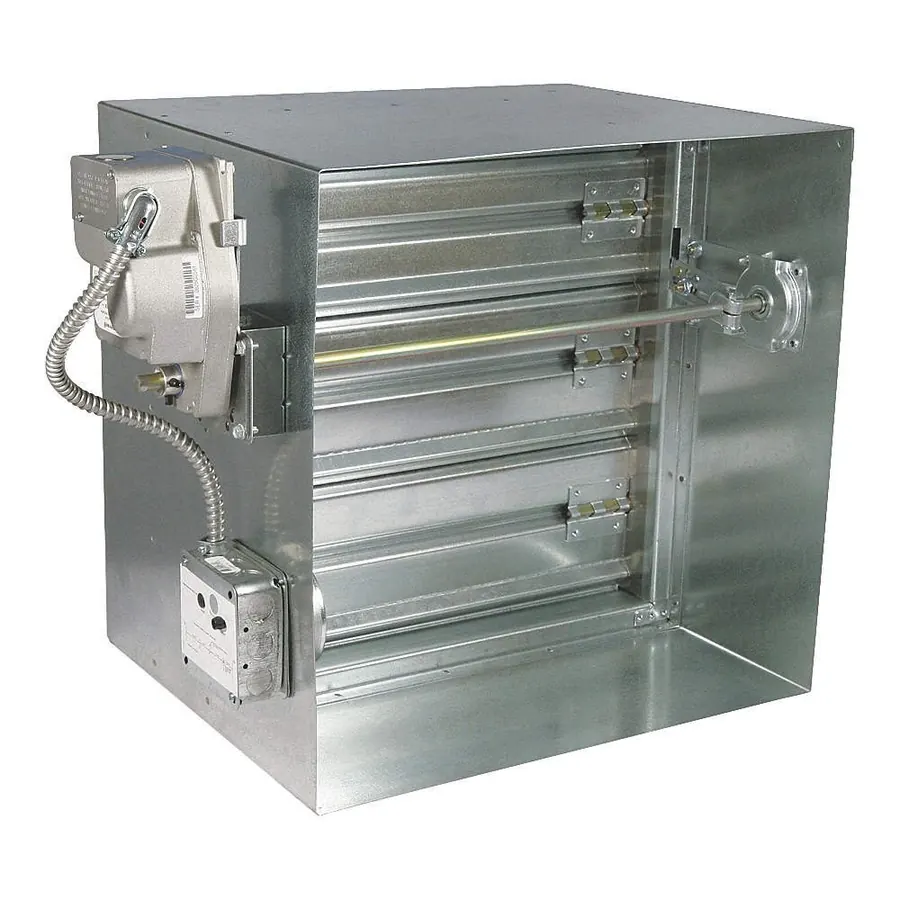
KBG Group manufactures the full range of air distribution products — square, round, plaque and swirl diffusers, linear slot diffusers, single- and double-deflection grilles, return and egg-crate grilles, and long-throw jet nozzles — with balancing dampers and finishes to suit the space. Where the same system carries life-safety duty, our fire, smoke and volume control dampers integrate into the same ductwork, and the guide to fire & smoke damper specification covers that side of the design.
Frequently Asked Questions
What is "throw" in air distribution?
Throw is the distance from an outlet to where the airstream slows to a defined terminal velocity — commonly 0.25, 0.5 or 0.75 m/s (T0.25, T0.5, T0.75). It tells you how far a diffuser or grille projects air, which decides whether the air mixes before reaching the occupied zone or dumps on people.
What is the difference between a diffuser, a grille and a jet nozzle?
A grille is a bladed supply/return face, often with deflection blades and a damper. A diffuser (square, round, swirl or slot) spreads and induces room air for even ceiling-level mixing. A jet nozzle throws a concentrated airstream a long distance, for large high-volume spaces like airports and atriums.
What NC level should air outlets be selected for?
Outlets should be selected so their sound stays within the space's Noise Criterion (NC) or Room Criterion target — offices, hospitals and studios need lower targets than industrial areas. Manufacturers publish NC against airflow and pressure drop, so an outlet is sized for both airflow and acoustics.
What is ADPI?
ADPI, the Air Diffusion Performance Index, is the percentage of points in the occupied zone within a comfortable range of temperature and velocity. A higher ADPI means more of the space feels comfortable and draught-free, and it is used to judge how well a diffuser layout mixes supply and room air.
Selecting air outlets for a commercial or infrastructure HVAC project?
Our engineers review layouts and share performance data at no cost. Typical response within one business day.