Sizing actuator torque correctly
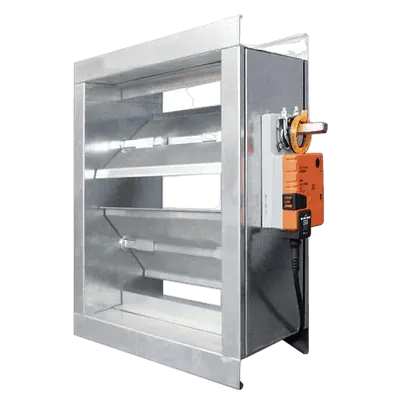
An actuator is sized from the torque the damper needs to operate, not from the damper's size alone. Operating torque rises with the damper area, the working pressure and velocity, and the seal friction of low-leakage blades — so a tight, high-pressure damper needs far more torque than a loose balancing one of the same size. The rule is simple and often ignored: pick the actuator so its rated torque exceeds the damper's operating torque across the full stroke, with margin.
- Damper area — more blade area, more torque.
- Pressure & velocity — higher differential and airflow raise the torque to open/close and seal.
- Seals — blade edge and jamb seals add friction; low-leakage dampers need more torque.
- Margin & fail-safe — spring-return (fail-safe) actuators must overcome the spring too.
Actuation & Reliability
- An under-torqued actuator is the most common cause of a damper that will not fully stroke or seal on site.
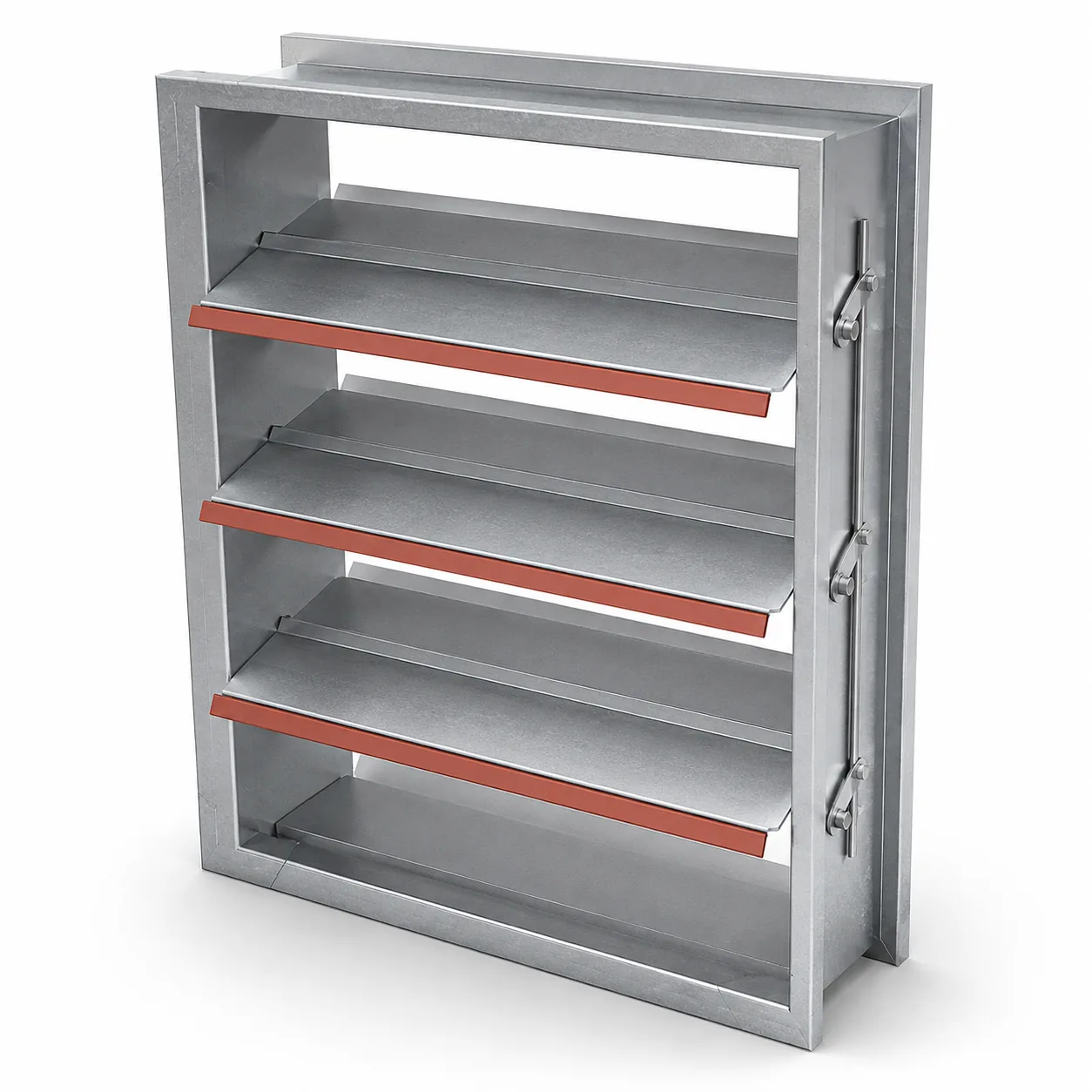
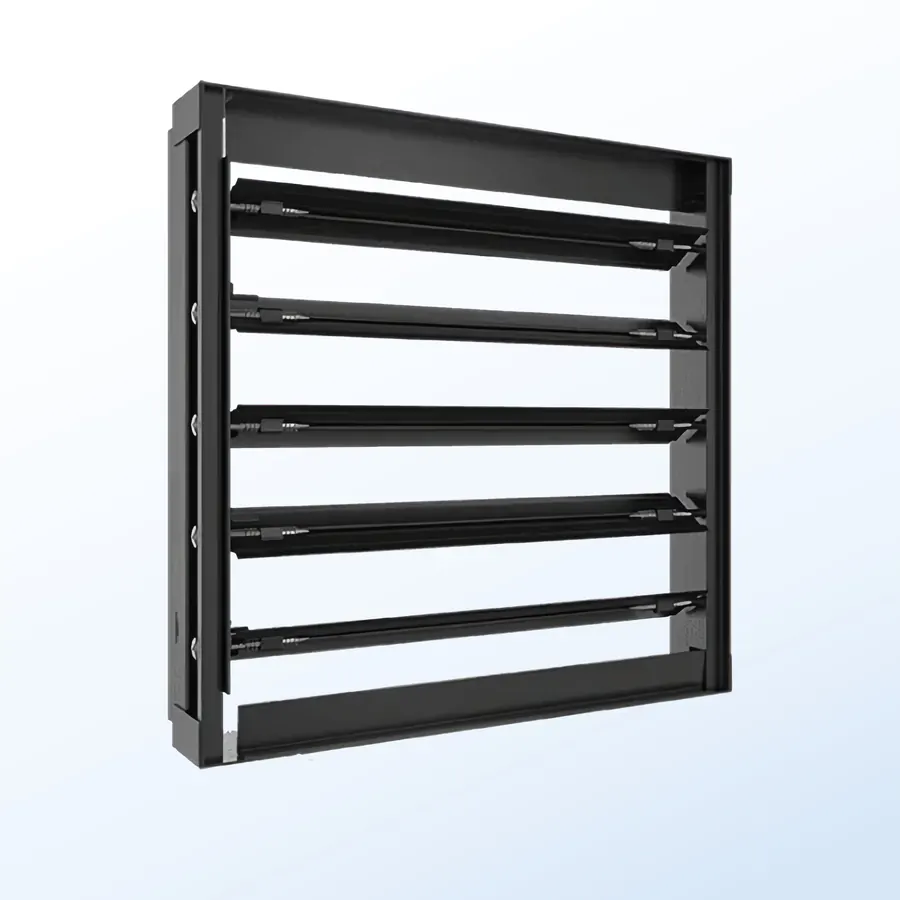
- Large dampers are divided into sections with intermediate supports because a single oversized blade bank distorts and binds.
- Damper aerodynamic and leakage data (AMCA 500-D) let the operating torque and actuator be matched to the real duty.
Large dampers: sections, supports and linkage
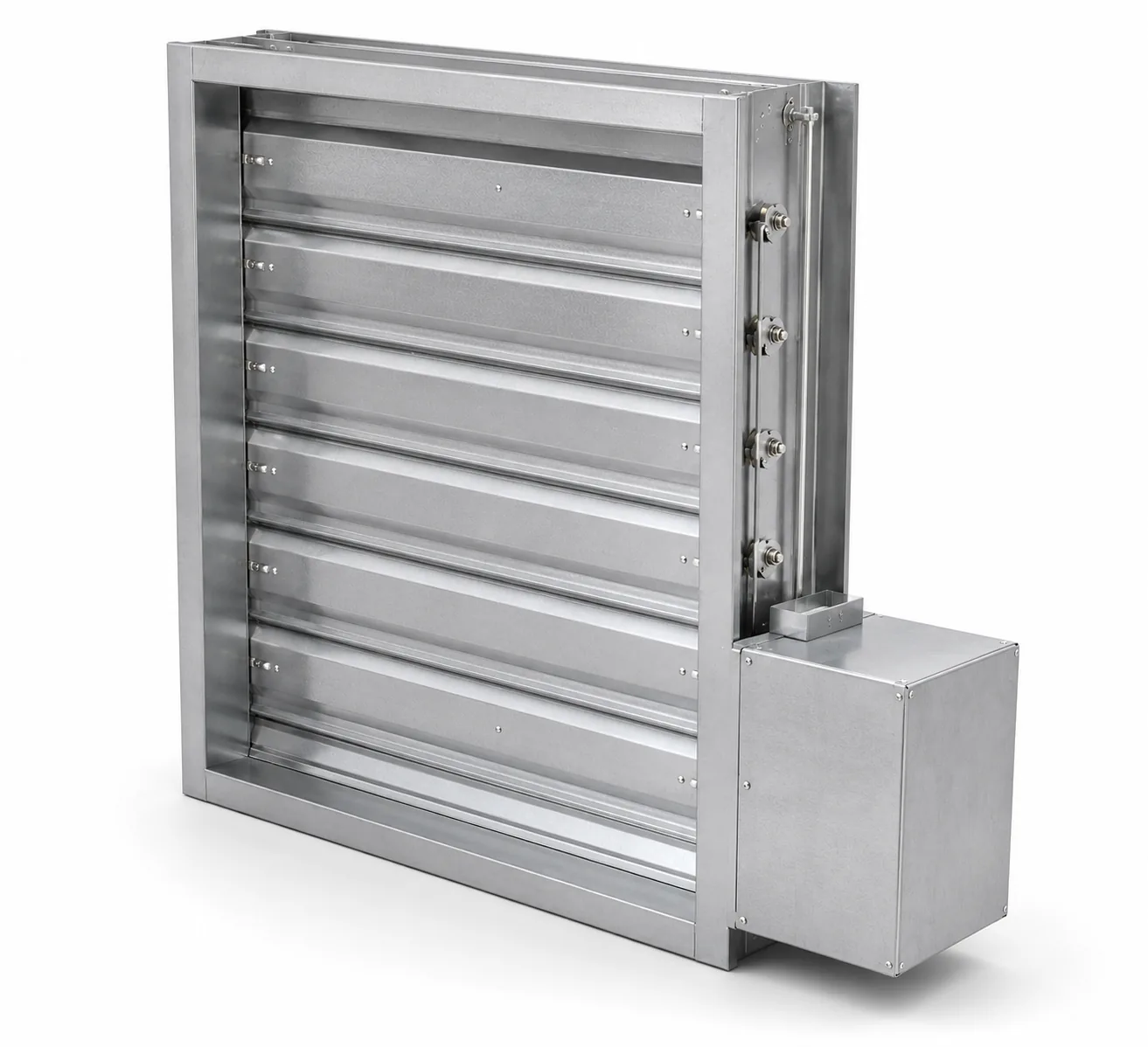
There is a limit to how large a single damper bank can be before it distorts under pressure and binds. Beyond it, a large opening is built as multiple damper sections with intermediate mullions/supports carrying the load, linked so they stroke together, and driven by multiple actuators sized for each section. Get the sectioning wrong and the assembly racks out of square, the blades bind, and no amount of actuator torque gives a clean seal.
A damper that is too big for one section will bind before it seals. Sectioning, supports and multiple actuators are not extras — they are what makes a large damper actually close.
Why motorised dampers fail at commissioning
Most damper problems are discovered on site, not on the datasheet. The recurring causes are worth designing out in advance:
| Failure at commissioning | Root cause |
|---|---|
| Damper will not fully stroke | Under-sized actuator torque |
| Blades bind / rack | Out-of-square installation, missing intermediate supports |
| Excess leakage when closed | Damaged/absent edge & jamb seals, distorted frame |
| Sections move unevenly | Linkage slip between sections, mismatched actuators |
| Actuator overheats/stalls | No margin over operating torque at working pressure |
Reviewing a performance-damper submittal against these — actuator torque with margin, sectioning and supports, seal detail, and AMCA-referenced leakage/torque data — catches the failures before they reach site. KBG Group supplies control and performance dampers with correctly sized, fail-safe actuation and multi-section assemblies, backed by the test data a review needs; see the high-performance damper and volume control damper guides.
Frequently Asked Questions
How do I select damper actuator torque?
From the damper's operating torque — which rises with area, working pressure and velocity, and seal friction — chosen so the actuator's rated torque exceeds it across the full stroke with margin. Spring-return (fail-safe) actuators must also overcome the return spring.
Why do large dampers need multiple sections and actuators?
A single oversized blade bank distorts and binds under pressure. Large openings are built as multiple sections with intermediate supports, linked to stroke together and driven by multiple actuators sized per section, so the assembly closes and seals cleanly.
Why do motorised dampers fail during commissioning?
Common causes are an under-sized actuator (won't fully stroke), out-of-square installation or missing supports (blades bind), damaged or absent seals (excess leakage), linkage slip between sections, and no torque margin at working pressure (actuator stalls).
What should a consultant check on a performance-damper submittal?
Actuator torque with margin over the operating torque at working pressure, damper sectioning and intermediate supports, blade/jamb seal detail, fail-safe behaviour, and AMCA 500-D-referenced leakage and pressure data for the model offered.
Reviewing a performance-damper submittal?
Our engineers review specifications and share test data at no cost. Typical response within one business day.