Why a tunnel damper is a different class of product
A tunnel ventilation damper sits in a system whose "duct" is a running tunnel, so it faces conditions no building damper sees. In a metro tunnel, trains drive a piston effect — large, rapidly reversing pressure and velocity surges as they pass. In a road tunnel, the ventilation moves enormous volumes to clear vehicle emissions and, critically, smoke. The damper therefore has to be big, robust against pressure reversals, and utterly reliable when it is needed most — during a fire.
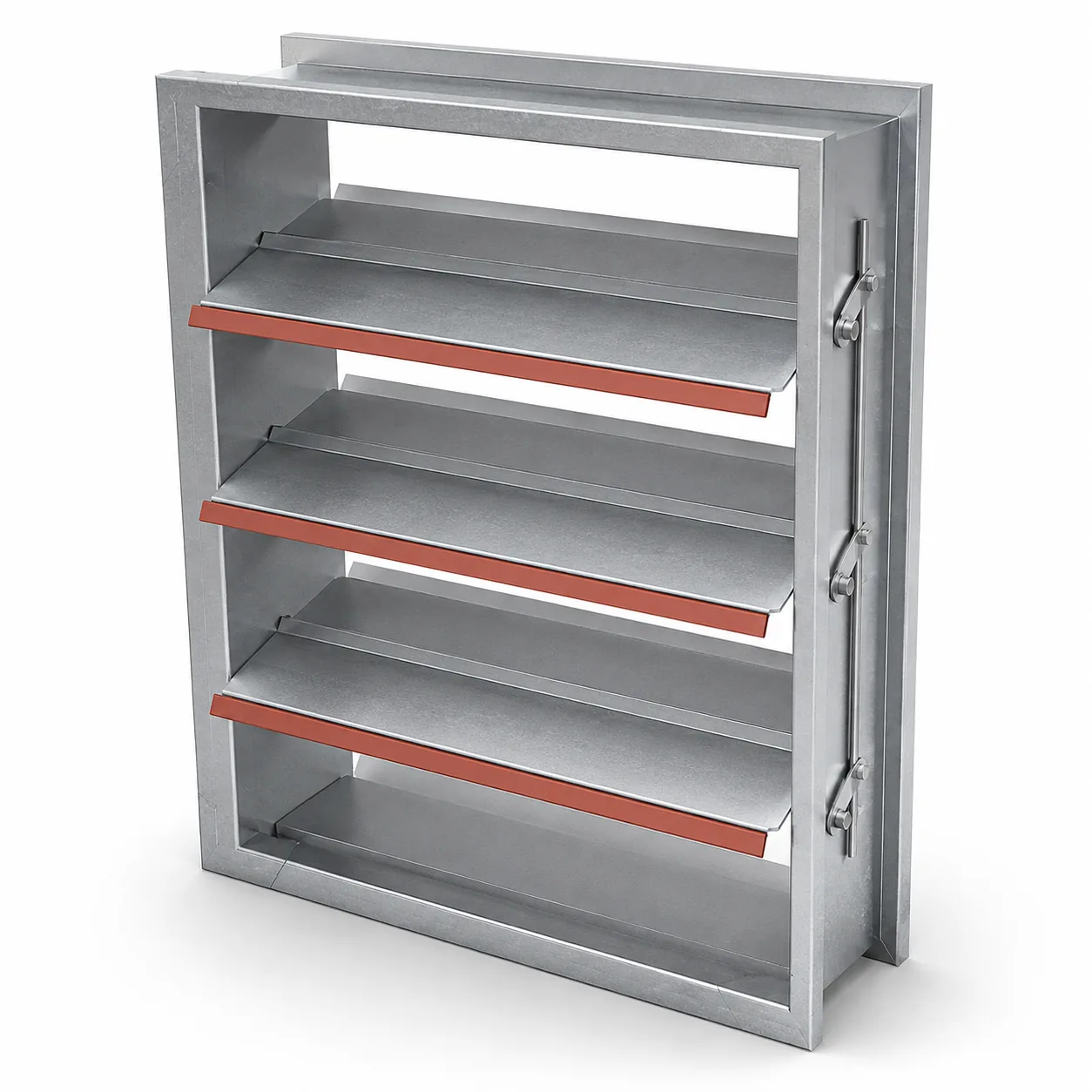
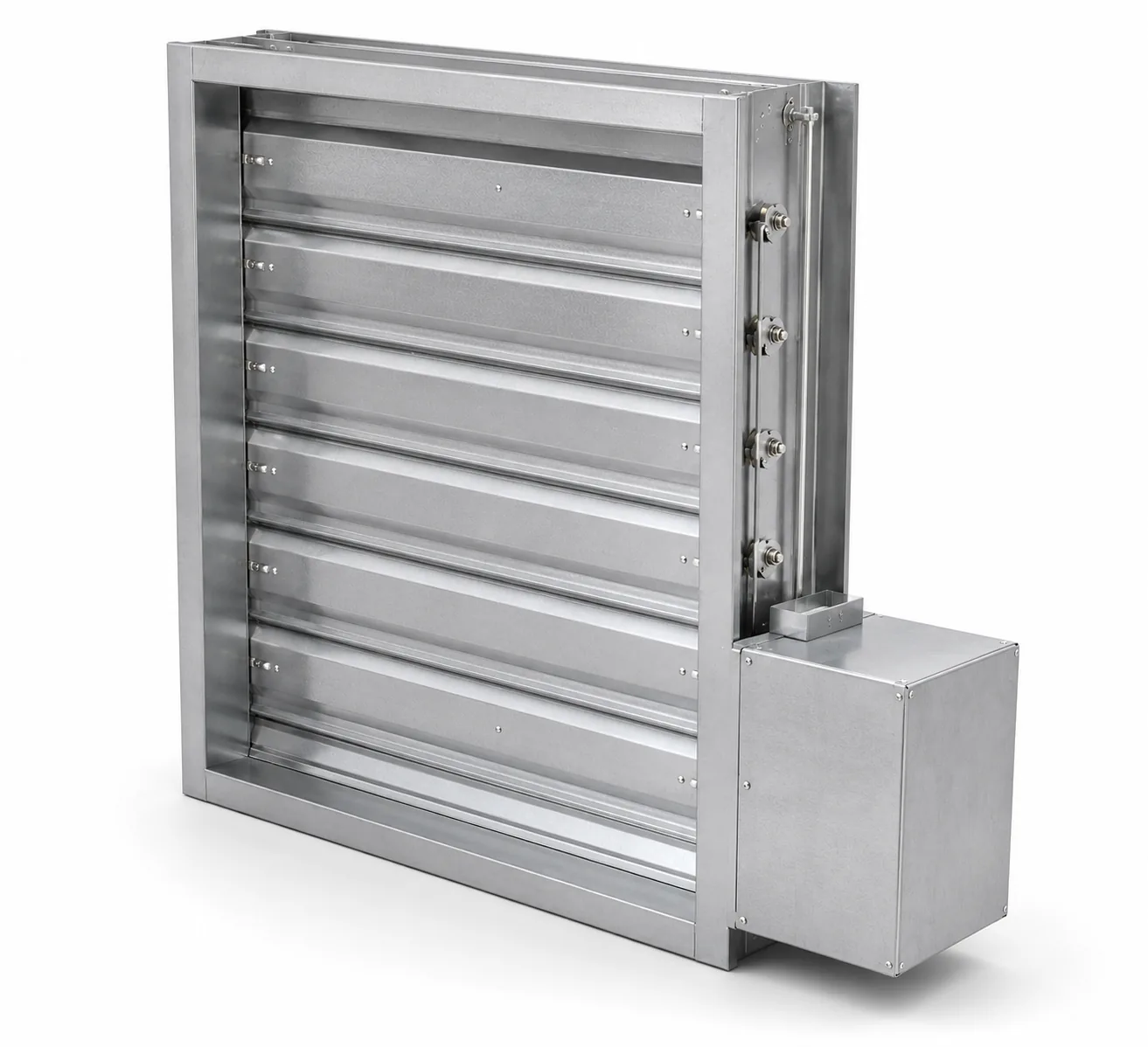
- Large size — tunnel airflows are huge, so dampers are large and often multi-section.
- Pressure surges — piston effect and fan pressures cycle the blades and frame; the damper must not fatigue or leak.
- Life-safety duty — many tunnel dampers are part of the emergency smoke-control system, not comfort ventilation.
Tunnel Ventilation & Life Safety
- Metro and rail tunnel ventilation is designed to standards such as NFPA 130 for fixed-guideway transit and passenger rail systems.
- Road tunnel ventilation and emergency smoke control follow international guidance such as that of PIARC (the World Road Association).
- Smoke-control dampers are tested for operation at elevated temperature so they still function in the heat of a fire.
High-temperature and smoke-control duty
The defining requirement for tunnel emergency dampers is high-temperature operation. In a fire, the smoke-extract path must keep working while hot smoke passes through it, so the damper and its actuator are rated to operate at elevated temperature for a defined period — the classification comes from the smoke-control framework (for example the EN 12101 family for powered smoke-control dampers) and the project's tunnel ventilation design. A comfort-rated damper simply fails in that heat.
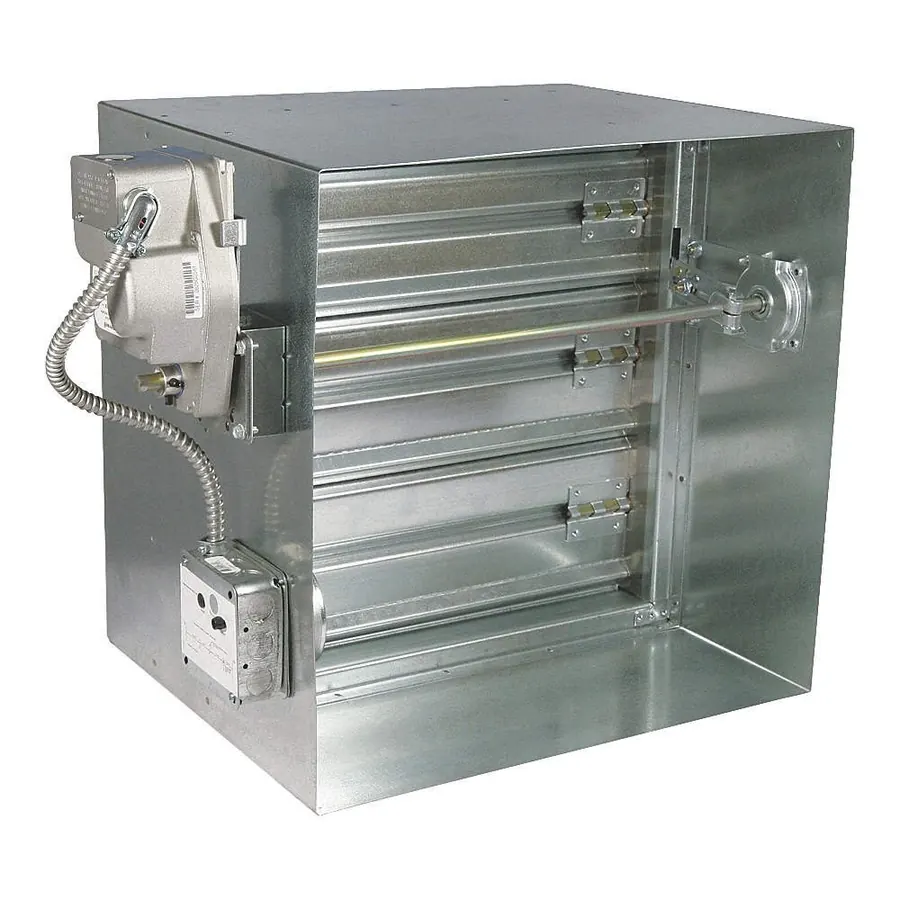
This shapes every part: steel construction rather than aluminium where temperature demands it, high-temperature seals and bearings, and an actuator (or spring-return mechanism) qualified to drive the damper at temperature. The damper is specified by its temperature/time rating and its role in the ventilation scenario, not just its size.
A tunnel smoke damper is judged on whether it still opens and holds in the heat of a fire — the one moment it exists for. That is why it is temperature-rated and qualified, not just sized for airflow.
Reliability, fail-safe and actuation
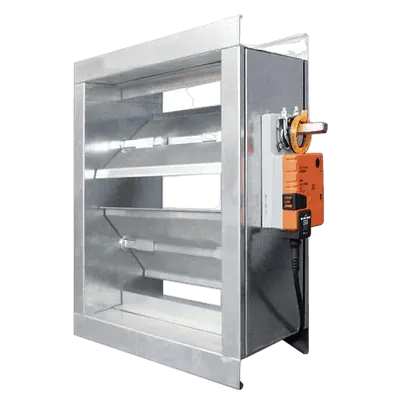
Because tunnel dampers are life-safety devices, reliability and fail-safe behaviour dominate the specification. The damper must move to its safe position on command or on power loss, drive positively against the pressure and any debris, and prove its position back to the ventilation control system. Large dampers are split into sections with intermediate supports and multiple actuators, coordinated so the whole assembly strokes together.
KBG Group manufactures large tunnel and smoke-control ventilation dampers with high-temperature construction, qualified actuation and multi-section assemblies for metro and road tunnel projects. See the companion guides to high-performance & low-leakage dampers and fire & smoke dampers, and the actuator sizing & commissioning guide for the drive detail.
Frequently Asked Questions
What makes tunnel ventilation dampers different from HVAC dampers?
Tunnel dampers face piston-effect pressure surges, move very large airflows, and are usually part of a life-safety smoke-control system. They are large, robust against pressure reversals, high-temperature rated and fail-safe — well beyond a comfort HVAC damper.
Why do tunnel dampers need a high-temperature rating?
In a fire, the smoke-extract path must keep working while hot smoke passes through it, so the damper and actuator are rated to operate at elevated temperature for a defined period (per smoke-control standards such as EN 12101 and the tunnel ventilation design). A comfort-rated damper fails in that heat.
Which standards govern tunnel ventilation systems?
Metro and rail tunnels commonly follow NFPA 130; road tunnels follow PIARC guidance; smoke-control dampers reference the EN 12101 family. The project's tunnel ventilation design sets the specific ratings.
How are large tunnel dampers actuated?
They are split into multiple sections with intermediate supports and driven by multiple coordinated actuators (or spring-return mechanisms) qualified for the temperature and pressure, moving to a fail-safe position on command or power loss and proving position back to the control system.
Specifying dampers for a metro or road tunnel?
Our engineers review specifications and share test data at no cost. Typical response within one business day.