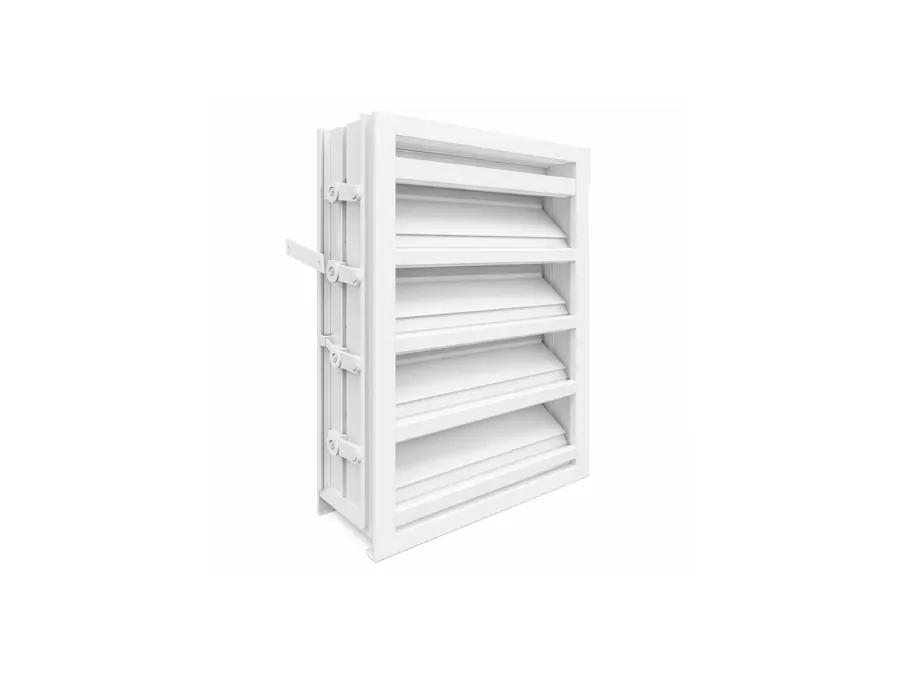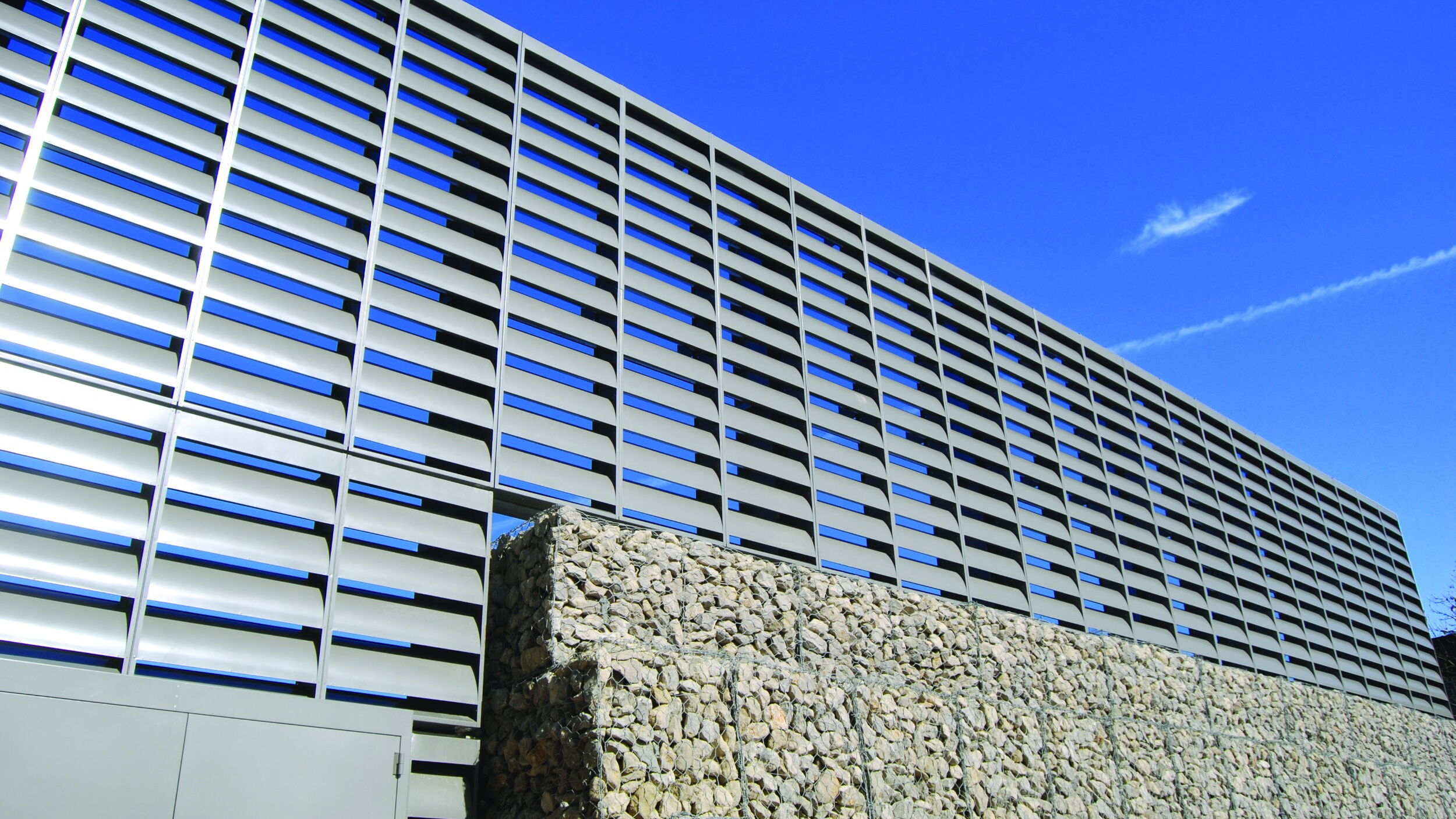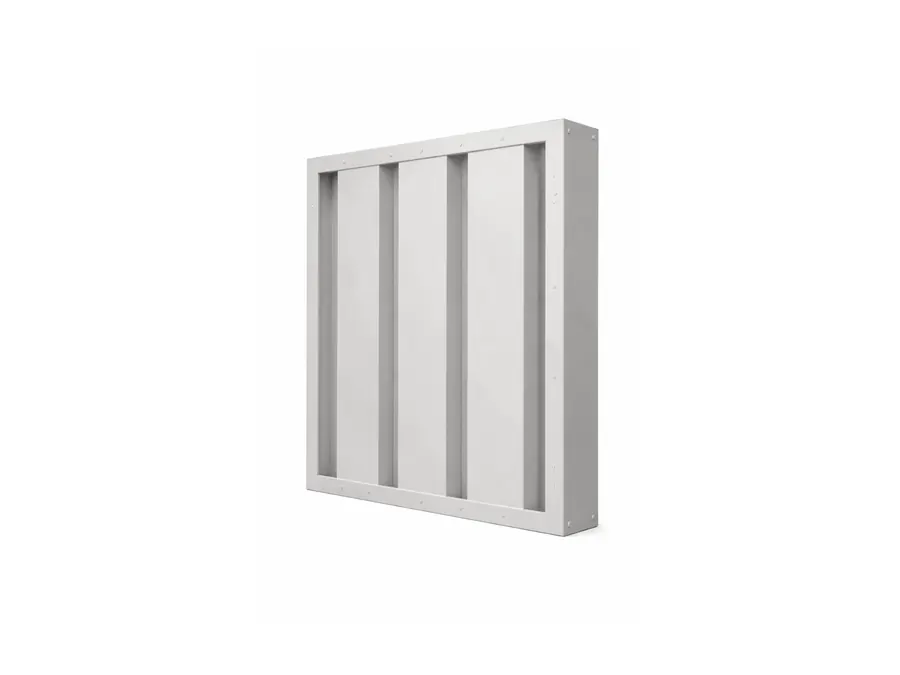
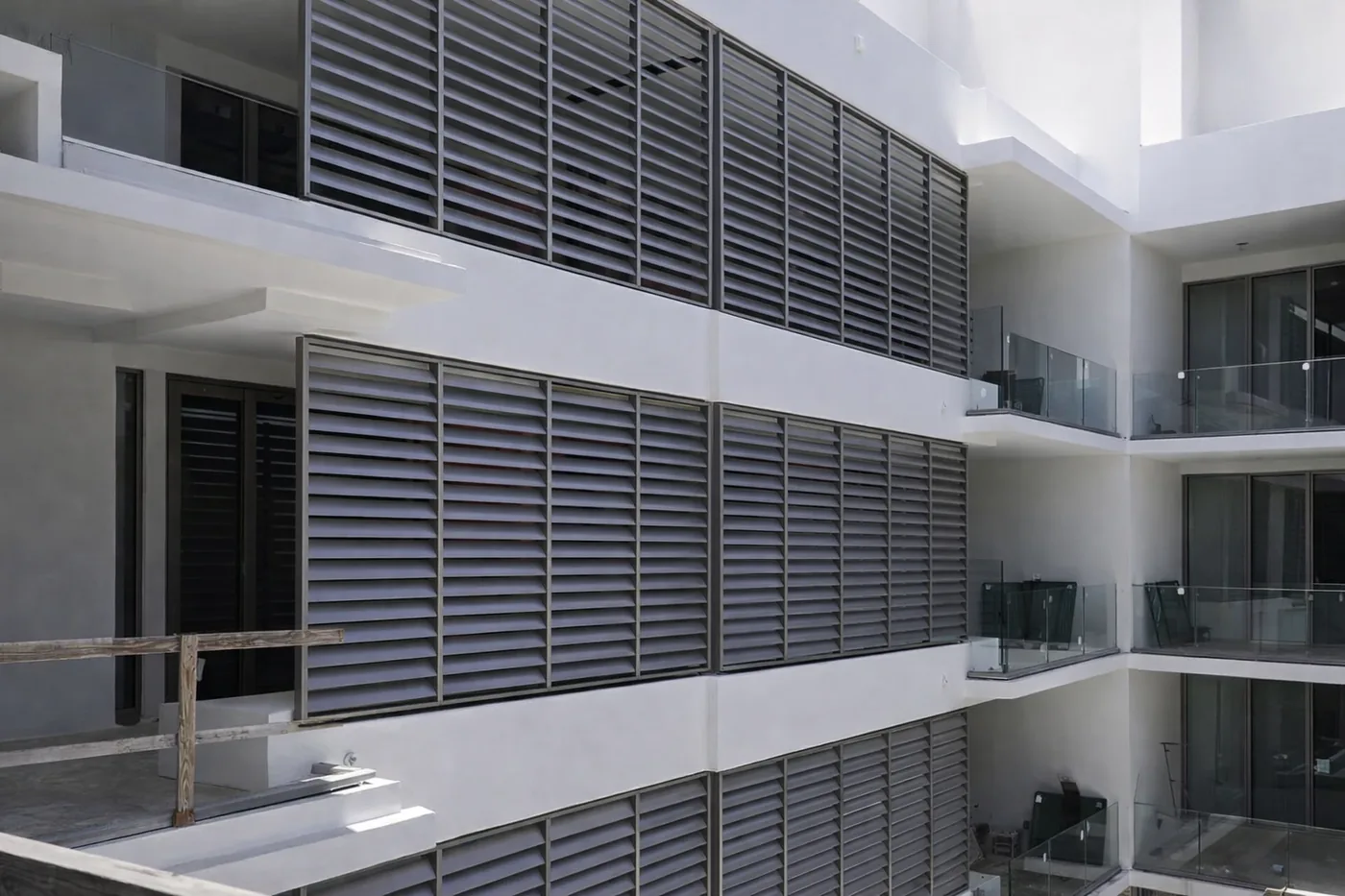
What is a BS EN 13030 Class A louver?
BS EN 13030 rates louvres for rain rejection in four classes (A–D) at a defined core face velocity, where Class A is the highest — effectively zero water penetration up to about 3.5 m/s. “Certified” means the class is backed by an independent, NABL-accredited laboratory test report for that specific louver model, not a catalogue claim.
What EN 13030 actually measures
EN 13030 is the European test method for louvres. It does two jobs: it measures air performance (the pressure drop and an aerodynamic coefficient across a range of velocities) and it measures water-penetration effectiveness (what proportion of simulated driving rain the louver stops). Crucially, the water test is not a single pass/fail — it is run at a series of rising core face velocities, and the louver is given a class based on the velocity band over which it keeps water out effectively.
The water-rejection classes run from Class A (best) down through B, C and D. A Class A rating means the louver rejects effectively up to the highest tested velocity band; a Class D louver only holds at low velocity. Because the class is tied to velocity, "Class A" on its own is an incomplete claim — the report must state the velocity at which the class was achieved.
- Air performance — pressure-drop curve and loss coefficient versus velocity.
- Water rejection — effectiveness (%) measured at increasing core face velocities.
- Class (A–D) — assigned from the velocity band over which rejection stays above the class threshold.
Certification & Consultant Approval
- EN 13030 and AMCA 500-L are the two internationally recognised louvre test methods; a genuine certificate names the standard, the test house and the tested sample.
- Water-rejection class is defined against face velocity, so a credible Class A claim always comes with the velocity at which it was measured.
- A test report is specific to the tested louver model and construction — a certificate for one model does not cover a different blade profile or depth.
How to read a Class A water-penetration report
When a manufacturer sends a water-penetration report for approval, read it in this order — it takes two minutes and catches most of the weak submittals.
| Check | What to look for | Red flag |
|---|---|---|
| Standard cited | EN 13030 (or AMCA 500-L) named explicitly | "Class A" with no standard named |
| Tested model | The exact louver model and blade depth you are buying | A certificate for a different / deeper model |
| Velocity at class | The core face velocity at which Class A holds | A class with no velocity stated |
| Test house | An independent, named laboratory | An in-house, unwitnessed claim |
| Air data too | Pressure-drop curve for the same model | Water class but no pressure data |
"Class A" without a velocity and a named standard is marketing, not certification. The velocity is the number that makes the class mean something.
The trap is the mismatched certificate: a Class A report for a 100 mm-deep drainable louver does not certify a shallower, cheaper louver on the same order. The tested sample in the report must match the product on the BOQ — same blade profile, same depth, same construction.
Certified vs untested: what consultants should specify
For any weather-exposed intake or exhaust — plant rooms, fresh-air shafts, DG rooms, data-centre galleries — the specification should call for a certified performance louver with an EN 13030 (or AMCA 500-L) report for the exact model, stating the water class and the velocity at which it holds, plus the pressure-drop curve. That single requirement filters out the untested louvers that cause water-ingress claims after handover.
KBG Group supplies certified performance louvers with EN 13030-referenced air and water data and drainable, storm-resistant options for high-rainfall and coastal projects. The companion guide to performance louver selection shows how to turn that data into a size, and our marine ventilation systems extend the same tested approach to shipboard and offshore duty.
Frequently Asked Questions
What does EN 13030 Class A mean?
Class A is the top water-rejection class in EN 13030, meaning the louver rejects simulated driving rain effectively up to the highest tested core face-velocity band. Because the class is tied to velocity, a genuine Class A claim always states the velocity at which it was achieved.
How do I read a louver water-penetration test report?
Confirm the standard is named (EN 13030 or AMCA 500-L), that the tested model matches the louver you are buying, the core face velocity at which the class holds, an independent test house, and that air (pressure-drop) data is included for the same model.
Is a certified louver worth the extra cost over a non-tested one?
For weather-exposed intakes, yes. A certified louver gives verifiable water and pressure performance for the exact model, which prevents water-ingress problems after handover and clears consultant approval — an untested louver offers no such assurance.
Does a test certificate for one louver cover other models?
No. A test report is specific to the tested sample — its blade profile, depth and construction. A certificate for one model does not certify a different or shallower louver on the same order.
Need certified louver test data for a submittal?
Our engineers review specifications and share test data at no cost. Typical response within one business day.
Tested vs untested louvers: why certification matters →