Extruded aluminium vs fabricated GI
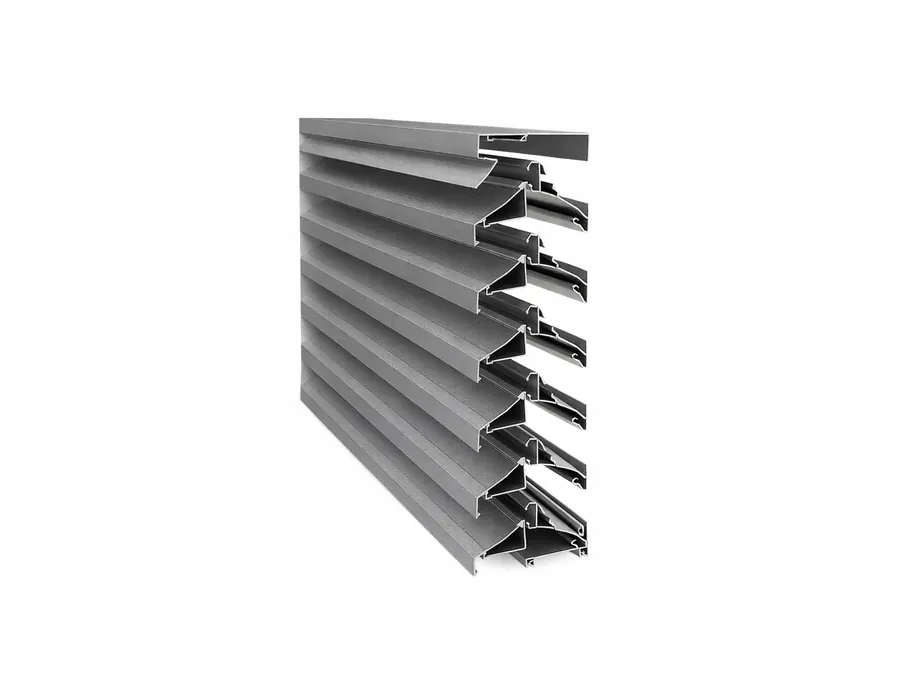
The base material sets a louver's life, weight and finish quality. Extruded aluminium (typically 6063-T5) gives precise, repeatable blade profiles, light weight, natural corrosion resistance and a clean architectural finish. Fabricated GI (galvanized steel folded to shape) is heavier, less precise, and depends entirely on the galvanizing and paint for corrosion life — once that is scratched, steel rusts.
| Attribute | Extruded aluminium | Fabricated GI |
|---|---|---|
| Blade precision | High (die-formed profile) | Lower (folded sheet) |
| Corrosion resistance | Inherent + coating | Depends on galvanizing/paint |
| Weight | Light | Heavier |
| Architectural finish | Anodised / PVDF / powder | Powder over galvanizing |
| Best fit | Facades, coastal, performance duty | Budget internal / industrial screens |
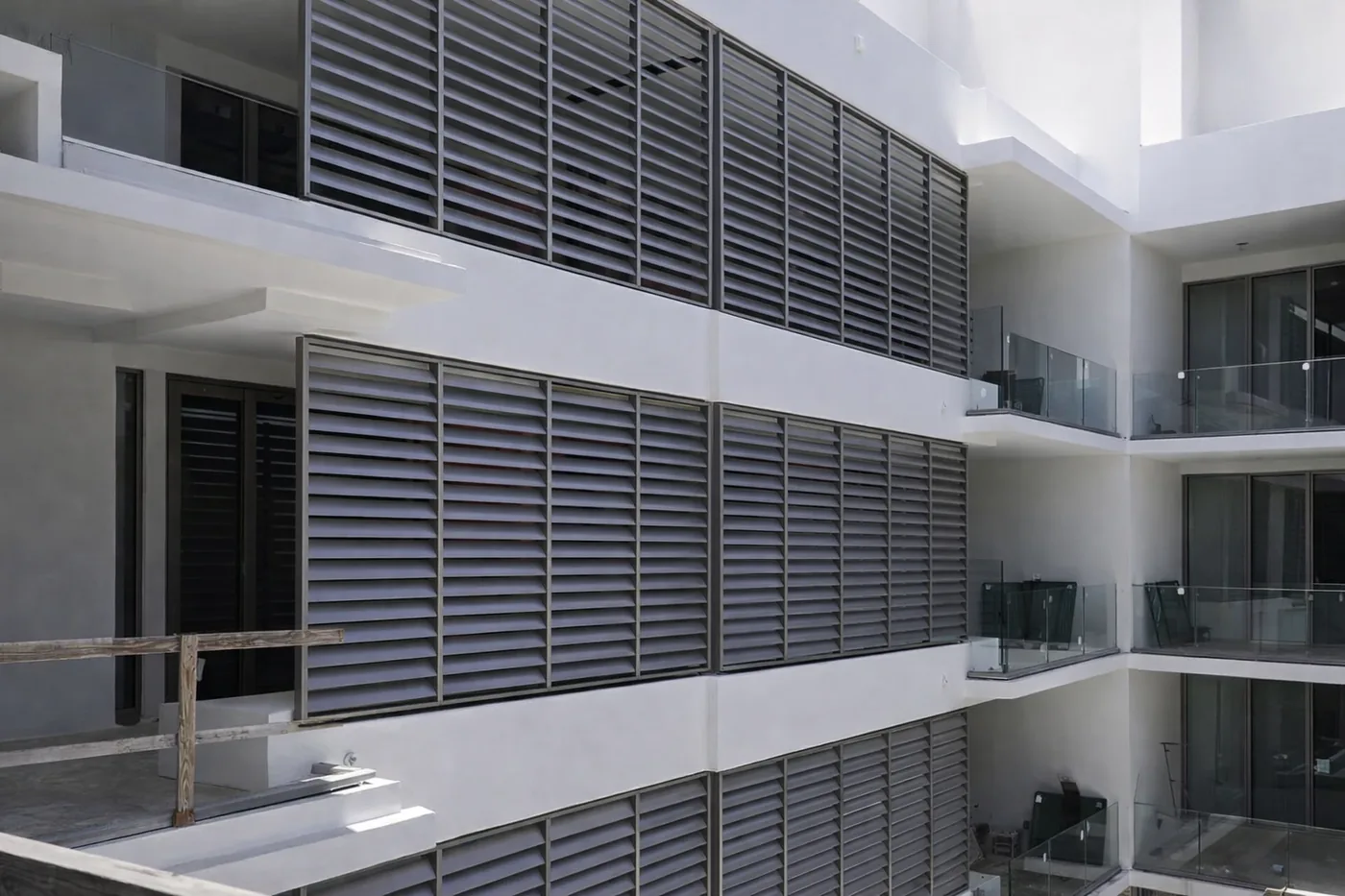
For any performance or weather-exposed application — and certainly for facades and coastal sites — extruded aluminium is the defensible choice. GI has a place for low-cost internal or industrial screening where appearance and corrosion are not critical.
Blade profile, mesh and mullions
Three build details change performance on the same louver footprint:
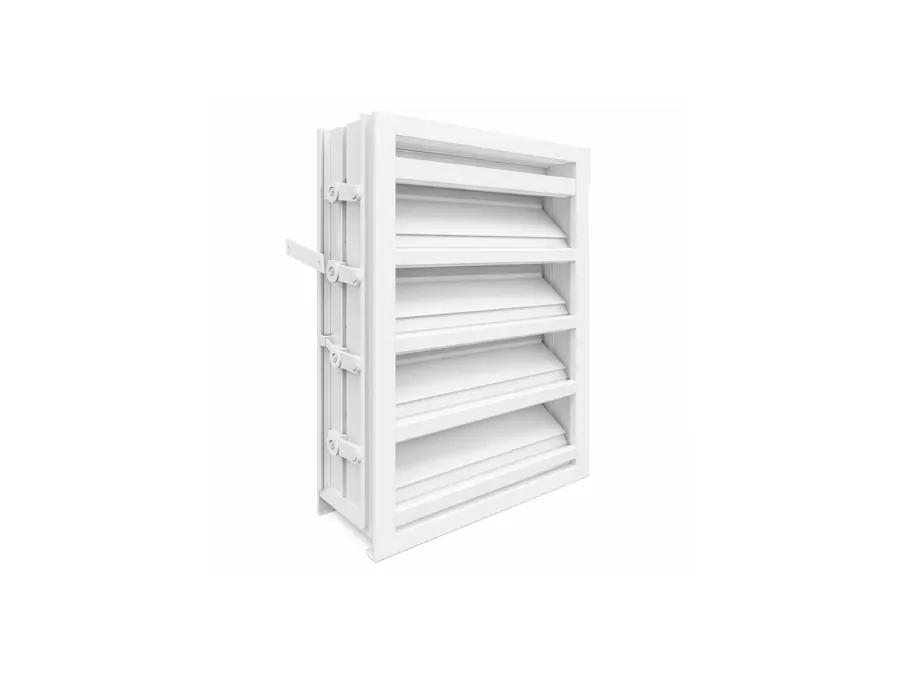
- Blade profile — drainable blades (with integral gutters) hold their water class at higher velocity than plain non-drainable blades; deeper sections improve rain defence at the cost of pressure drop.
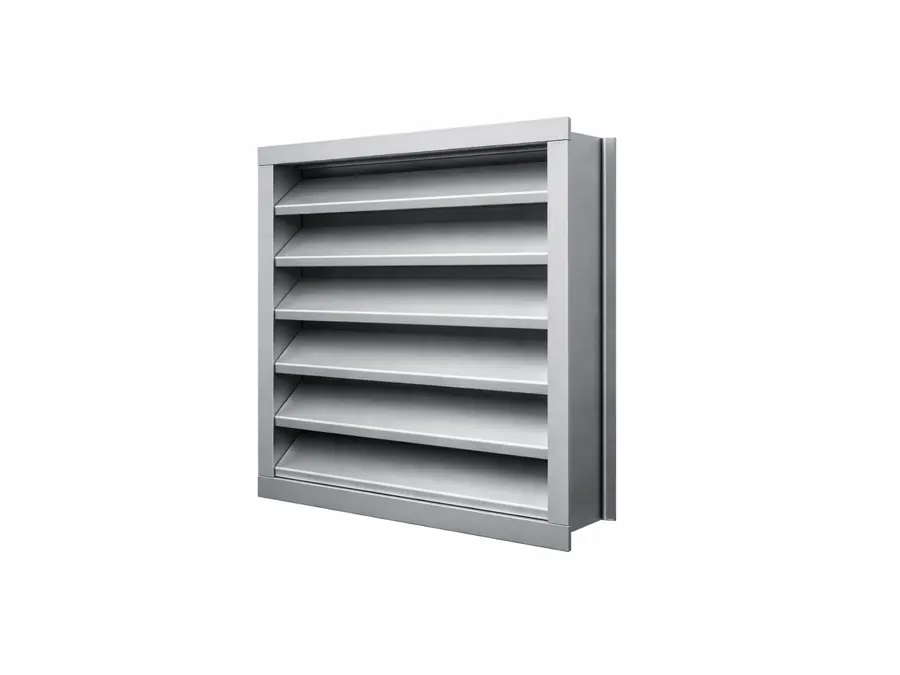
- Bird and insect mesh — necessary to keep out birds and insects, but they reduce the effective free area and raise pressure drop. Insect mesh (fine) costs more free area than bird mesh (coarse), so it must be allowed for in sizing.
- Structural mullions — large openings cannot span in a single louver; intermediate mullions carry the wind load. Ignoring them risks blade distortion or failure under storm pressure.
Mesh is not free airflow. Fine insect mesh can cut effective free area noticeably, so it has to be in the sizing calculation — not added as an afterthought on site.
Consultant checklist for a louver submittal
Use this as the spine for reviewing a louver technical submittal — it catches the weak ones fast.
| # | Check |
|---|---|
| 1 | EN 13030 / AMCA 500-L test report for the exact model offered |
| 2 | Water-penetration class stated with the velocity at which it holds |
| 3 | Pressure-drop curve at the design airflow, within the fan's static |
| 4 | Effective (aerodynamic) free area, not just geometric |
| 5 | Alloy/grade (e.g. 6063-T5) and finish (anodise/PVDF/powder) |
| 6 | Blade type — drainable vs non-drainable — matched to exposure |
| 7 | Mesh type and its allowance in the free-area calculation |
| 8 | Mullion/support design for the opening size and wind load |
| 9 | Fastener material (stainless) for coastal/marine use |
| 10 | Storm / wind-driven-rain / impact rating where the site needs it |
KBG Group builds extruded aluminium performance louvers with drainable blades, architectural finishes, mesh options and mullion-supported large assemblies, each supplied with the test and free-area data a submittal review needs. See performance louver selection and EN 13030 & Class A louvers for the sizing and certification detail.
Frequently Asked Questions
Are extruded aluminium louvers better than fabricated GI?
For performance, weather-exposed and facade applications, yes — extruded aluminium gives precise blade profiles, light weight, inherent corrosion resistance and an architectural finish. Fabricated GI suits low-cost internal or industrial screening where appearance and corrosion are not critical.
How does bird or insect mesh affect a louver?
Mesh reduces the effective free area and raises pressure drop. Fine insect mesh costs more free area than coarse bird mesh, so its effect must be included in the sizing calculation rather than added afterwards.
Why do large louvers need mullions?
A large opening cannot span as a single louver under wind load; structural mullions and intermediate supports carry the wind pressure and prevent blade distortion or failure in a storm.
What should a consultant check on a louver submittal?
The EN 13030/AMCA test report for the exact model, water class with its velocity, pressure-drop curve, effective free area, alloy and finish, blade type, mesh allowance, mullion design, fastener material, and any storm/impact rating the site requires.
Reviewing a louver technical submittal?
Our engineers review specifications and share test data at no cost. Typical response within one business day.