Wind-driven rain, storms and cyclones
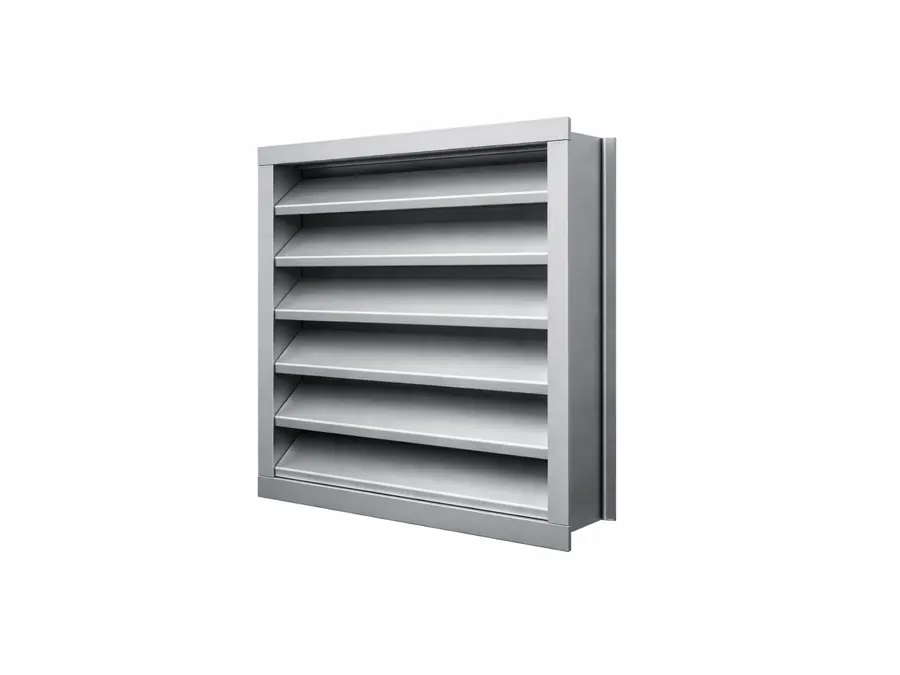
Standard weather-louver ratings (EN 13030, AMCA 500-L) are measured at moderate, controlled rainfall and velocities. A cyclone or severe storm presents something harder: high-velocity wind-driven rain and, in the worst case, flying debris. Louvers for these locations are specified against tougher, purpose-built tests rather than the everyday rain rating.
- High-velocity wind-driven rain — assessed by methods such as AMCA 550, which drive rain at hurricane-scale wind speeds to check the louver still rejects water.
- Impact / large-missile resistance — for cyclone debris zones, methods such as AMCA 540 verify the louver survives an impact without failing open.
- Structural wind load — the louver and its mullions must carry the design wind pressure for the location and height.
The practical rule: a "storm-resistant" or "hurricane" louver is one that carries a wind-driven-rain and, where needed, an impact test — not just a Class A rain rating at low velocity.
Extreme Weather & Building Intakes
- Wind-driven rain intensity rises steeply with wind speed, so a louver rated at low velocity can leak heavily in a storm at the same rainfall.
- Purpose-built methods such as AMCA 550 (high-velocity wind-driven rain) and AMCA 540 (impact) exist precisely because standard rain ratings do not cover cyclone conditions.
- Airborne dust and sand in arid regions is a separate problem from rain, handled by inertial sand-trap louvers rather than water-rejection blades.
Monsoon rainfall and desert sand
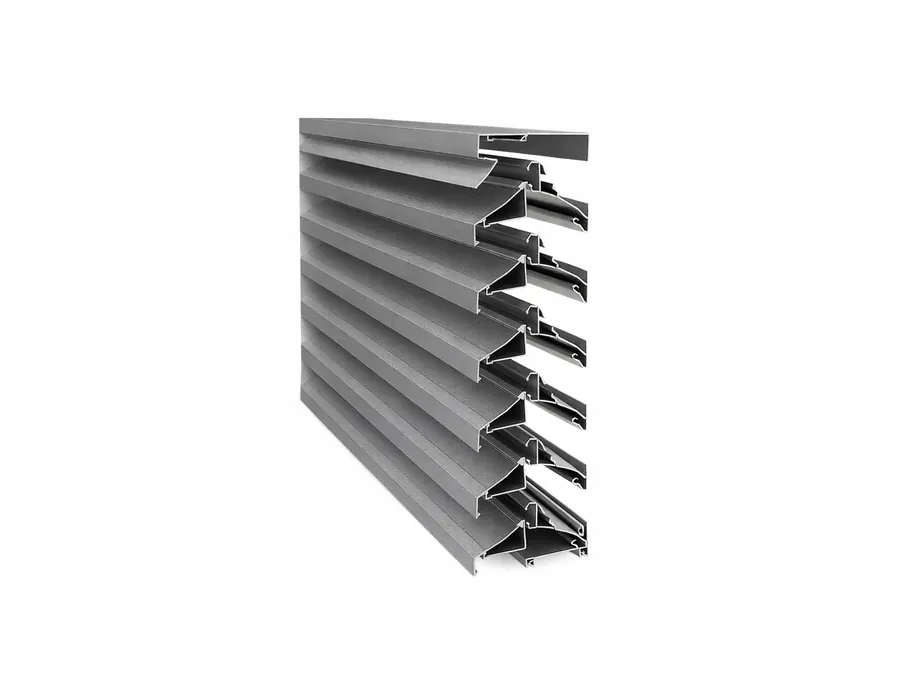
Monsoon locations combine very high rainfall with sustained fan operation, so drainable louvers — with blade channels that carry intercepted water down and out — hold their water class far better than non-drainable blades at the same velocity. Sizing to a lower face velocity buys additional margin exactly when it rains hardest.
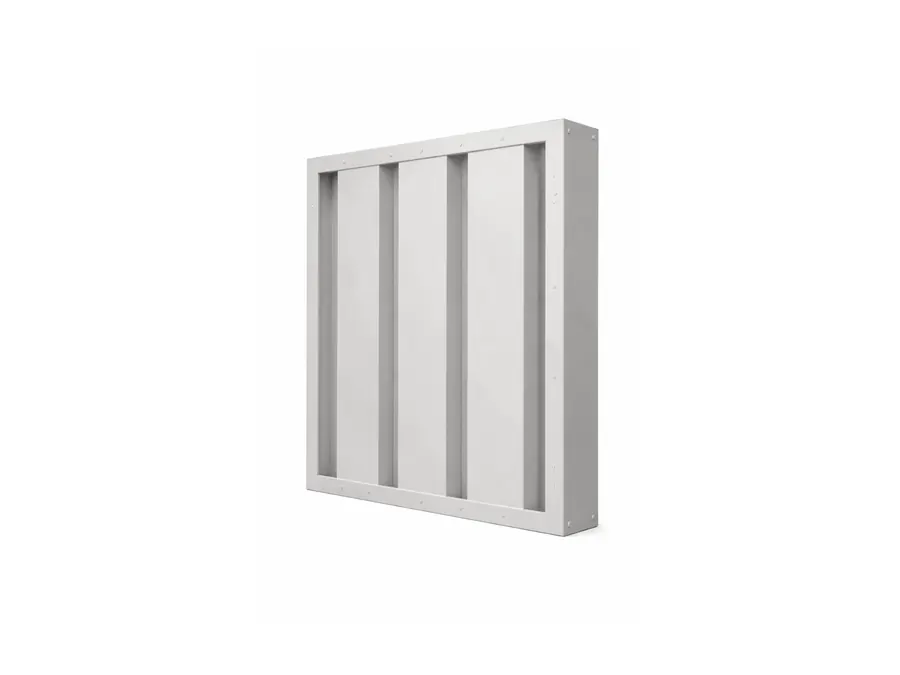
Desert and arid sites face airborne sand and dust rather than rain. Here the answer is a sand-trap louver — an inertial separator that forces the airstream to change direction so heavier particles drop out into a collection channel. A single-stage sand trap handles moderate dust; a double-stage unit is specified where dust loading is severe or downstream equipment (data-centre cooling, gas turbines) is sensitive.
| Condition | Right louver type | Why |
|---|---|---|
| Monsoon / high rainfall | Drainable weather louver, low face velocity | Holds water class when rain and airflow peak together |
| Cyclone / storm | Wind-driven-rain + impact-rated louver | Rejects high-velocity rain, survives debris |
| Desert / dusty | Single- or double-stage sand trap | Inertial separation removes airborne sand |
| Coastal | Marine-grade alloy + protective coating | Resists salt corrosion over service life |
Rain, wind-driven rain, sand and salt are four different problems. A louver that solves one does not automatically solve the others — the specification has to name the actual exposure.
Coastal corrosion: alloy and coating
Coastal projects add salt to the air, which attacks ordinary aluminium and mild-steel hardware. The defence is material and finish: a corrosion-resistant aluminium grade, stainless fasteners to avoid galvanic corrosion, and a durable coating — anodising or a PVDF architectural finish — chosen for the salinity of the site. This is the same logic that governs marine ventilation louvers, where salt exposure is continuous.
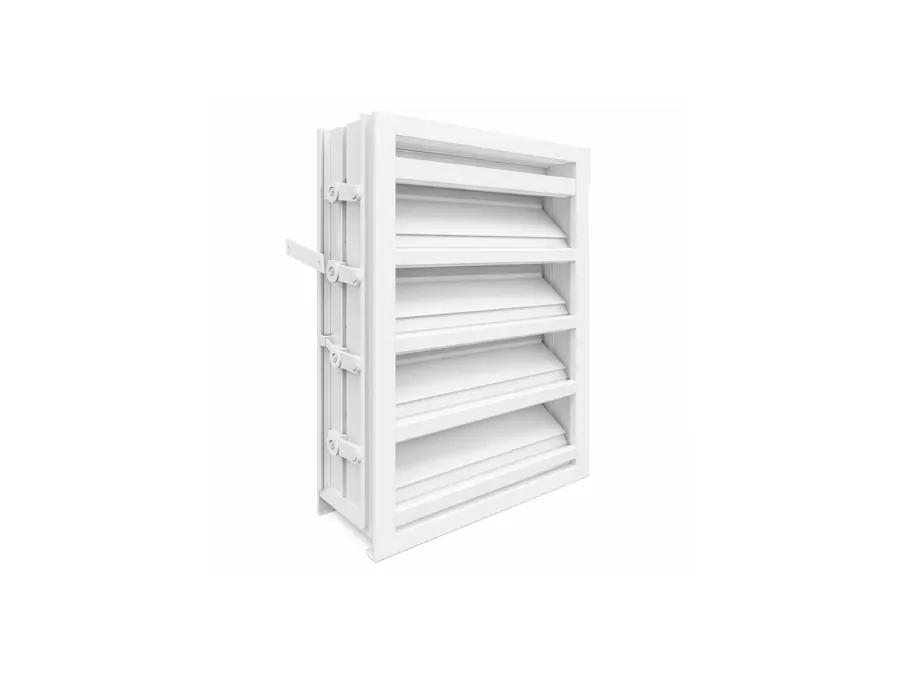
KBG Group manufactures storm-resistant, drainable and sand-trap louvers in corrosion-resistant aluminium with architectural coatings, sized and mullion-supported for the wind load of the location. See the companion guides to performance louver selection and louver construction and materials for the sizing and build detail behind these choices.
Frequently Asked Questions
What makes a louver storm- or cyclone-resistant?
A storm/cyclone louver carries a high-velocity wind-driven-rain test (such as AMCA 550) and, in debris zones, an impact test (such as AMCA 540), plus mullions sized for the design wind load — not just a Class A rain rating measured at low velocity.
How should louvers be specified for monsoon locations?
Use drainable louvers, whose blade channels carry intercepted water away, and size to a lower face velocity so the water-penetration class holds when heavy rain and full airflow occur together.
What is a sand-trap louver and when is it needed?
A sand-trap louver is an inertial separator that changes the airstream direction so heavier airborne sand and dust drop out. It is specified for desert and dusty sites; a double-stage unit is used where dust loading is severe or downstream equipment is sensitive.
How are coastal louvers protected from corrosion?
With a corrosion-resistant aluminium grade, stainless fasteners to prevent galvanic corrosion, and a durable coating such as anodising or PVDF selected for the site salinity.
Specifying louvers for a coastal, desert or high-rainfall site?
Our engineers review specifications and share test data at no cost. Typical response within one business day.