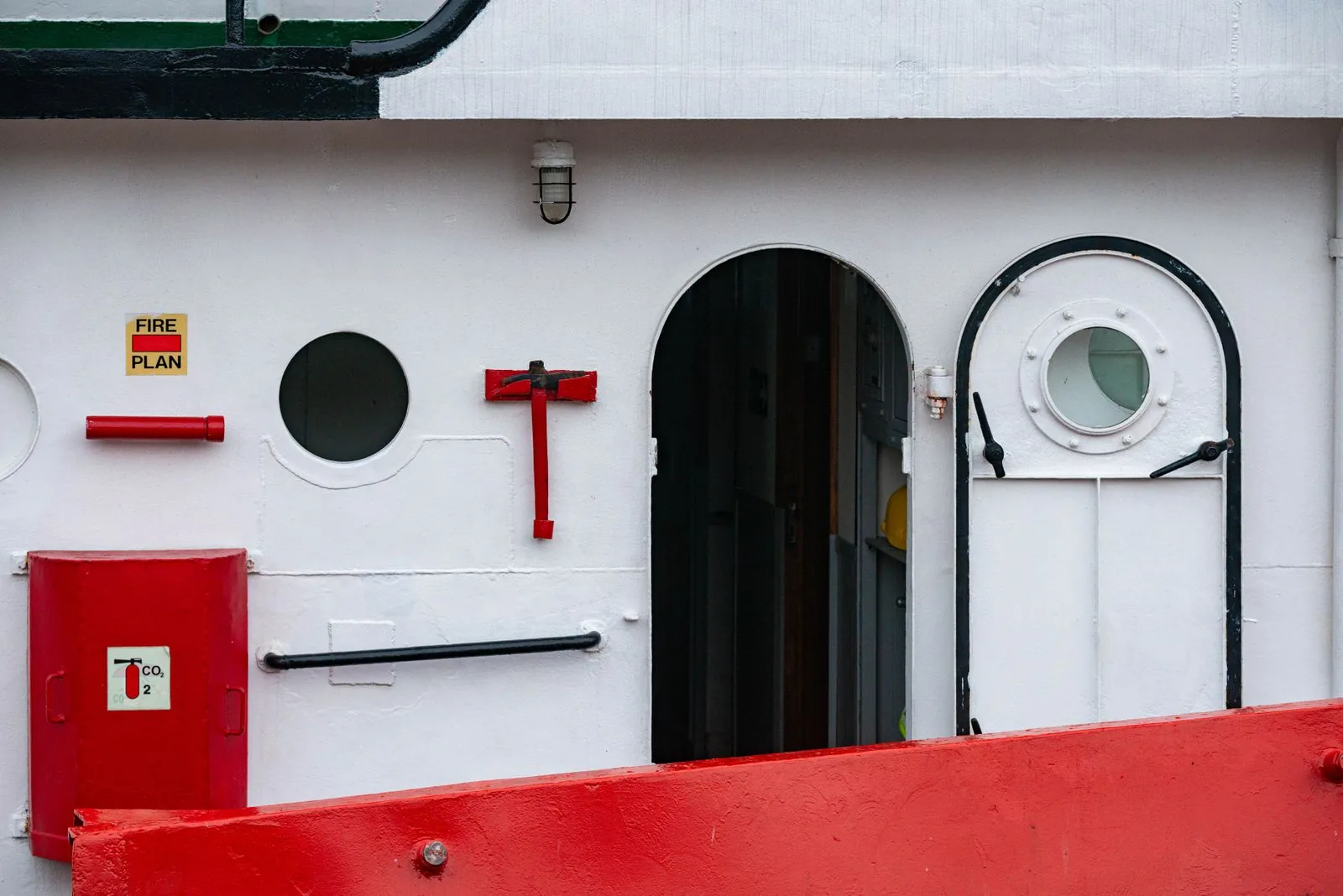
Watertight vs weathertight — the duty decides everything
The first decision on a marine hatch door is its duty, because it changes the whole design. Weathertight means water will not pass into the vessel in normal service in any sea condition — the standard for most exposed deck and superstructure openings. Watertight is a higher duty: the closure resists a head of water under pressure, used for openings in watertight boundaries below or at the waterline. A door is designed, gasketed and tested to the duty its position on the vessel demands — over-specifying adds weight and cost, under-specifying fails survey.
- Weathertight — no ingress in normal service; most exposed deck/house openings.
- Watertight — resists a pressure head; watertight-boundary openings.
- Location drives duty — the door's position on the vessel sets which applies.
Marine Closures & Class
- Weathertight and watertight closures are governed by the ship's classification society rules and the international Load Line requirements.
- A watertight closure is proven by pressure/hose testing appropriate to its duty before approval.
- The marine atmosphere is highly corrosive, so closure hardware is selected in corrosion-resistant materials.
How gaskets and dog clamps create the seal
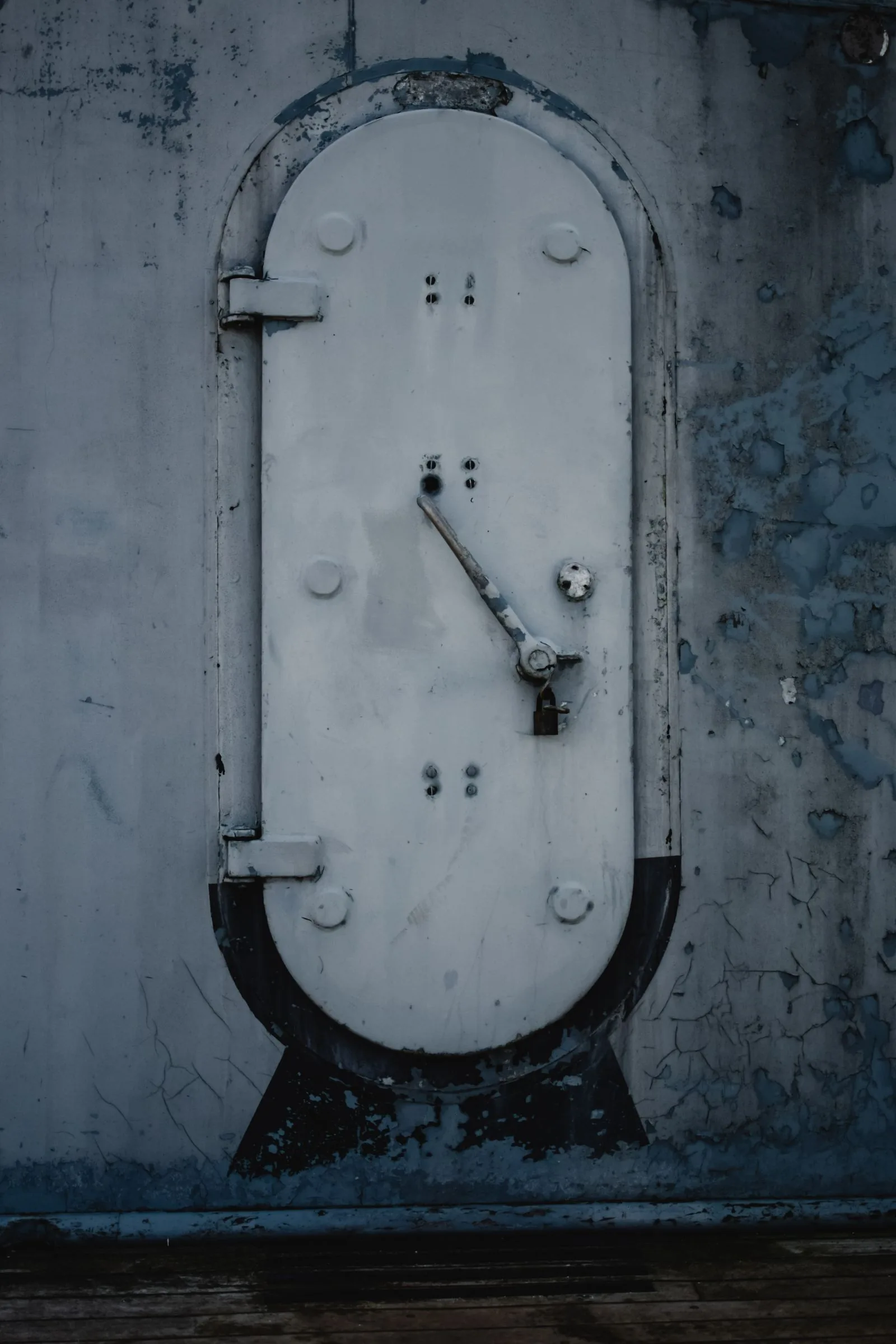
A marine door seals by compressing a resilient gasket (typically EPDM or neoprene) between the door and its frame. The gasket alone does nothing — it must be evenly compressed all round, and that is the job of the dog clamps (also called dogs or cleats). Each dog draws the door tight against the frame at its point; a set of dogs around the door delivers uniform compression so the gasket seals continuously.
The mechanisms range from individual hand-dogged clamps to quick-acting central-locking systems that dog all points with one lever — chosen for how often the door is used and how fast it must be secured. What matters technically is even compression, a continuous gasket seat, and a frame stiff enough not to spring between dogs.
The gasket does not seal — even compression seals. Enough dogs, a stiff frame and a continuous gasket seat are what keep the sea out, not the rubber alone.
Material selection and pre-approval inspection
Material follows duty and environment. Aluminium is light and corrosion-resistant — favoured for superstructure doors where weight matters. Stainless steel gives strength with corrosion resistance for demanding or high-wear positions. Mild steel is strong and economical but depends entirely on its coating for corrosion life. Dissimilar metals are isolated to prevent galvanic corrosion, and fasteners and dogs are selected to match.
Before client or classification approval, a short inspection catches the usual issues:
| # | Inspection check |
|---|---|
| 1 | Gasket continuous, undamaged, correctly seated |
| 2 | Even gasket compression at every dog |
| 3 | Frame flat and stiff — no spring between dogs |
| 4 | Dogs / quick-acting gear operate freely and latch |
| 5 | Material & coating correct; dissimilar metals isolated |
| 6 | Weather/water test appropriate to the door's duty passed |
KBG Group manufactures marine hatch doors and access doors in marine-grade aluminium and stainless steel, with gasketed weathertight closures and dog-clamp or quick-acting locking to suit the duty. See the marine ventilation & access systems guide and the companion piece on marine louvers.
Frequently Asked Questions
What is the difference between a watertight and weathertight hatch door?
Weathertight means water will not pass into the vessel in normal service in any sea condition — the standard for most exposed openings. Watertight is a higher duty: the closure resists a head of water under pressure, for openings in watertight boundaries. The door's position on the vessel sets which applies.
How do dog clamps and gaskets seal a marine door?
A resilient gasket (EPDM/neoprene) is compressed between the door and frame; the dog clamps (dogs/cleats) draw the door tight at each point to give even compression all round. The gasket seals only when it is evenly compressed against a continuous, stiff seat.
What material should a marine hatch door be?
Aluminium for light, corrosion-resistant superstructure doors; stainless steel for strength with corrosion resistance in demanding positions; mild steel where strength and economy matter and a coating protects it. Dissimilar metals are isolated to avoid galvanic corrosion.
What is checked before a marine hatch door is approved?
That the gasket is continuous and correctly seated, compression is even at every dog, the frame is flat and stiff, the dogs/quick-acting gear operate and latch, the material and coating are correct with dissimilar metals isolated, and the weather/water test for the door's duty is passed.
Specifying marine hatch doors for a vessel or shipyard?
Our engineers review specifications and share test data at no cost. Typical response within one business day.