Feeding a machinery space its air
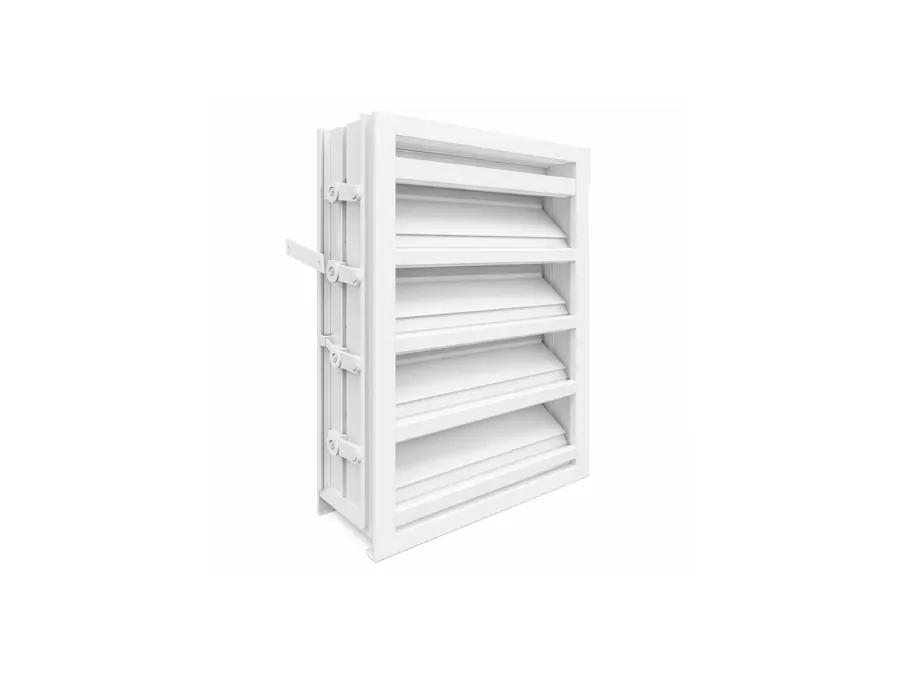
An engine room or machinery space needs a large, continuous supply of air — for combustion, for cooling the machinery, and to keep the space habitable. That makes free area and low pressure drop the first priority for a marine ventilation louver: it has to pass high airflow without starving the engines or forcing the fans to work against excessive resistance. Marine intake and exhaust louvers are therefore high-free-area designs, sized from the machinery's combustion and heat-rejection load.
- High free area — machinery spaces demand large airflow through limited openings.
- Low pressure drop — so fans and natural draught are not fighting the louver.
- Intake and exhaust — matched louvers for supply and extract paths.
Marine Ventilation & Corrosion
- Machinery-space ventilation must supply combustion and cooling air continuously, so louver free area is sized from the engine and equipment load.
- Exposed marine openings need a means of closure (storm valves/closing appliances) so ventilation can be shut in heavy weather.
- The marine atmosphere is among the most corrosive environments, so louvers use marine aluminium alloys and protective coatings.
Keeping water out — the opposing demand
The opposing demand is water exclusion. A deck or ship-side louver is exposed to driving spray and, on lower openings, green water. So the marine louver must reject water while still passing its air — the same physics as a building weather louver, but harder, because the "weather" is the sea. Deep weather blades and, where required, a storm valve or closing appliance behind the louver let the opening be shut in heavy weather so the space stays dry when ventilation must stop.
On a ship the weather is the sea. A marine louver has to reject spray and green water while still feeding an engine room its air — and be able to shut when the weather wins.
Saltwater corrosion: alloy, fasteners and coating
The third demand is survival in salt. Continuous salt exposure destroys ordinary materials, so marine louvers are built from corrosion-resistant marine aluminium alloys (the 5000/6000 series), assembled with compatible stainless fasteners to avoid galvanic corrosion, and finished with a marine coating or anodising suited to the exposure. Dissimilar-metal contact is detailed out, because the least-noble metal in the assembly sets its life — the same discipline that governs marine hatch doors.
KBG Group manufactures marine ventilation louvers, weather louvers and intake/exhaust louvers in marine-grade aluminium with corrosion-resistant finishes and integrated closure options for shipboard, offshore and coastal duty. See the marine ventilation & access systems guide for the full system and performance louver selection for the airflow-versus-water physics.
Frequently Asked Questions
How are marine louvers for engine rooms specified?
From the machinery's combustion and cooling air demand — as high-free-area, low-pressure-drop intake and exhaust louvers that pass the required airflow without starving the engines, while still rejecting spray and green water.
How do marine louvers keep water out?
With deep weather blades that reject spray and, where the opening is exposed, a storm valve or closing appliance behind the louver so the opening can be shut in heavy weather while the machinery space stays dry.
How is saltwater corrosion controlled in marine louvers?
With corrosion-resistant marine aluminium alloys (5000/6000 series), compatible stainless fasteners to prevent galvanic corrosion, a marine coating or anodising for the exposure, and detailing that isolates dissimilar metals.
What is the difference between a marine louver and a building weather louver?
The physics of rejecting water while passing air is the same, but a marine louver faces the sea rather than rain — driving spray and green water, continuous salt corrosion, and a need to close in heavy weather — so it uses marine alloys, deeper weather blades and closing appliances.
Specifying marine louvers for machinery spaces?
Our engineers review specifications and share test data at no cost. Typical response within one business day.