The certificate and the measurement are not the same test
The single most common source of confusion in generator noise compliance is the assumption that a compliant set produces a compliant installation. It does not, because the two are measured differently and against different criteria.
| Product rating | Site measurement | |
|---|---|---|
| What is measured | Sound pressure level | Ambient level, usually Leq |
| Where | 1 m from the enclosure surface | At the site boundary or a named receiver |
| What is running | One set | Everything, together |
| Criterion | 75 dB(A) for sets up to 1000 kVA | Zone limits under the Noise Pollution Rules, 2000 |
| Whose obligation | Set manufacturer | Site operator |
Once that is clear, most "inexplicable" failures become arithmetic. A residential boundary carries a night-time limit of 45 dB(A) under the Rules. A set rated 75 dB(A) at 1 metre, perhaps two or three sets running together, a boundary not far away, and limited screening between — there is simply not enough distance and attenuation in that chain to arrive at 45. The installation was never going to pass, and no certificate was ever going to change that.
So the first diagnostic question is not "what went wrong with the enclosure" but "was this installation ever designed to reach the boundary limit?" If it was not, the fix is a design change rather than a repair.
Which Number Applies Where
- 75 dB(A) at 1 metre from the enclosure surface applies to new DG sets up to 1000 kVA, supplied with an integral factory enclosure.
- Sets outside that scope are treated to a minimum 25 dB(A) insertion loss, or to ambient standards, whichever is higher.
- Boundary compliance is assessed against the Noise Pollution Rules, 2000 zone limits, by day (6 am–10 pm) and night (10 pm–6 am) separately.
The six usual causes
Where the installation was designed to reach the limit and still failed, the cause is almost always in this list.
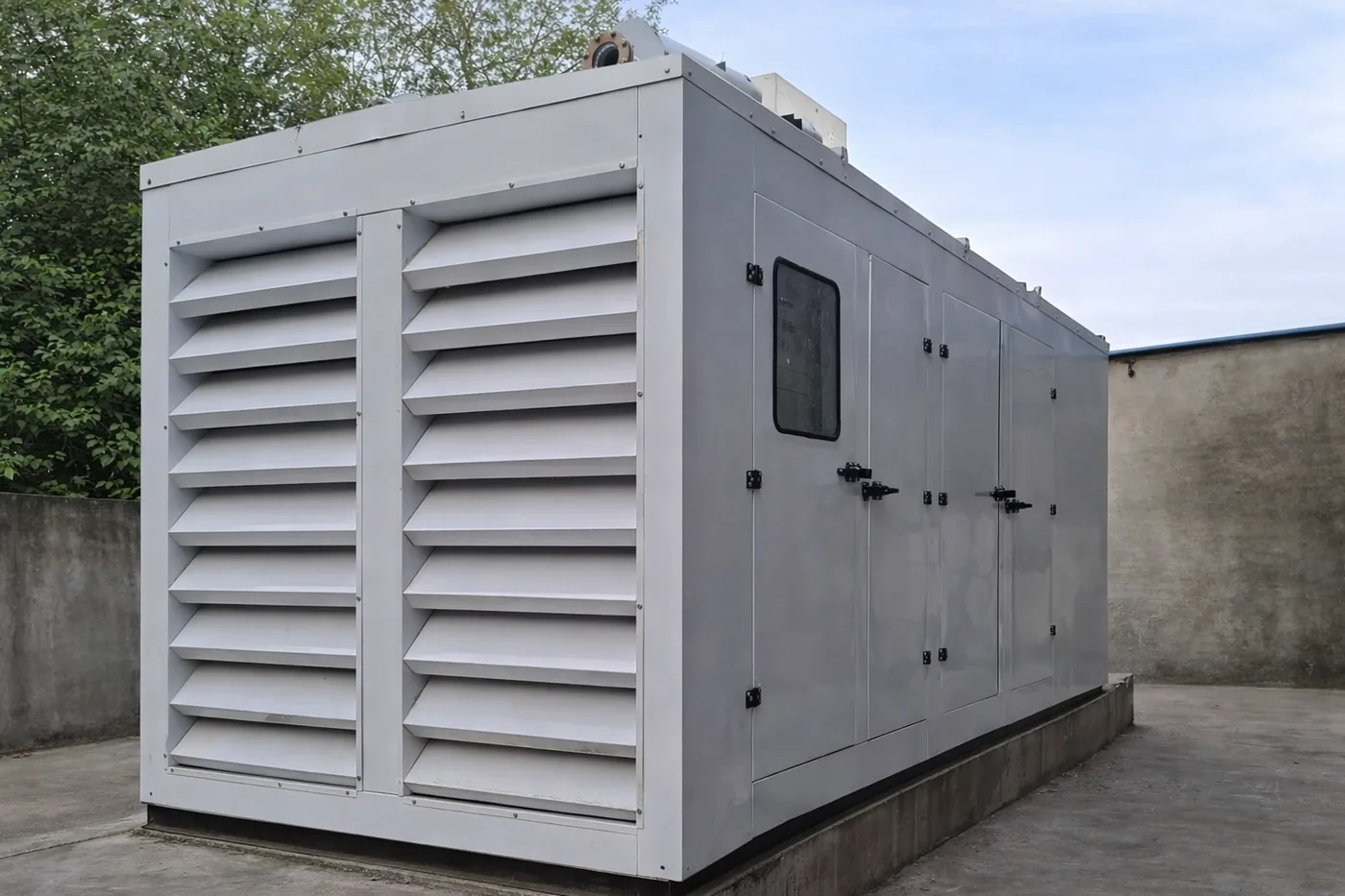
1. Flanking paths. Sound bypassing the treatment rather than passing through it — unsealed cable and fuel penetrations, gaps at panel joints, a service door whose seal has aged, structural transmission through a mounting. This is the most frequent cause and usually the cheapest to fix.
2. Exhaust. Once an enclosure is doing its job, exhaust is often the loudest remaining path. An under-specified silencer, or an outlet pointed at the receiver, will dominate the measurement regardless of how good the enclosure is.
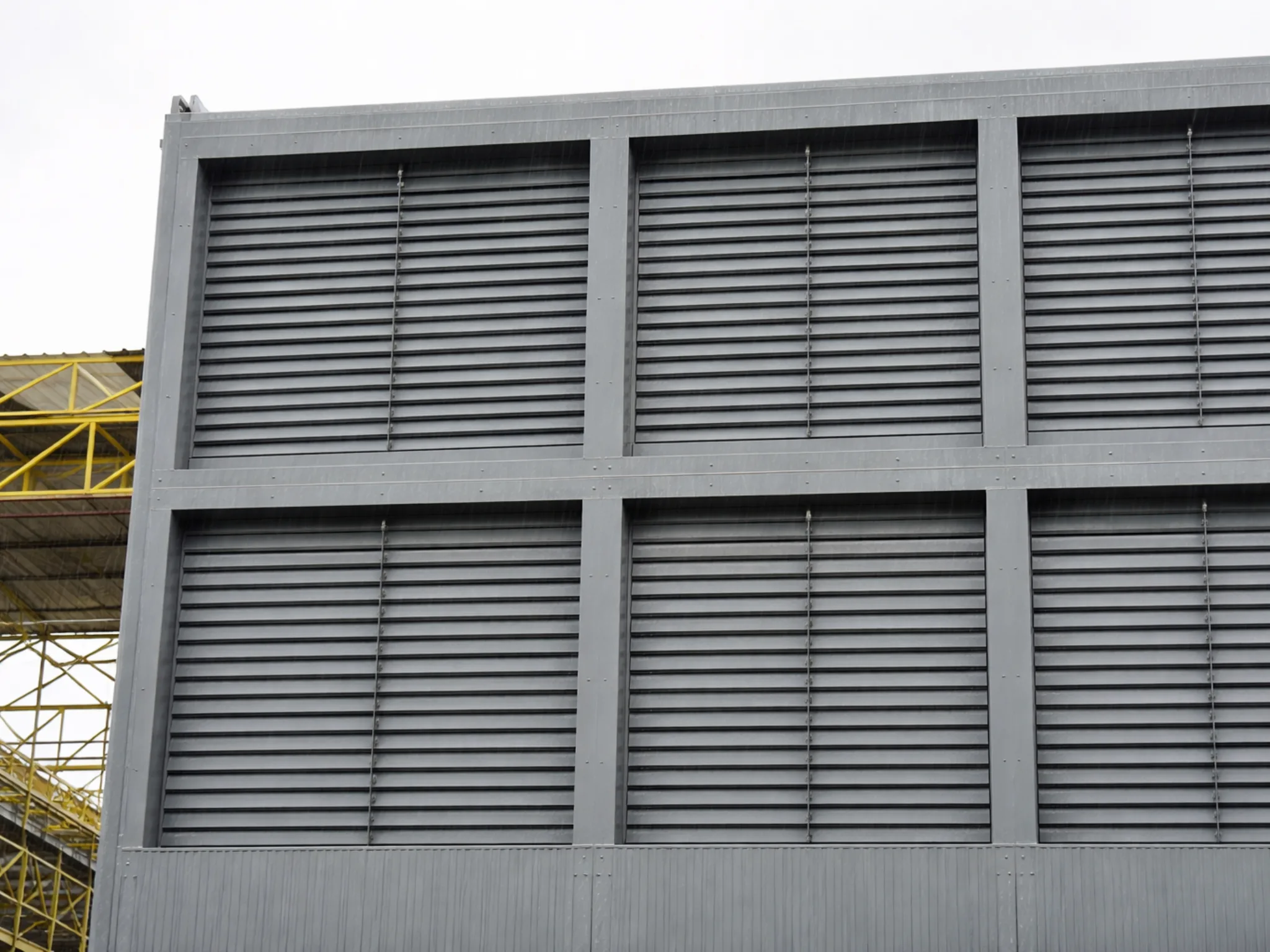
3. Radiator discharge. The largest opening, carrying the most air and therefore the most sound. If the discharge path was left untreated — or treated with weather louvers instead of acoustic louvers — this is where the energy is leaving.
4. Addition of multiple sets. Several sets running together are louder than one. Where redundancy means two or three operate simultaneously during a test, the design has to have accounted for the combination, not the single machine.
5. Low-frequency content. The limits are A-weighted, which discounts low frequencies. Diesel engines and exhausts generate strong low-frequency energy that travels further and penetrates fabric more readily, so an installation can be numerically compliant and still draw complaints — or fail a measurement taken in an unfavourable condition.
6. Measurement conditions. Wind direction, reflecting surfaces, a genuinely higher baseline than assumed, or a test run at a different load or time period than the design case. Worth checking, though it is the explanation to reach for last rather than first.
Diagnosing which one it is
A disciplined sequence saves a great deal of money, because the cheap causes are also the common ones.
- Re-read the criterion. Which limit, which zone, which time period, which measurement position? A surprising number of failures are failures against the wrong number.
- Walk the enclosure with the set running. Flanking paths are usually audible at close range. Penetrations, joints, door seals and the base frame are where to put your ear.
- Measure close to each path separately. Radiator discharge, exhaust outlet, enclosure faces, base. The dominant path normally identifies itself immediately.
- Look at the spectrum, not just the A-weighted figure. Octave-band data distinguishes a sealing problem, which tends to show across mid and high frequencies, from an exhaust or structural problem weighted to the low end.
- Test set combinations. One set, then two, then the full test configuration. If the failure appears only in combination, the design case was wrong rather than the build.
- Compare against a baseline. Which is only possible if one was taken — the argument for doing so is in our guide to noise studies for infrastructure projects.
Check the criterion before the hardware. A good proportion of failed generator tests were measured against a limit the installation was never designed for.
What each fix actually costs
Roughly in ascending order, which is also the order worth investigating:
| Cause | Fix | Relative cost |
|---|---|---|
| Flanking paths | Seal penetrations, replace door seals, close joints | Low |
| Wrong criterion assumed | Re-establish the applicable limit and redesign to it | Low to assess, variable to resolve |
| Exhaust dominant | Upgrade silencer, reposition or extend outlet | Low to moderate |
| Radiator discharge untreated | Acoustic louvers sized to the radiator airflow | Moderate |
| Multiple sets not designed for | Additional enclosure treatment or boundary barrier | Moderate to high |
| Boundary limit beyond enclosure capability | Barrier, room-in-room or relocation | High |
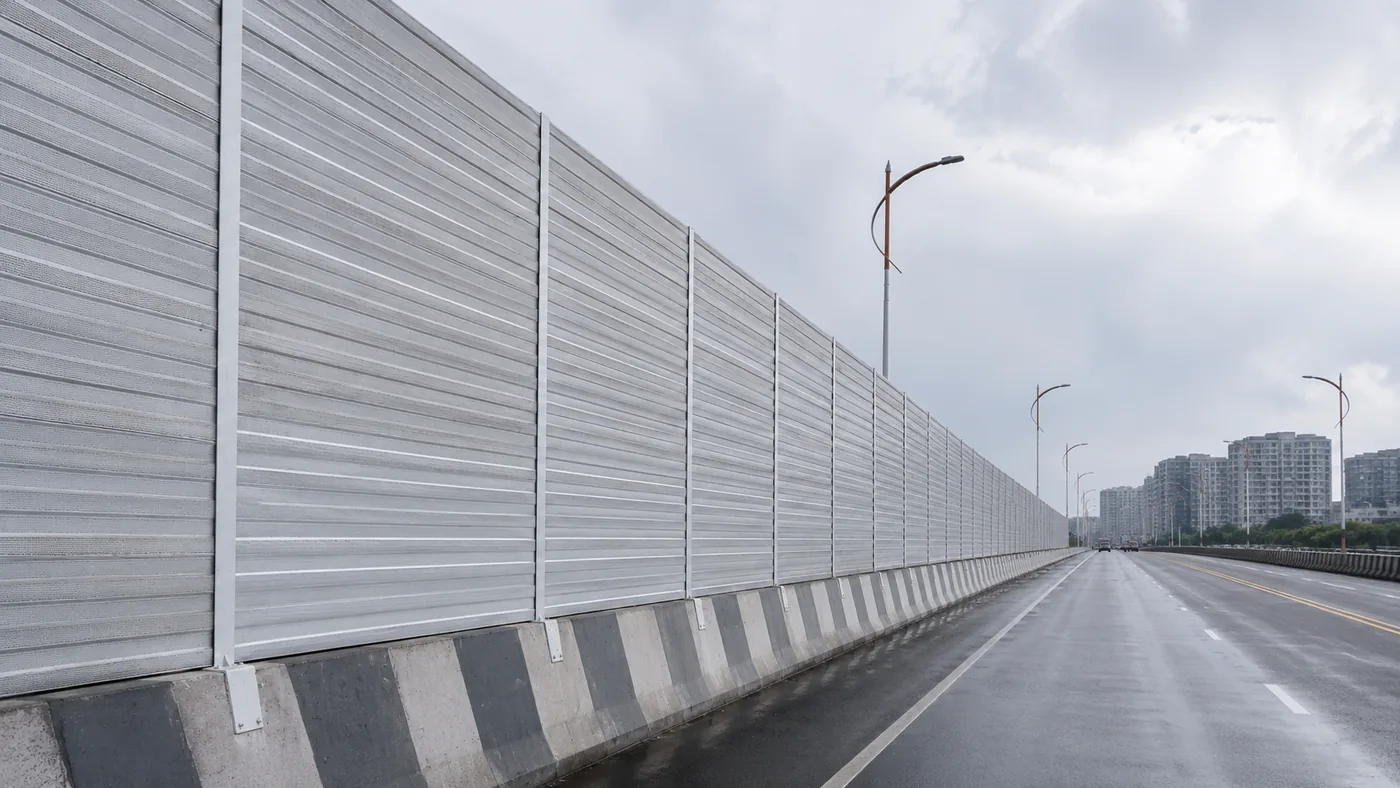
Two cautions on the fixes. First, anything that reduces radiator or combustion airflow trades a noise problem for a reliability problem — acoustic louvers have to be sized against the set's airflow allowance, as set out in the 25 dB(A) insertion loss route. Second, where the boundary rather than the machine is the binding constraint, a boundary barrier on the line of sight does work no amount of enclosure improvement can, and the geometry matters more than the area — see barrier height, gaps and wind.
KBG Group manufactures acoustic enclosures, acoustic louvers and boundary barriers, and will diagnose a failed installation path by path before recommending work — including telling you when the problem is the criterion rather than the enclosure. Send us the measurement report and the set and site details.
Frequently Asked Questions
My generator has a 75 dB(A) certificate — why did the site test fail?
Because the two measurements answer different questions. The 75 dB(A) figure is measured at 1 metre from the enclosure surface for a single set and certifies the product. A site test typically measures ambient level at the boundary with everything running, against the zone limits in the Noise Pollution Rules, 2000. A set can be fully compliant as a product and the installation still exceed a residential night limit of 45 dB(A).
What is a flanking path on a generator enclosure?
Any route by which sound bypasses the acoustic treatment — gaps at panel joints, unsealed cable and fuel penetrations, service doors that no longer seal, ductwork that transmits structurally, or the exhaust itself. Flanking paths are the most common cause of an enclosure underperforming its design figure, and they are usually the cheapest thing to correct once found.
Why does low-frequency generator noise cause complaints even when limits are met?
Because the limits are A-weighted, which deliberately discounts low frequencies relative to human sensitivity at moderate levels. Diesel engines and their exhausts produce strong low-frequency content that propagates further, penetrates building fabric more readily and is perceived as a rumble indoors. A result that is numerically compliant can therefore still generate complaints, which is why low-frequency content is worth assessing separately.
Can a noise test failure be fixed without replacing the enclosure?
Usually, yes. In most cases the shortfall comes from sealing, exhaust treatment or a specific flanking path rather than from a fundamentally inadequate enclosure, and those are addressable in place. Replacement or additional containment is the answer only when the gap between measured and required levels is large, or when the boundary limit was always beyond what enclosure treatment alone could deliver.
Failed a generator noise measurement and need it resolved?
Our engineers review specifications and share test data at no cost. Typical response within one business day.