The limits, precisely
The Noise Pollution (Regulation and Control) Rules, 2000, made under the Environment (Protection) Act, set ambient air quality standards in respect of noise. They are the framework against which a site boundary is assessed, and they are short enough to state in full.
| Area / zone | Day — dB(A) Leq | Night — dB(A) Leq |
|---|---|---|
| Industrial area | 75 | 70 |
| Commercial area | 65 | 55 |
| Residential area | 55 | 45 |
| Silence zone | 50 | 40 |
With the definitions that make them usable:
- Daytime is 6 am to 10 pm; night-time is 10 pm to 6 am.
- Silence zone means an area of not less than 100 metres around hospitals, educational institutions and courts, which may be declared as such by the State Government. A later proviso restricts when an area can be notified, so the designation should be confirmed rather than inferred from proximity.
- Complaint threshold — a person may complain to the Deputy Commissioner where the level exceeds the ambient standards by 10 dB(A) or more.
- Amendments — the Rules have been amended several times since 2000, and states add their own conditions, so the current consolidated text and local requirements should be checked for any formal submission.
Three observations that matter more than the table. First, the night-time figure is the one that governs most industrial sites, because continuous plant runs through it and the limit is lower. Second, the gap between zones is large — a residential night limit of 45 dB(A) is 25 dB below an industrial daytime limit of 75, which is a difference of design approach, not of fine tuning. Third, the zone that matters is the receiving one, so an industrial site adjoining housing is working to a residential limit at that boundary.
Two Frameworks, Both Applicable
- The Noise Pollution Rules, 2000 set ambient limits at the receiving location by zone and by day/night period.
- CPCB DG set standards separately require 75 dB(A) at 1 metre for new sets up to 1000 kVA, and a minimum 25 dB(A) insertion loss — or ambient standards, whichever is higher — for sets outside that scope.
- Monitoring data has shown ambient levels exceeding the prescribed standards at a majority of monitoring stations, so a quiet baseline should never be assumed.
What the limits apply to — and what they do not
This is where most compliance confusion sits, and it comes from mixing up two different kinds of obligation.
Ambient limits are about a place, not a machine. The figures above describe the total sound level at a receiving location — everything audible there, your site included, measured as an equivalent continuous level over the relevant period. They are not a budget allocated to each piece of equipment.
Product standards are about a machine, not a place. The CPCB DG set requirement of 75 dB(A) at 1 metre is a type requirement on an individual set, as is the 25 dB(A) insertion loss route for sets outside that scope — covered in the 25 dB(A) insertion loss route. Meeting it says nothing about your boundary.
The consequences are worth stating plainly:
- Sources add. Several machines each individually compliant produce a higher level together, and the boundary limit applies to the sum.
- The existing background counts. Ambient level includes noise that was there before you, which is why a baseline survey is needed to know how much headroom you actually have. CPCB monitoring has shown limits being exceeded at a majority of stations, so assuming a quiet baseline is optimistic.
- Your limit depends on your neighbour. The receiving zone governs, so the same plant is a different compliance problem on two different sites.
- Both frameworks apply at once. Compliant machines and a compliant boundary are separate tests, and a site has to pass both.
Our guide to why a DG set fails its site noise test works through exactly this gap in practice.
Every machine compliant is not the same as the site compliant. The Rules measure a place; the product standards measure a machine.
The compliance route
Four stages, in this order. Taking them out of order is the usual cause of expensive rework.
1. Survey — establish the baseline before you build. Measure existing ambient levels at the positions that will matter, over the periods that will matter, including night. Without this you cannot know your headroom, you cannot demonstrate insertion loss later, and you cannot distinguish your contribution from the background in any subsequent dispute. The method is in noise studies and assessment for infrastructure projects. This stage is cheap and skipping it is the most expensive decision available.
2. Predict — model the proposed condition. Source levels for the plant, propagation to the receivers, combined with the baseline, against the applicable limit for each receiving zone and period. The output is a number: how many decibels of attenuation are needed, at which receivers, in which period.
3. Treat — design to that number. In the established order: source, then path, then receiver. Choose treatments against the deficit the prediction identified, not against a general wish to be quieter.
4. Verify — measure the built condition. Under representative operating conditions, at the agreed positions, in the relevant period. Verification against a documented baseline is also what allows a product-level insertion-loss claim to be evidenced where one is required.
Where construction itself is the issue rather than the finished operation, the NGT-driven framework for site activity applies alongside this and is covered in construction site noise control.
Choosing the treatment
Once stage 2 has produced a decibel deficit at specific receivers, the choice of treatment becomes an engineering decision rather than a preference.
| Situation | Treatment | Why it fits |
|---|---|---|
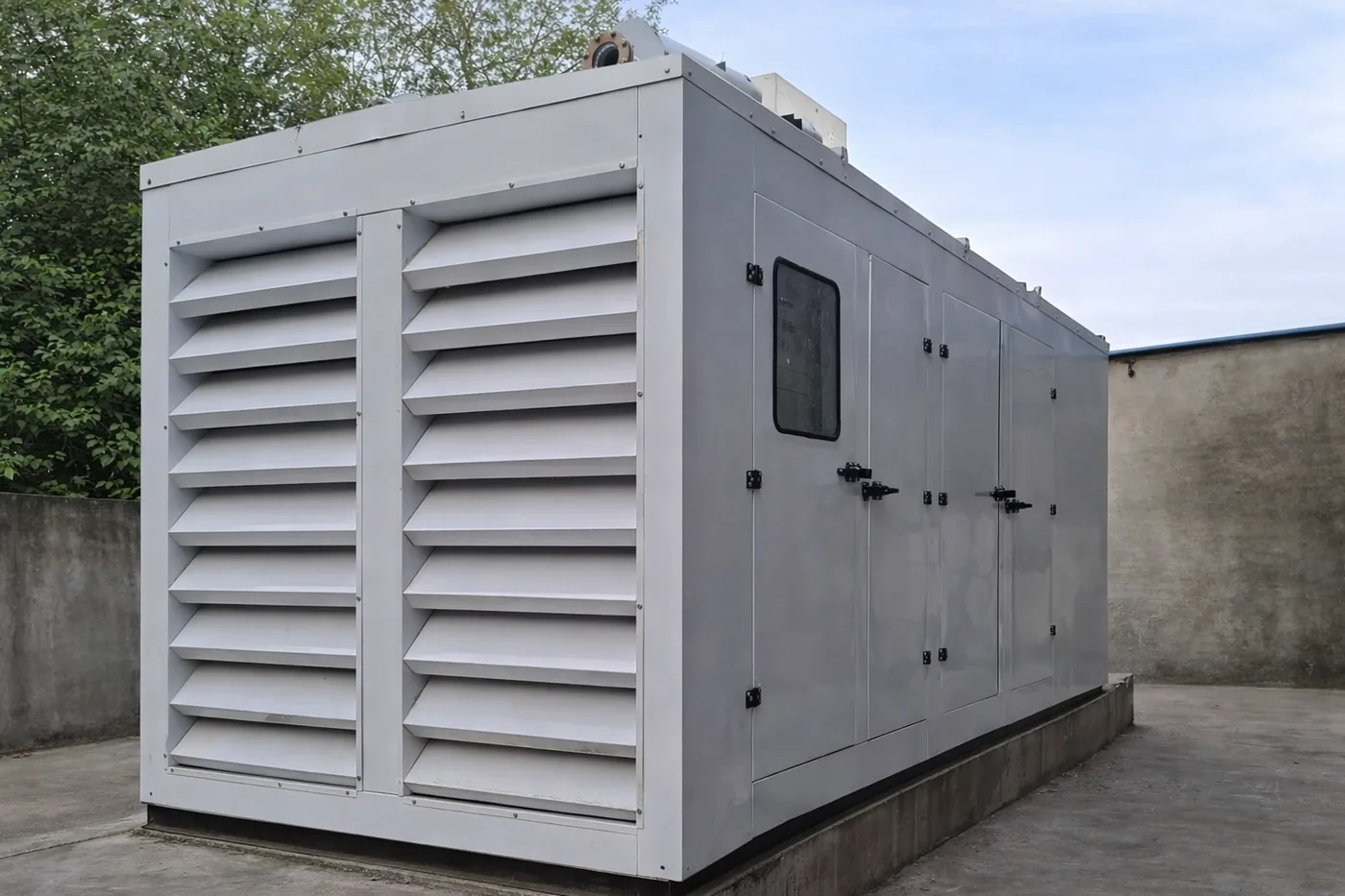
| One or two dominant machines | Acoustic enclosure | Treats the source, attenuates in all directions |
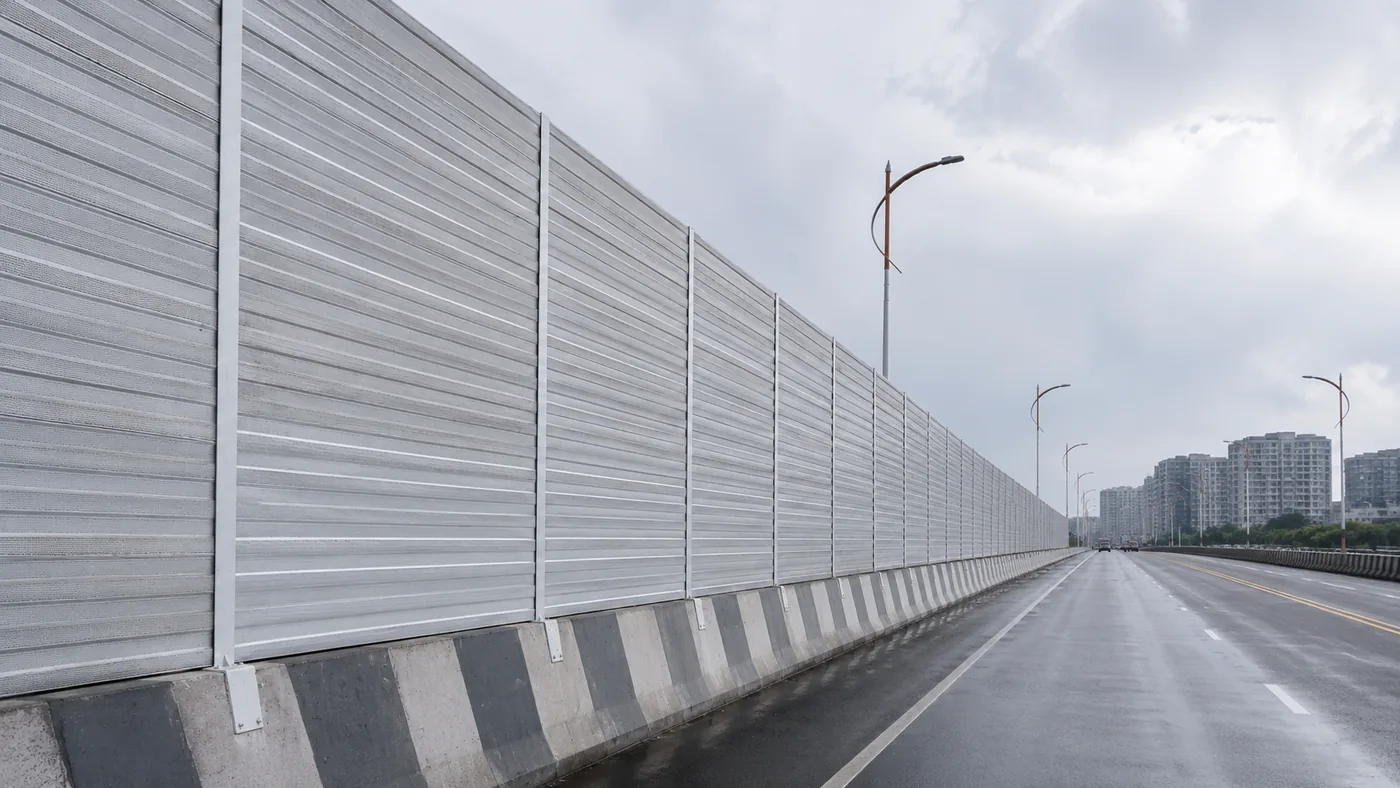
| Clear line of sight to a receiver | Noise barrier | Interrupts the direct path; geometry-driven |
| Noise escaping through openings | Acoustic louvers | Keeps airflow, attenuates the aperture |
| Noise through building fabric | Acoustic cladding | Raises transmission loss of the envelope |
| Rooftop plant above or beside receivers | Rooftop screening plus isolation | Airborne and structure-borne paths differ |
| Deficit beyond any single measure | Combination, or relocation | Sometimes layout is cheaper than acoustics |
Three principles that hold across all of them:
- Source beats path beats receiver. Treating the machine is almost always more efficient per decibel than treating everything around it.
- The weakest path sets the result. An unsealed penetration, an open door or a gap in a barrier will dominate however good everything else is.
- Airflow is not negotiable. Any treatment that starves a machine of air has converted a compliance problem into a reliability problem.
Our comparison of cladding, enclosures and barriers sets out where each belongs in more detail.
KBG Group manufactures the full range — acoustic enclosures, noise barriers, acoustic louvers and acoustic cladding — and our engineers will work from your baseline survey and plant schedule to the attenuation your boundary actually needs, in the period that governs. Talk to an engineer before the layout is fixed, when the options are still cheap.
Frequently Asked Questions
What are the ambient noise limits under the Noise Pollution Rules, 2000?
In dB(A) Leq, by day and night: industrial 75 and 70, commercial 65 and 55, residential 55 and 45, and silence zone 50 and 40. Daytime is 6 am to 10 pm and night-time is 10 pm to 6 am. The Rules have been amended several times since 2000, so the current consolidated text and any state-specific conditions should be checked before relying on the figures for a compliance submission.
What is a silence zone under the Rules?
An area of not less than 100 metres around hospitals, educational institutions and courts, which may be declared a silence area or zone by the State Government. Within it the limits are 50 dB(A) by day and 40 by night — the most stringent in the framework. A later proviso restricts when an area can be notified as a silence zone, so the applicable designation should be confirmed with the state authority rather than assumed from proximity.
When can someone complain about noise from my site?
The Rules provide that a person may complain to the Deputy Commissioner where the noise level exceeds the ambient standards by 10 dB(A) or more. In practice complaints are made well before that threshold, and a complaint triggers scrutiny regardless of whether the formal margin is met — which is why designing to the limit rather than to the complaint threshold is the sounder approach.
Does meeting the DG set noise standard mean my site is compliant?
No. The CPCB DG set standard — 75 dB(A) at 1 metre for sets up to 1000 kVA — is a product requirement on an individual machine. The Rules apply to ambient levels at your boundary with everything on site running together. A site of individually compliant machines can exceed the boundary limit, particularly against a residential night-time figure of 45 dB(A). The two obligations are separate and both apply.
Need to bring a site boundary into compliance?
Our engineers review specifications and share test data at no cost. Typical response within one business day.