Two compliance routes, and most people only know one
Ask about diesel generator noise in India and you will be told "75 dB(A) at one metre". That is correct, and it is only half the framework.
Route one — the product rule. CPCB norms set the maximum permissible sound pressure level for new DG sets up to 1000 kVA at 75 dB(A) at 1 metre from the enclosure surface, and require that such sets be provided with an integral acoustic enclosure at the manufacturing stage. This is a type-approval style obligation discharged by the set manufacturer. If you are buying a new set in that range, it arrives compliant and there is nothing to design.
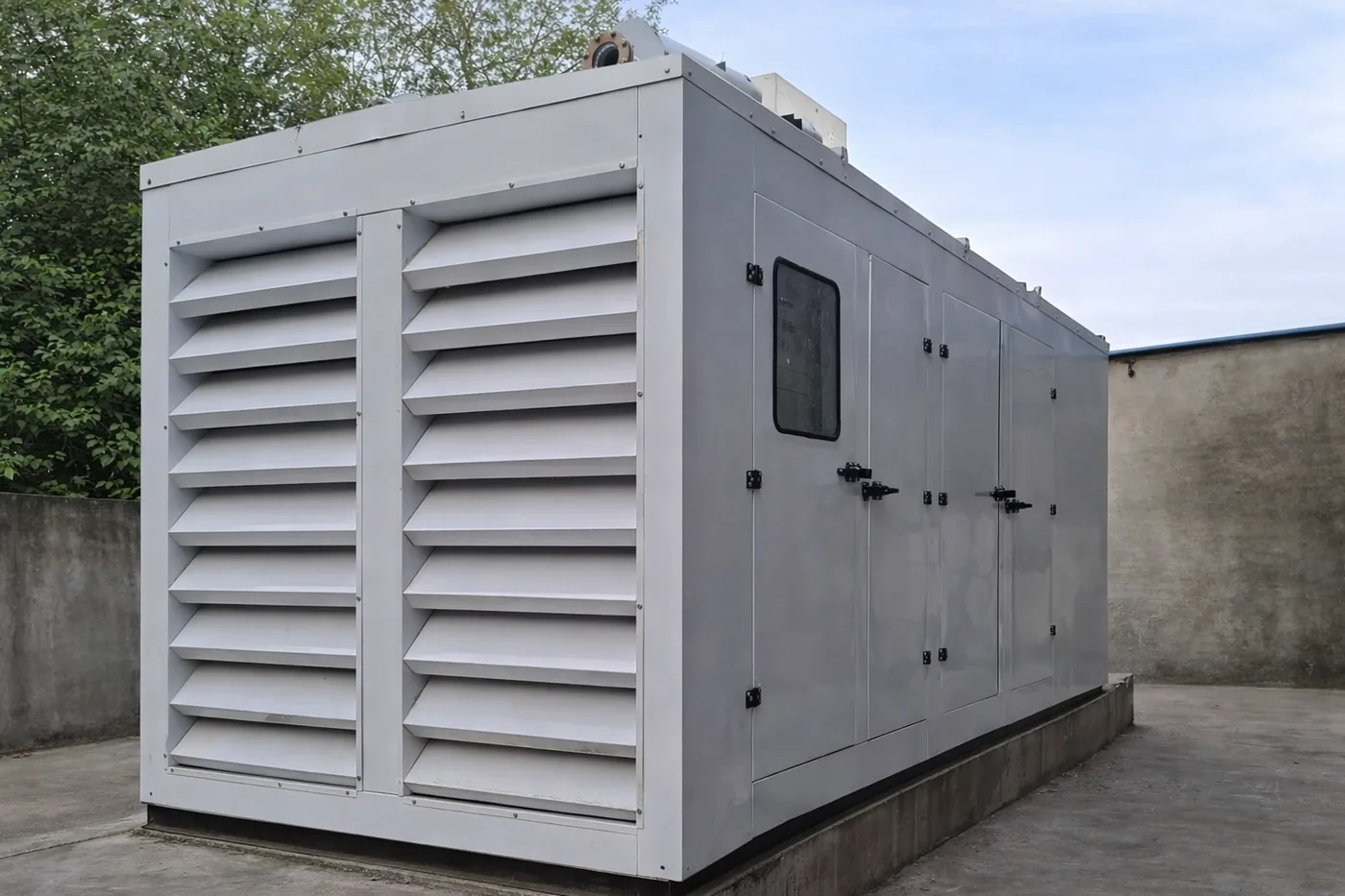
Route two — the performance rule. For sets that fall outside that scope, the requirement changes shape entirely: the acoustic enclosure or the acoustic treatment of the room shall be designed for a minimum 25 dB(A) insertion loss, or for meeting the prescribed ambient noise standards, whichever is on the higher side.
That second route is the one that applies to a large share of real projects — older installations being brought up to standard, larger sets, and sets already installed in buildings — and it is a fundamentally different kind of requirement. It is not a number the machine carries. It is a number your treatment has to demonstrate, and it comes with a second test attached: the ambient standards, whichever is higher.
The Retrofit Requirement, Precisely
- New DG sets up to 1000 kVA: maximum 75 dB(A) at 1 metre from the enclosure surface, with an integral acoustic enclosure fitted at the manufacturing stage.
- Sets outside that scope: the enclosure or room treatment is designed for a minimum 25 dB(A) insertion loss, or to meet ambient standards, whichever is higher.
- The ambient standards referred to are the zone limits in the Noise Pollution (Regulation and Control) Rules, 2000 — 55/45 dB(A) day/night residential, 75/70 industrial.
What insertion loss actually means
Insertion loss is a difference, not a level. It is how much quieter things are with the treatment in place than without it, measured at the same position under the same operating conditions.
That distinction has three practical consequences.
It needs a baseline. You cannot demonstrate 25 dB(A) insertion loss without a credible "before" measurement of the untreated set, at defined positions and load. Projects that skip the baseline and measure only the finished installation have no way to evidence the figure, and a certifying authority is entitled to say so. Measure first.
It is not sufficient on its own. A very loud set treated by 25 dB(A) can still be loud. This is exactly why the rule says "or ambient standards, whichever is on the higher side" — the insertion loss is a floor on the quality of the treatment, and the ambient limit at the boundary is the test of whether the result is acceptable in context. A compliant enclosure on a set near a residential boundary with a 45 dB(A) night limit may still need more.
It is frequency-dependent in practice. Though stated as a single A-weighted figure, the attenuation an enclosure achieves varies strongly with frequency, and diesel sets produce substantial low-frequency energy that is the hardest to treat. An enclosure designed on average performance can meet the headline figure and still leave an audible low-frequency rumble at the boundary — the complaint most likely to be made and hardest to resolve. Our guide to STC, NRC and insertion loss sets out why these ratings are not interchangeable.
Insertion loss grades your treatment. The ambient limit grades the outcome. The rule asks you to pass whichever is harder.
Airflow is the real constraint
The engineering difficulty in a retrofit enclosure is not acoustic. It is that a diesel generator is an air-breathing machine with a large and non-negotiable appetite, and every opening that satisfies it is a path for noise to escape.
A set needs:
- Radiator discharge air — by far the largest volume, and the opening that dominates the design.
- Combustion air for the engine itself.
- An exhaust path, which carries both gas and a great deal of noise.
- Service access, which means removable panels that must seal acoustically and be openable repeatedly.
- Penetrations for fuel, control and power cabling, each a potential flanking path.
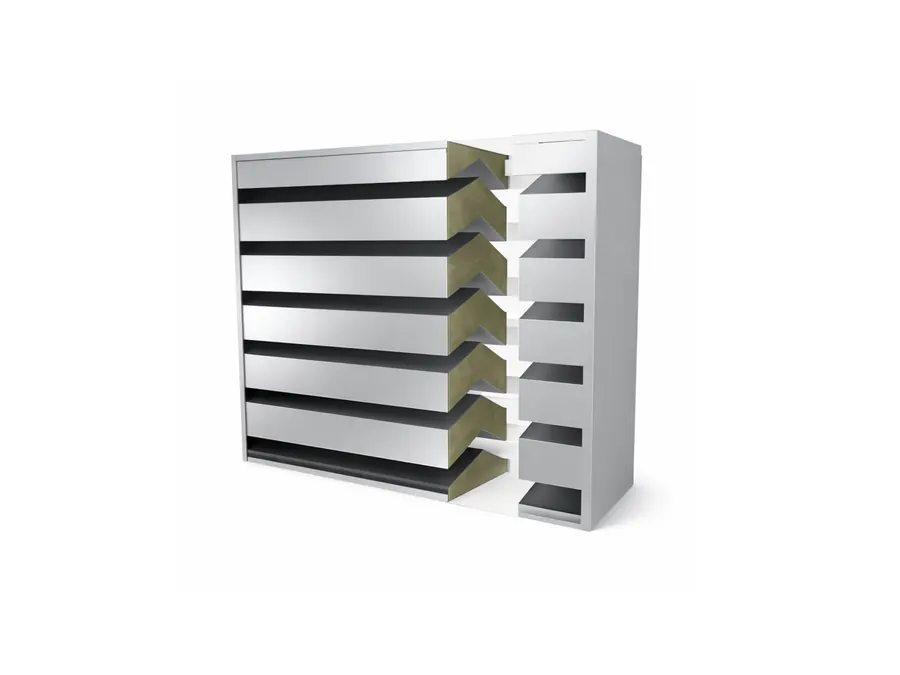
Restrict the radiator path and the set runs hot, derates and eventually trips — converting a noise problem into a power-availability problem, which is a poor trade for a standby asset. The resolution is to treat the openings rather than reduce them: acoustic louvers sized so that the combined pressure drop stays inside the radiator's allowance while delivering attenuation on the discharge path. That is the insertion-loss against pressure-drop negotiation set out in our guide to insertion loss versus pressure drop, with the added constraint that one side of it is a machine specification you cannot argue with.
Exhaust deserves separate attention. Once the enclosure is working, exhaust is commonly the dominant remaining path, so silencer selection and outlet position become part of the acoustic design. The ventilation side of the same problem — when the set sits in a room rather than an enclosure — is covered in DG set room ventilation design.
Enclosure or room treatment?
The CPCB wording permits either, and the right choice is usually decided by what already exists on site.
| Situation | Better route | Why |
|---|---|---|
| Set outdoors, space around it | Acoustic enclosure on the set | Treats the source directly, smallest treated volume |
| Set already inside a plant room | Room treatment | No space to build around the machine; openings are the paths |
| Several sets in one room | Room treatment plus local measures | One treated envelope serves all sets |
| Very tight boundary limit | Enclosure plus room or barrier | Insertion loss alone will not reach the ambient figure |
| Set must stay serviceable in place | Enclosure with engineered access | Panels designed to seal and be reopened |
Whichever route is taken, the same four things decide whether it passes:
- A baseline measurement taken before anything is built.
- Ventilation sized to the set, not to the acoustic target alone.
- Flanking paths closed — penetrations, panel joints and the exhaust route, which is where most of the shortfall hides.
- Verification under real load, at the positions and in the period the consent conditions name.
Where the boundary rather than the machine is the binding constraint, the enclosure may need a boundary barrier alongside it, and the broader compliance route is in meeting the Noise Pollution Rules at your site boundary. For cost expectations, see acoustic enclosure price in India.
KBG Group manufactures acoustic enclosures and DG set acoustic solutions for retrofit as well as new installations, sizing enclosure ventilation against the set's radiator and combustion air requirement so the insertion-loss target is met without derating the machine. Send us the set rating, the layout and the boundary distance and we will tell you which route reaches the number.
Frequently Asked Questions
What is the 25 dB(A) insertion loss requirement for DG sets?
For diesel generator sets that fall outside the factory-enclosure rule, CPCB guidance requires the acoustic enclosure or the acoustic treatment of the room to be designed for a minimum 25 dB(A) insertion loss, or for meeting the prescribed ambient noise standards, whichever is on the higher side. It is a performance requirement on the treatment, not a sound-level rating on the machine.
How is insertion loss different from a 75 dB(A) rating?
A 75 dB(A) rating is an absolute sound pressure level measured at 1 metre from the enclosure surface, and applies to new sets up to 1000 kVA supplied with an integral enclosure. Insertion loss is a relative measurement — the difference the treatment makes, measured before and after it is fitted. A set can achieve 25 dB(A) insertion loss and still be loud if it started very loud, which is why the rule adds 'or ambient standards, whichever is higher'.
Can an acoustic enclosure reduce generator output or reliability?
It can, if ventilation is got wrong. A diesel set needs radiator discharge air, combustion air and a clear exhaust path, and an enclosure that restricts any of them will cause the set to run hot and derate or trip. This is the most common retrofit failure: the acoustic target is met and the machine becomes unreliable. Enclosure ventilation has to be sized against the set's actual airflow requirement, usually using acoustic louvers on the openings.
Is treating the generator room an alternative to an enclosure?
Yes, and the CPCB wording allows for it — the requirement applies to the acoustic enclosure or to acoustic treatment of the room. Room treatment suits sets already installed indoors where there is no space to build an enclosure around the machine, and it works by treating the room's openings, walls and ventilation paths instead. The same insertion-loss performance has to be demonstrated either way.
Need to bring an existing DG set into compliance?
Our engineers review specifications and share test data at no cost. Typical response within one business day.