Why a data centre generator yard is its own problem
Standby generation is the noisiest thing a data centre owns, and the way data centres are built makes it harder than an ordinary genset installation. Four factors compound:
- Scale. A campus carries redundant capacity for the full IT load plus cooling, which means many large sets rather than one.
- Density. Land is expensive and cable runs should be short, so the sets sit together in a yard, often close to a site edge.
- Routine testing. Unlike most standby plant, data centre generators are exercised regularly and under load — so the noise is a recurring, predictable event, not a rare emergency.
- Siting. Data centres increasingly sit in urban and peri-urban industrial pockets where the adjoining zone is residential.
That combination produces the classic outcome: every set carries a compliant factory rating, the yard as a whole breaches the boundary limit, and the problem is found during witness testing when the yard is already built. Retrofitting acoustic treatment into a live generator yard, around fuel lines, exhaust runs and radiator airflow, costs several times what designing it in would have.
Two Limits, Two Different Tests
- CPCB norms require DG sets up to 1000 kVA to meet 75 dB(A) at 1 metre from the enclosure surface, with an integral acoustic enclosure provided at the manufacturing stage.
- Where a set falls outside that scope, the acoustic enclosure or room treatment is to be designed for a minimum 25 dB(A) insertion loss, or to meet ambient standards, whichever is higher.
- Site boundary compliance is governed separately by the Noise Pollution (Regulation and Control) Rules, 2000 — 55 dB(A) day and 45 night in a residential zone, 75/70 in an industrial zone.
What the rules actually require
These are two distinct obligations and they are routinely conflated.
The product obligation. CPCB norms set the maximum sound pressure level for new DG sets up to 1000 kVA at 75 dB(A) at 1 metre from the enclosure surface, and require the set to be supplied with an integral acoustic enclosure at the manufacturing stage. For sets outside that scope, the enclosure or room treatment must deliver a minimum 25 dB(A) insertion loss, or meet ambient standards — whichever is the higher requirement. We cover that route in detail in retrofitting acoustic enclosures to existing sets.
The site obligation. The Noise Pollution (Regulation and Control) Rules, 2000 set ambient limits in dB(A) Leq by zone: industrial 75 day / 70 night, commercial 65/55, residential 55/45, silence zone 50/40, with day running 6 am to 10 pm and night 10 pm to 6 am. These apply to the site as a whole, at the boundary, to everything running at once.
The gap between the two is where data centres get caught. A 75 dB(A) rating at 1 metre is a single-machine figure at close range. Run several sets together and their contributions add. Place the yard close to a boundary and there is little distance over which the level can decay. The arithmetic is unforgiving: a residential night-time limit of 45 dB(A) is a demanding target for a yard of megawatt-class sets a short distance away, and it is the night figure that matters, because that is when a monthly load test is least welcome and when the limit is lowest.
Every set compliant, the site non-compliant. That is not a contradiction — the two numbers were never measuring the same thing.
Enclosure, barrier, or both
The order of intervention is settled engineering: treat the source, then the path, then the receiver. Applied to a generator yard:
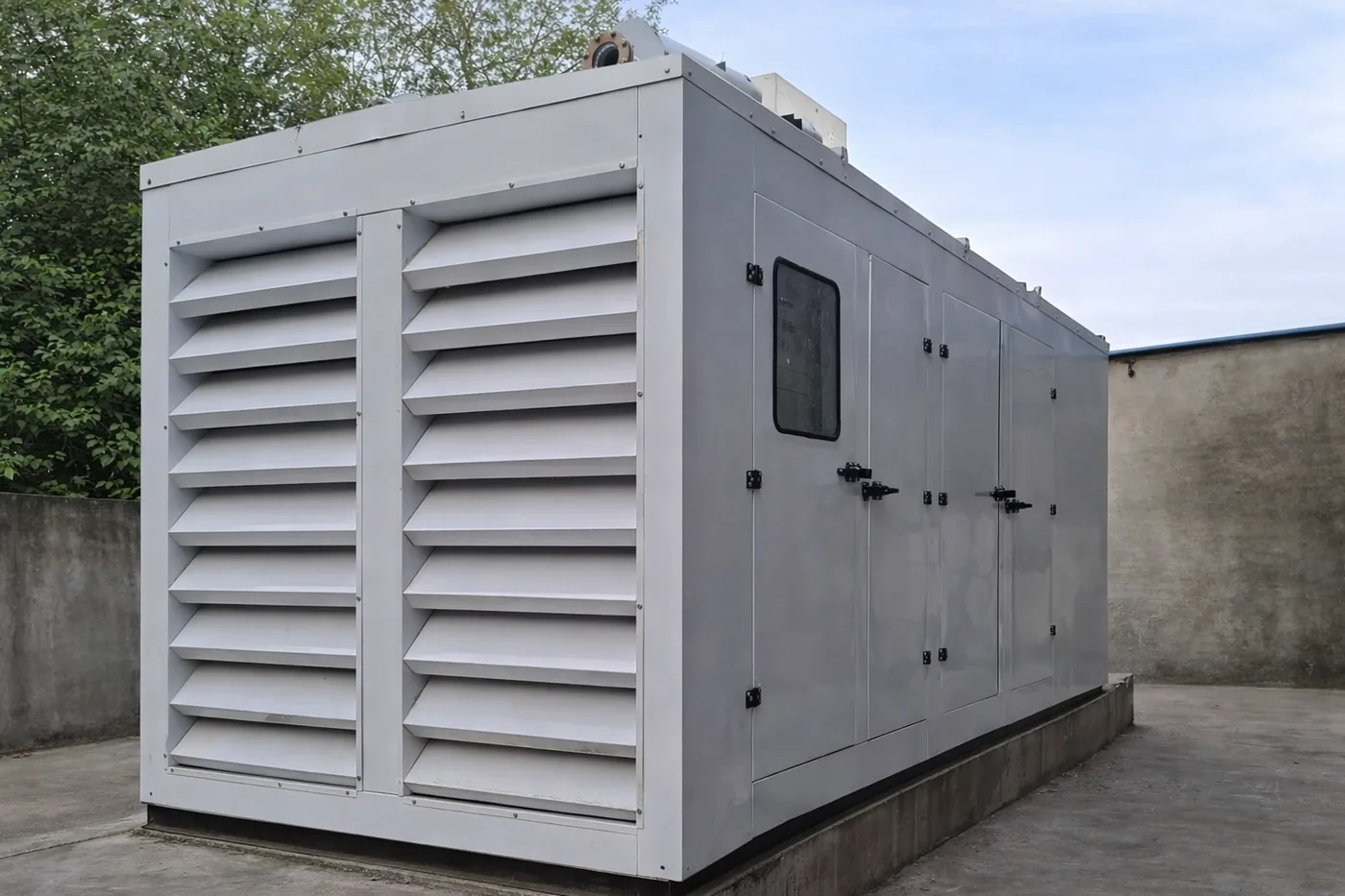
1. The enclosure. An acoustic enclosure around each set attenuates in every direction and is the most efficient decibel-per-rupee intervention available. It is also the hardest to retrofit, because it has to work with — not against — the machine's own needs: radiator discharge airflow, combustion air, exhaust routing, fuel and control penetrations, and access for service. An enclosure that solves noise and strangles radiator airflow has traded a compliance problem for a reliability problem, which in a data centre is the worse of the two.
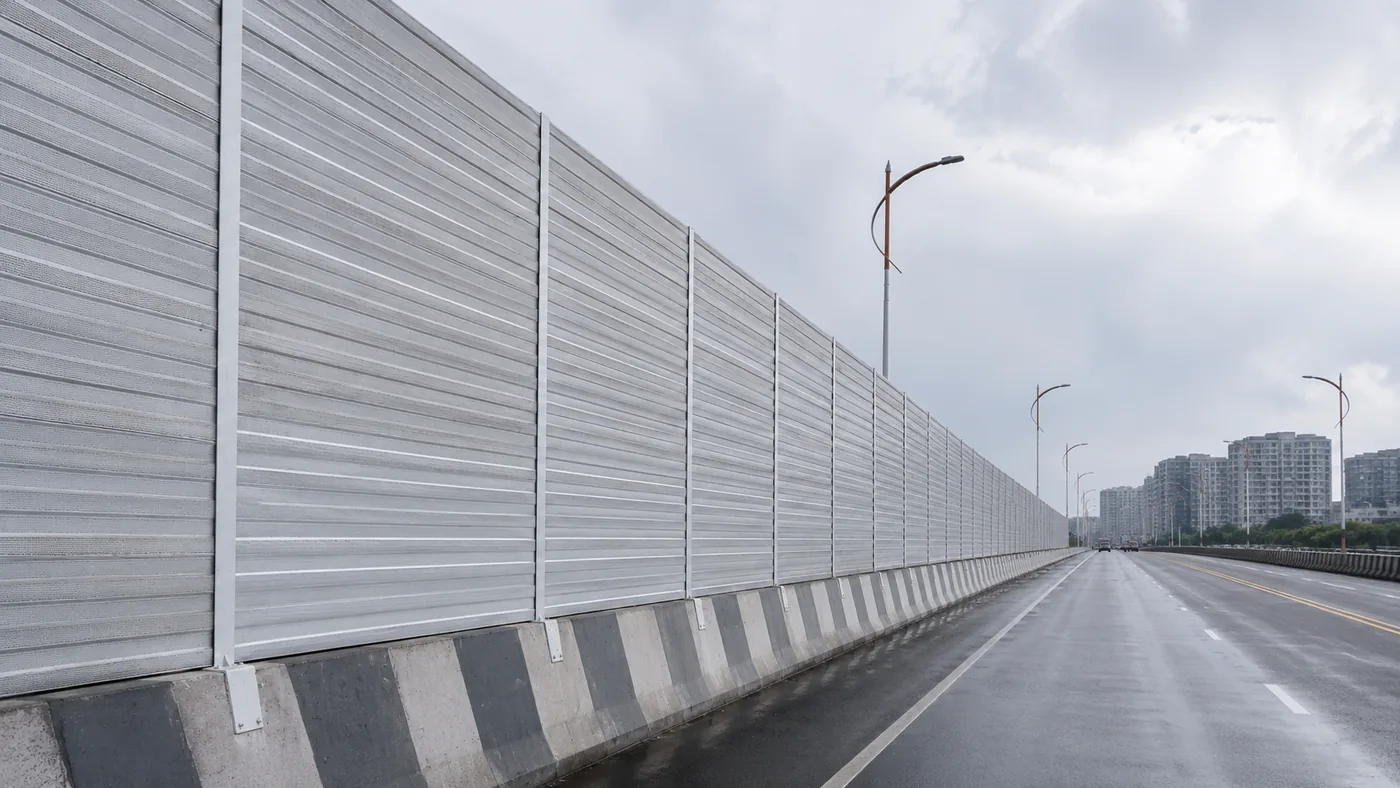
2. The barrier. A noise barrier works only where it interrupts the line of sight from source to receiver. That makes it the right second move, not the first: once the sets are enclosed, a barrier addresses the specific receiver that still has a view of the yard. Barrier design is geometry — height and position relative to source and receiver — exactly as set out in our guide to barrier height, gaps and wind load. Buying barrier by the square metre without that analysis is how money gets spent for two or three decibels.
3. The rest of the yard. Generators are not the only source. Radiator fans, exhaust outlets and the day tank vent all contribute, and exhaust is frequently the dominant residual once the enclosure is in place — which makes exhaust silencer selection part of the acoustic design rather than a mechanical afterthought.
| Intervention | Works by | Best used when |
|---|---|---|
| Acoustic enclosure per set | Attenuating at the source, all directions | Always — the primary measure |
| Exhaust silencer upgrade | Treating the dominant residual path | Once enclosures are fitted |
| Boundary barrier | Breaking line of sight to a receiver | A specific receiver still over limit |
| Acoustic louvers on yard openings | Attenuating through ventilation paths | Enclosed or walled yards |
| Room-in-room / acoustic building | Full containment | Severe limits or very close boundaries |
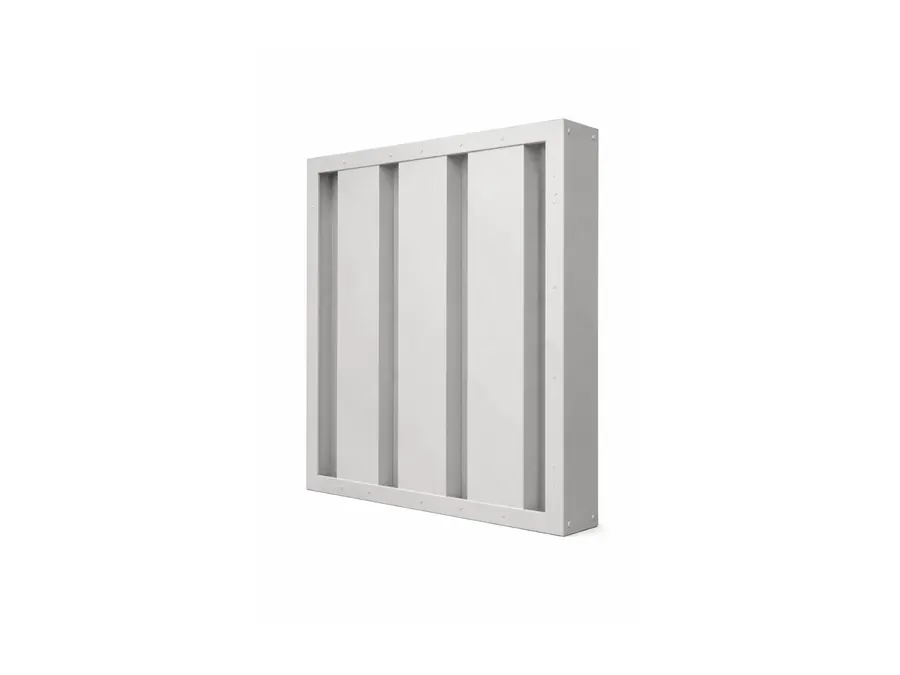
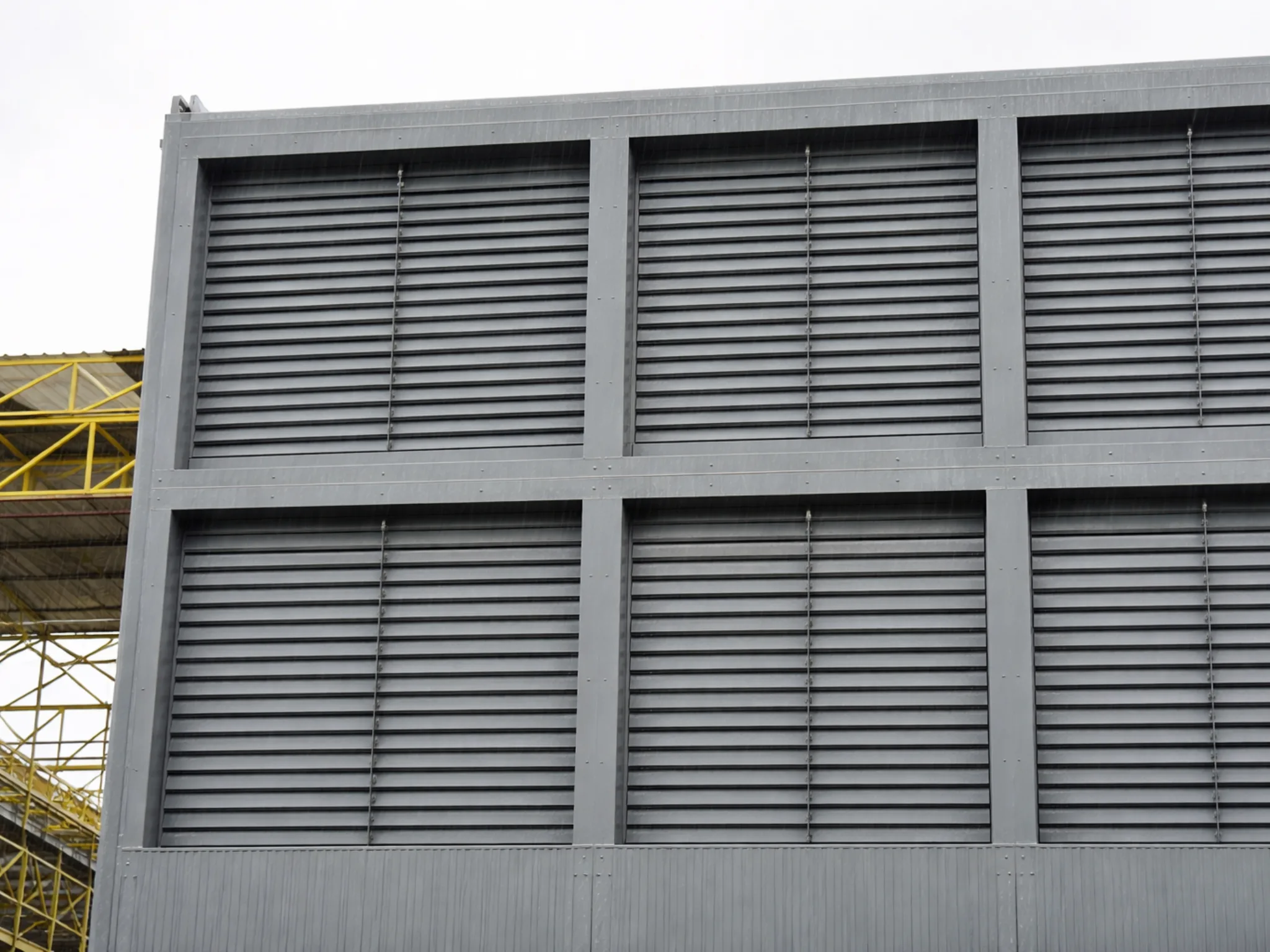
Where the yard is walled or built into the structure, the ventilation openings become the weak path and acoustic louvers enter the design — with the insertion-loss against pressure-drop trade-off handled as in our guide to insertion loss versus pressure drop. Radiator airflow is not negotiable, so that trade-off has to be closed on real numbers.
Testing it under conditions that mean something
Acceptance testing is where optimistic designs are found out. A defensible test specification states four things:
- Load. Noise rises with load. A test at light load is not evidence about a monthly full-load exercise, so the load bank condition should be named.
- Set count. The test should run the number of sets that will genuinely operate together, because that is the condition the boundary limit applies to.
- Position. The measurement points from the consent conditions, at the boundary, not a convenient spot in the yard.
- Time period. Against the night-time limit if sets can run at night — which, for a data centre, they can.
It is also worth separating the two obligations in the test regime: an enclosure insertion-loss verification on the set, and a boundary ambient measurement for the site. They answer different questions, and a project that only does the first has not demonstrated compliance with the Rules. A proper baseline survey before construction makes the post-construction result interpretable at all — the method is in our guide to noise studies for infrastructure projects, and the broader compliance route in meeting the Noise Pollution Rules at your boundary.
KBG Group manufactures acoustic enclosures, boundary barriers, acoustic louvers and cladding for standby power installations, and sizes enclosure ventilation so the acoustic target is met without compromising radiator airflow. Send us the yard layout, set schedule and consent conditions and we will model the boundary case before the slab is poured.
Frequently Asked Questions
What noise limit applies to data centre standby generators in India?
Two separate limits apply. The DG set itself is covered by the CPCB requirement of 75 dB(A) at 1 metre from the enclosure surface for sets up to 1000 kVA, supplied with an integral acoustic enclosure from the factory. Separately, the site has to meet the ambient limits in the Noise Pollution (Regulation and Control) Rules, 2000 at its boundary, which for a residential zone is 55 dB(A) by day and 45 by night. Meeting the first does not guarantee the second.
Why does a compliant generator still fail at the site boundary?
Because 75 dB(A) at 1 metre is a product rating for one machine, while the boundary limit applies to everything on the site running together. Several sets in one yard add up, and the boundary may be much closer than the distance at which that sound level would have decayed to the limit. A yard of individually compliant sets can therefore exceed a residential night-time limit of 45 dB(A) comfortably.
Is an acoustic enclosure or a boundary barrier the better answer?
Treat the source first. An enclosure around each set attenuates in every direction and is the more efficient intervention per decibel. A barrier only helps where it breaks the line of sight between source and receiver, so it is the right addition once the sets are enclosed and a specific receiver still sees too much. Most data centre yards need both, with the enclosure doing the bulk of the work.
When should generator yard noise be tested?
Under real load, with the number of sets that will actually run together, at the boundary positions the consent conditions name, at night if a night-time limit applies. A single set tested at light load in daylight proves very little about a yard of sets on a load bank during a monthly test. Acceptance criteria should say load, set count, position and time period.
Designing the acoustic case for a data centre generator yard?
Our engineers review specifications and share test data at no cost. Typical response within one business day.